



July 2026 Cyber Threat Report Reveals Alarming Surge in Ransomware Attacks
Overview of Cyber Threats in July 2026
Check Point Research (CPR), a leading cybersecurity firm, has unveiled its alarming report on cyber threats for July 2026. The data indicates that the frequency of cyber attacks globally has escalated significantly, with ransomware incidents surging an astonishing 87% compared to the previous year. This increase in threats highlights the urgent need for enhanced security measures across organizations worldwide.
The report states that on average, each organization faced 2,336 cyber attacks weekly in July. This figure represents a 3% rise from the previous month and a 16% increase compared to the same month last year. In Japan specifically, organizations dealt with an average of 1,754 attacks per week, marking a staggering 35% increase year-over-year.
Key Findings
The primary insights from the July 2026 cyber threat analysis are as follows:
- - Global Cyber Attacks: Each organization faced an average of 2,336 attacks weekly (up 3% from June and 16% from July 2025).
- - Japan's Cyber Scene: In Japan, the average weekly attacks reached 1,754, surpassing June's numbers.
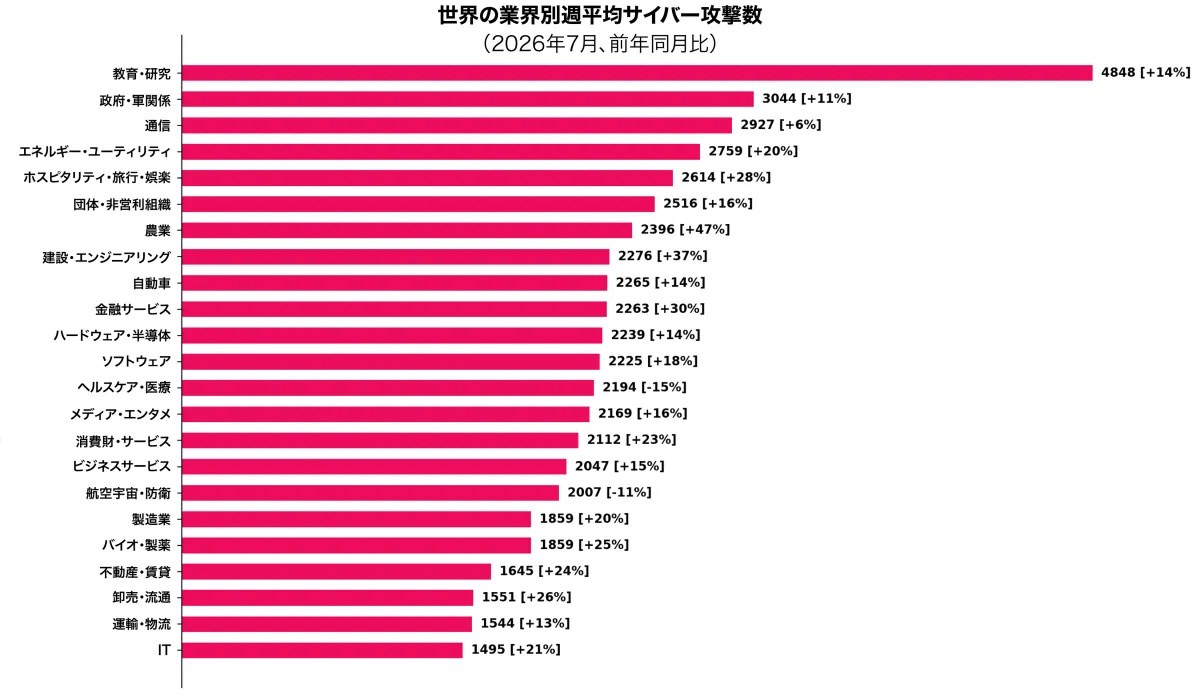
- - Most Targeted Sector: The education and research sector became the most common target, experiencing an average of 4,848 attacks per organization each week.
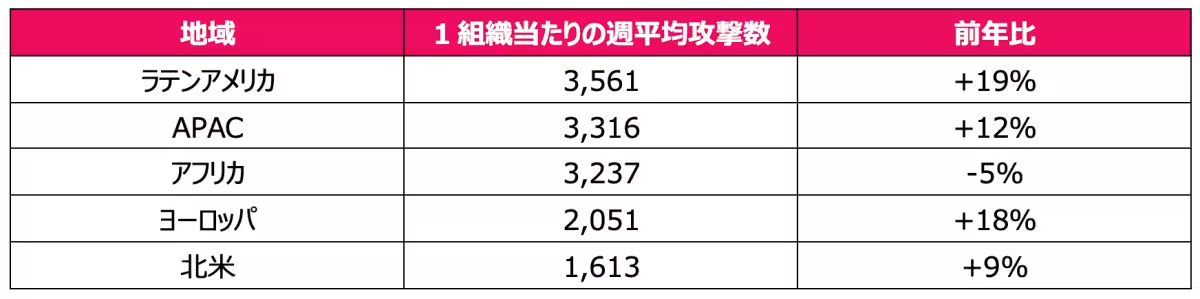
- - Regional Attack Patterns: Latin America remains the most targeted region with a striking average of 3,561 weekly attacks per organization.
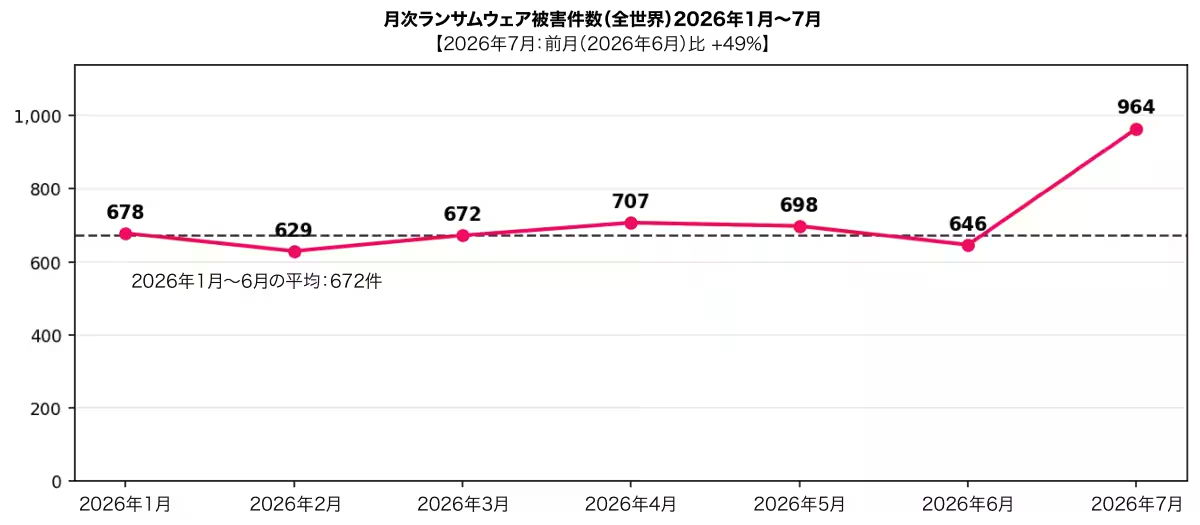
- - Ransomware Surge: The number of reported ransomware incidents skyrocketed to 964, marking a 49% increase from the previous month and a dramatic 87% increase from the prior year.
Ransomware Groups & Activities
Among the active ransomware groups, 'The Gentlemen' and 'Qilin' led the pack, each accounting for 14% of reported attacks. This demonstrates a significant shift in the landscape of ransomware threats, showing both groups' increasing audacity and sophistication in executing attacks.
Omer Dembinsky, the Data Research Manager at CPR, emphasizes the pressing nature of these threats: “The data from July 2026 indicates that multiple fields are simultaneously witnessing growing cyber risks. The escalation in attack frequency coupled with the rising threat of ransomware underscores the urgent need for organizations to prioritize security.” He suggests that organizations must reinforce their defenses to protect networks, users, data, and AI workflows against the looming threat of cyber attacks.
The Prevalence of Generative AI Risks
Adding another layer of concern, the report highlights that an alarming one in 36 generative AI prompts in organizations holds a high risk of leaking sensitive data. This oversight of handling AI-generated content poses a tangible risk to companies that leverage these tools in their operations. The data reveals the following:
- - Employees produce an average of 95 generative AI prompts monthly.
- - Approximately 22% of these prompts may contain confidential information.
Trends in Cyber Attack Vectors
Email continues to be a significant threat vector, with 1 in every 128 emails classified as phishing attempts. Notably, regions like Africa and North America recorded the highest phishing rates, shedding light on the dependence of modern attacks on email-based mechanisms for credential theft and malware distribution.
Conclusion
July 2026 marked a pivotal moment in the evolution of cyber threats, particularly with the surge in ransomware attacks. The landscape is changing rapidly, and organizations must adapt accordingly. For detailed insights into the July cyber threat report, including further statistics and analyses, check the Check Point Research Blog.
As the cybersecurity landscape continues to evolve, staying informed and prepared is paramount for organizations looking to safeguard their digital assets and maintain operational integrity in the face of such challenges.
Topics Other)
【About Using Articles】
You can freely use the title and article content by linking to the page where the article is posted.
※ Images cannot be used.
【About Links】
Links are free to use.