



Half of Social Media Users Have Criticized Others Without Understanding Legal Risks!
Introduction
A recent survey conducted by Lead Law Office, located in Chiyoda City, Tokyo, highlights pressing issues in social media usage and the associated legal risks. The survey, titled "SNS Troubles and Litigation Risks," analyzed the behaviors of individuals who actively post on social media. The findings are both enlightening and alarming, revealing that many users engage in risky posting behaviors while being largely unaware of the legal implications.
Survey Overview
The survey was conducted between August 12 and August 14, 2025, using online research methods provided by PRIZMA. A total of 1,007 participants who confirmed they post regularly on social media were surveyed to uncover their experiences and understandings regarding legalities surrounding their posts.
Key Findings
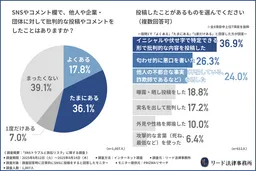
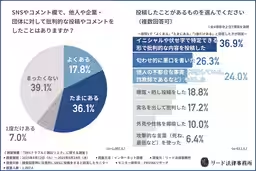
One of the most striking revelations from the survey is that approximately 53.9% of respondents reported having made critical comments or posts about others, including individuals and organizations, on social media.
Nature of Critical Posts
Among those who admitted to making critical remarks, several patterns emerged:
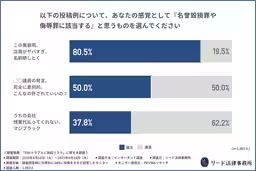
- - Identifiable Criticism: 36.9% indicated they had posted criticisms that could be linked back to individuals through initials or obscured names.
- - Implied Insults: 26.3% reported they had engaged in subtle, implied derogatory comments.
- - Exposing Unpleasant Truths: 24.0% revealed they had shared unpleasant facts about others, such as infidelity or deception.
These types of posts not only breach social norms but can also lead to legal grievances such as defamation or insult under criminal law. The participants' tendency to obscure names may provide a false sense of security regarding their legal exposure.
Awareness of Legal Knowledge
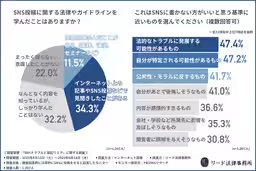
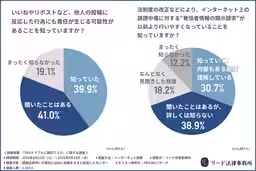
Surprisingly, only 11.5% of surveyed individuals reported having any formal education regarding legal guidelines related to social media platforms. Moreover, around 60.1% were not fully aware that reacting to or endorsing others' posts (through likes or shares) could also carry legal liabilities.
Deletion of Problematic Posts
Participants were asked about instances where they deleted posts or wished they hadn't shared something online. Notable responses included:
- - Criticizing a specific business and later regretting the move due to potential backlash.
- - Critiquing a political party, only to realize later that the language used was excessively harsh.
- - Engaging in a debate intended as personal expression that was misinterpreted as criticism, which led to further conflict.
- - Commenting without full context, creating a misunderstanding that became problematic.
These examples underscore the significant consequences of posting without fully grasping the potential repercussions. If a post tarnishes someone's reputation, even deleting it afterward does not absolve the poster from possible legal consequences.
Observational Behavior
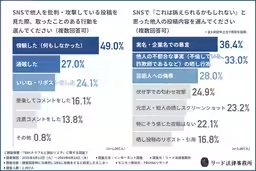
When asked about how they react to negative posts they encounter, about 49% of participants admitted to witnessing such posts without intervening. In contrast, around 27% opted to report the post, while 24.1% chose to endorse it through likes or shares. This dichotomy illustrates the polarized nature of social media behavior: some users are inclined to take a stand against perceived negativity, while others choose to support or amplify it.
Understanding Legal Responsibilities
Survey participants were also prompted to reflect on certain types of posts that they believed might lead to legal action. The most common responses included:
- - Personal Attacks Using Real Names: 36.4% worried that posts explicitly naming individuals or companies could lead to litigation.
- - Exposing Personal Problems: 33.0% were concerned about disclosing others' troubling behaviors.
- - Insulting Public Figures: 28.0% highlighted the potential risks of disparaging celebrities online.
This acknowledgment indicates a significant misjudgment; while many users recognize the legal risks, they remain largely unaware of how court rulings have evolved concerning what constitutes defamation and damage to reputation.
Conclusion: An Urgent Call
Given social media's pervasive role in daily communication, the legal ramifications of improper use cannot be understated. The Lead Law Office urges users to remain vigilant regarding their online expressions and be conscious of the potential repercussions that may stem from their virtual interactions.
Awareness, education, and a cautious approach to posting can mitigate the risk of serious legal implications, helping maintain a responsible and respectful social media environment. The statistics demonstrate an urgent need for more educational efforts surrounding the relationship between online behavior and legal consequence, fostering a community of informed and conscientious users.
For more insights and guidance on navigating legal matters related to social media, visit Lead Law Office.

Topics Policy & Public Interest)
【About Using Articles】
You can freely use the title and article content by linking to the page where the article is posted.
※ Images cannot be used.
【About Links】
Links are free to use.