



Accelerating Digital Transformation in Agriculture through Triangle Ehime 2.0 Project
Introduction
The Triangle Ehime 2.0 project, initiated by Ehime Prefecture, aims to tackle pressing agricultural challenges through digital transformation. In collaboration with Canon Marketing Japan Inc. (Canon MJ) and its group company Canon IT Solutions Inc. (Canon ITS), the project is geared towards improving farming practices using advanced imaging and environmental data.
Project Overview
The project is designed to assist farmers facing various challenges such as labor shortages, aging demographics, and the complexities of knowledge transfer in agriculture. With the rapid advancement of technology, Canon MJ and Canon ITS propose a solution that utilizes video and sensor data to manage farmlands remotely and support the transfer of essential agricultural knowledge.
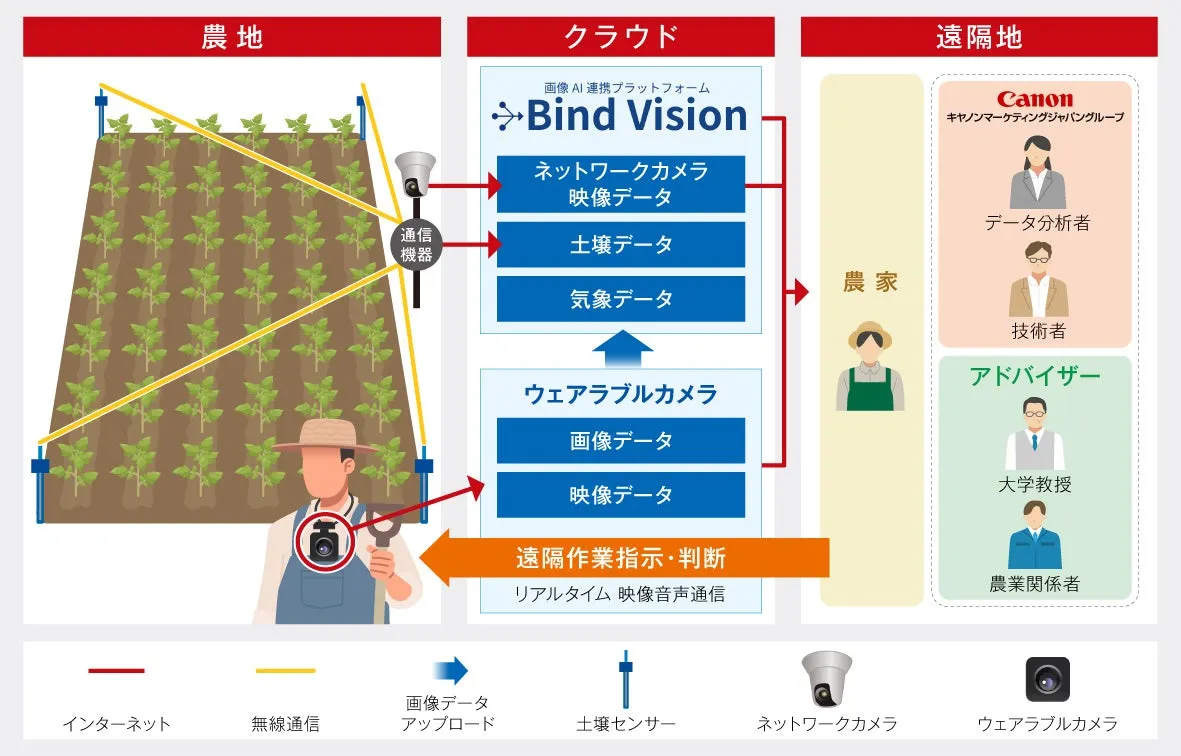
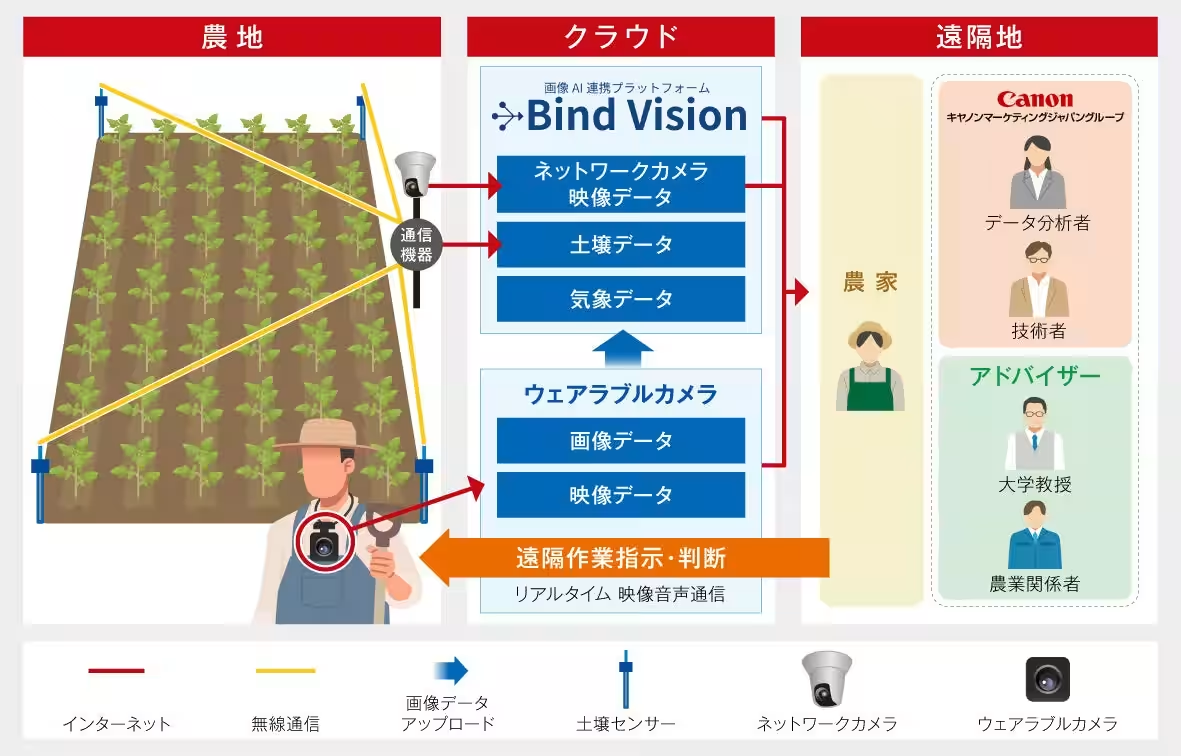
The demonstration experiment will run until the end of March 2026, where farmers in Ehime Prefecture will use Canon's advanced imaging technology. This includes high-resolution cameras and environmental sensors to gather data on crops like roses, taro, and tomatoes. The information will be processed through the Bind Vision platform, enabling real-time monitoring and analysis of agricultural conditions.
Background Challenges
Farmers face chronic issues that are exacerbated by an aging workforce and difficulties in training new agricultural workers. Previous surveys conducted by Canon MJ highlighted these concerns, leading to the development of this digital solution aimed at ensuring that traditional agricultural knowledge and techniques are adapted for modern use. By leveraging Canon's expertise in imaging, the project aspires to create a sustainable model for agricultural practice that contributes to the community as a whole.
Demonstration Experiment Details
The demonstration focuses on two farming locations within Ehime Prefecture, targeting outdoor cultivation for roses and taro, alongside greenhouse cultivation for tomatoes. By utilizing the Bind Vision platform, the project aims to visually represent and store environmental data such as weather and soil conditions alongside high-quality images. This will facilitate the real-time assessment of crop status from remote locations, enabling farmers to make informed decisions based on comprehensive data.
Additionally, wearables will be integrated into the process allowing farmers to share live footage and audio, enhancing communication and decision-making from afar. This approach not only streamlines agricultural operations but also supports knowledge transfer and standardizes tasks across varying levels of experience among workers.
Future Outlook
As this project evolves, there are plans to enhance field management, improve crop yield, and upgrade work environments for agricultural practitioners. Regular workshops will be held with local farmers and experts, allowing for feedback and continuous refinement of the services provided. In future years, the project’s goals include expanding its applicability beyond Ehime Prefecture by enhancing the technology's versatility and potentially incorporating AI solutions to optimize operational costs for farmers.
Value Proposition
Visualization and Data Management
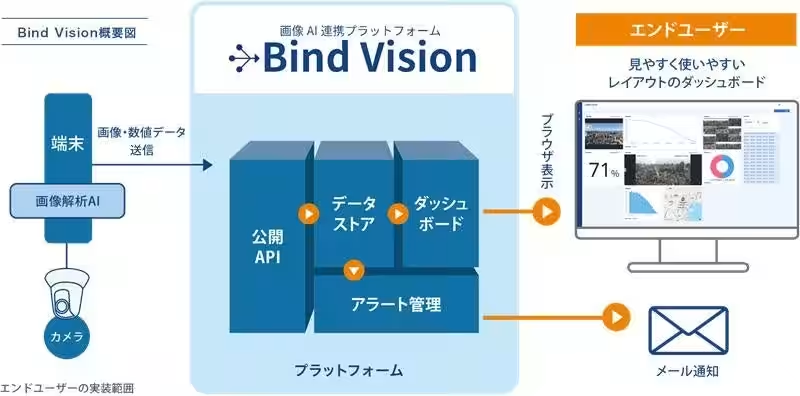
The Bind Vision platform will allow farmers to visualize the relationship between crop growth and environmental conditions by managing video and environmental data in a unified system. This capability will enable them to document anomalies and growth trends, making data-driven decisions more achievable. Furthermore, the experience and judgment of seasoned farmers can be recorded into the system to preserve knowledge that is often difficult to articulate.
Remote Support and Instruction
Utilizing network cameras along with wearable technology, the project will facilitate the real-time sharing of field conditions and support operations from a distance. This means seasoned professionals can provide guidance without needing to be physically present, which in turn helps refine the quality of work performed by less experienced workers.
Versatile Implementation
The project is designed to cater to a diverse range of crops and cultivation methods regardless of whether they are grown in open fields or greenhouses. This emphasis on broad applicability will ensure that the lessons learned from this demonstration can be applied widely across various agricultural contexts in the future.
Conclusion
As part of the Triangle Ehime 2.0 initiative, this collaboration between Canon and Ehime Prefecture marks a significant step towards revolutionizing traditional agricultural practices through digital technology. By fostering efficiency and sustainability, it presents a promising future for that region's farming landscape while paving the way for broader digital implementations in agriculture across Japan and beyond.
For further inquiries about the project, please contact Canon Marketing Japan or visit the Bind Vision homepage for detailed information on the platform and its capabilities. Together, they are redefining agriculture for a new era.

Topics Consumer Technology)
【About Using Articles】
You can freely use the title and article content by linking to the page where the article is posted.
※ Images cannot be used.
【About Links】
Links are free to use.