



Innovative Circular Toilet Implementation in Urban Areas Through Complex Fermentation Technology
Implementation of Urban Circular Toilets Using Complex Fermentation Technology
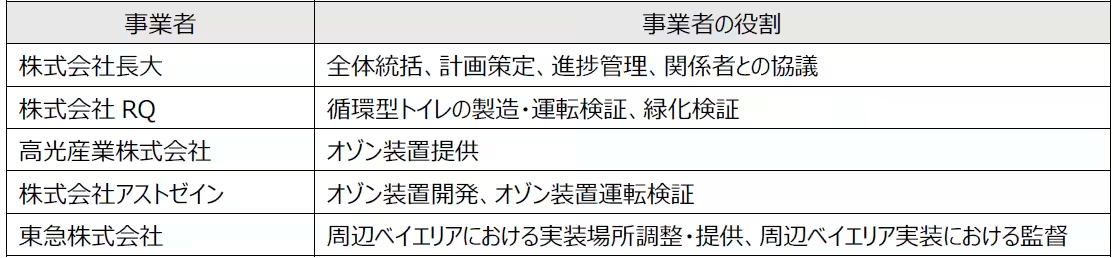
The adoption of the demonstration project utilizing complex fermentation technology for circular toilets has been approved as part of the Tokyo Bay eSG Project's priority initiatives for fiscal year 2025. This project involves a consortium of five companies: Chodai Corporation, RQ Corporation, Takamitsu Industries, Astzein, and Tokyu Corporation, focusing on the effectiveness of circular toilets in urban settings.
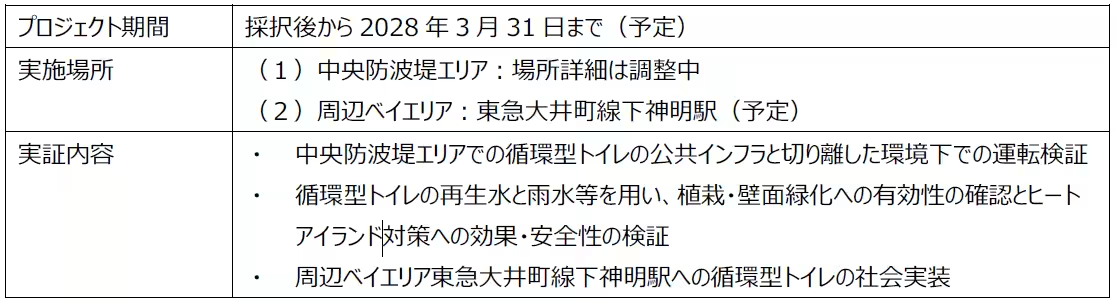
The project's primary goal is to verify the viability of circular toilets that employ complex fermentation technology. Additionally, the project will explore the benefits of urban greening, effective for heat island mitigation through planting and green wall installations. It aims to maximize the efficient use of water resources and improve the urban environment while ensuring that these toilets can be used at a level comparable to standard living conditions even in times of disasters.
In the project's later stages, circular toilets will be installed at stations along the Tokyu line, promoting accessibility and resilience, contributing to circular society initiatives from local high-traffic areas. Through this collaborative effort, the five companies intend to establish operational frameworks for circular toilets, which have mostly been applied in rural settings, and promote their implementation in urban spaces as well, particularly along the Tokyu line and similar environments.
Overview of the Project
1. Future Schedule: A detailed timeline will unfold as the project progresses, with expectations for key milestones across the city.
2. Structure: The consortium functions under a cohesive organizational model designed to facilitate collaboration across different enterprises.
3. Future Developments: Past experiences underline their commitment to disaster response and urban innovation. For instance, Chodai and RQ provided four circular toilets to Noto Town during recovery from the Noto Peninsula earthquake in January 2024, enhancing sanitary conditions for residents lacking functional water infrastructure.
Past efforts have included a two-year experimental project at Tokyu Group's facility in Miyako Island, Okinawa, with data collection initiated for the complex fermentation wastewater recycling system. Now, from April this year, the technology is being integrated into SOIL (Shibuya Open Innovation Lab) for operational validation within a dense urban center.
By installing circular toilets in public spheres, the initiative seeks to raise awareness and accessibility of disaster preparedness solutions, catalyzing a dual focus on environmental care and resilience in urban development.
Details on Circular Toilets
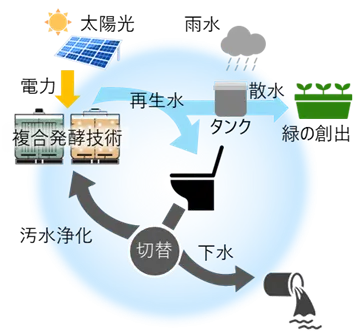
Circular toilets are self-contained systems that treat wastewater—including human waste—on site, allowing for the reuse of treated water for flushing. While traditionally effective in rural areas lacking proper sewage systems, this project aims to assess their functionality in city environments, aligning urban life with sustainable practices.
Insights into Complex Fermentation Technology
Complex fermentation technology leverages microbial action for non-chemical wastewater treatment, minimizing sludge while promoting zero-emission goals. Through these means, the project advocates for environmentally harmonious and sustainable solutions.
Historical Contributions
Providing Circular Toilets to Disaster Areas:
- - Duration: January 24, 2024 - Until evacuation centers were closed (approximately six months).
- - Locations: Multiple public facilities in Noto Town, Ishikawa Prefecture. These toilets contributed to sanitary improvements in high-need evacuation spots post-earthquake, with ongoing usage in community support.
Implementation Overview at SOIL:
- - Duration: April 2, 2025 - March 31, 2026 (anticipated).
- - Location: SOIL, Shibuya.
- - Projects will focus on verifying system efficiency in diverse usage environments. Water quality testing will underpin data reliability.
Experimental Overview at 'Mai Pari' Tropical Fruit Orchard:
- - Duration: February 27, 2023 - March 31, 2025.
- - Location: 'Mai Pari' in Miyako Island, Okinawa.
- - Utilization of treated wastewater for both sanitation and soil health, ultimately building a sustainable agricultural model.
These combined initiatives lay a foundation for a resilient and eco-conscious urban ecosystem, guiding both immediate and long-term environmental agenda in Tokyo and beyond.

Topics Environment)
【About Using Articles】
You can freely use the title and article content by linking to the page where the article is posted.
※ Images cannot be used.
【About Links】
Links are free to use.