




Uncovering the Genetic Abnormalities of Oral Cancer: A Step Towards Early Diagnosis
Uncovering the Genetic Abnormalities of Oral Cancer: A Step Towards Early Diagnosis
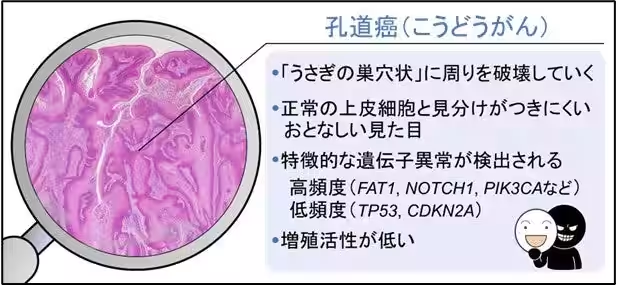
A collaborative team from Okayama University, Osaka University, and Tokyo Science University has achieved significant progress in understanding the genetic profile of a rare type of oral cancer known as 'Cuniculatum Carcinoma.' This specific subtype of squamous cell carcinoma has been notoriously challenging to diagnose due to its subtle appearance, resembling normal epithelial cells. This research aims to pave the way for more accurate and prompt diagnoses alongside potential early treatment options.
Research Overview
On June 7, 2026, the findings from the research group led by Assistant Professor Sawako Ono, Professor Hidetaka Yamamoto, Professor Naozumi Ishimaru, and others were released. They discovered that a staggering 87.5% of Cuniculatum Carcinoma cases exhibited pathological genetic abnormalities. This revelation points to a unique 'genetic pattern' associated with the cancer, which may contribute to its mild appearance that makes diagnosis difficult.
The study analyzed 2,002 cases of squamous cell carcinoma within the oral cavity, identifying the presence of Cuniculatum Carcinoma. Utilizing next-generation sequencing for gene analysis, the team established that this cancer's genetic profile differs significantly from other typical squamous cell carcinomas. Furthermore, they identified that these genetic anomalies relate to lower proliferation rates in cancer cells, indicating a unique biological behavior of Cuniculatum Carcinoma.
Implications of the Findings
The implications of this research are far-reaching. The detailed genetic profiling could dramatically enhance the accuracy and speed of diagnosis, enabling earlier intervention for patients. Additionally, the insights derived from the study could foster the development of targeted therapies tailored to the specific genetic characteristics of Cuniculatum Carcinoma. This can potentially revolutionize treatment options available for this rare cancer type, thus contributing significantly to the field of oncology and improving patient outcomes.
As Dr. Katsutoshi Hirose commented, the struggle to diagnose Cuniculatum Carcinoma has persisted for many pathologists, largely due to the disease's inconspicuous presentation. By elucidating the genetic abnormalities associated with this cancer, the research offers vital clues that could assist pathologists in reaching a more accurate diagnosis.
Publication Details
The results of this groundbreaking research were officially published on May 25, 2026, in the North American Journal of Head and Neck Pathology. The paper titled "Genetic Landscape of Oral Carcinoma Cuniculatum and Its Histological Mimics" highlights the collaborative effort that has taken place to decipher the genetic features of this cancer.
Conclusion
In summary, this research not only provides clarity on the genetic landscape of Cuniculatum Carcinoma but also opens doors to improved diagnostic methodologies and treatment protocols. It underscores the importance of molecular profiling in managing rare cancers and enhances our understanding of cancer biology as a whole. The hope is that these findings will lead to significantly improved standards of care for individuals afflicted with Cuniculatum Carcinoma, potentially reducing misdiagnosis and treatment delays.
For further inquiries regarding this revolutionary study, please reach out to:
- - Assistant Professor Katsutoshi Hirose, Osaka University, Phone: +81-6-6879-2892
- - Assistant Professor Sawako Ono, Okayama University, Phone: +81-86-235-7150
- - Assistant Professor Yuki Fukawa, Tokyo Science University, Phone: +81-3-5803-5454
For news or media inquiries, contact the administration department of the Osaka University Dental School at the provided contact numbers.
This groundbreaking research exemplifies Japan's commitment to advancing its understanding of complex diseases and enhancing treatment options for cancer patients. The ever-evolving field of oncogenomics continues to pave the way for innovative healthcare approaches and improved patient experiences.





Topics Health)



【About Using Articles】
You can freely use the title and article content by linking to the page where the article is posted.
※ Images cannot be used.
【About Links】
Links are free to use.