



Development of a Junctionless Thermal Diode Using Superconductors: A Breakthrough in Thermal Management Technology
Introduction
In recent years, the need for advanced thermal management technologies has been recognized globally, especially for high-performance electronic devices. The ability to control heat flow can significantly enhance device efficiency. One promising approach involves the development of thermal switching materials, which can dramatically alter thermal conductivity, allowing for precise heat flow regulation. A research team at Tokyo Metropolitan University has been making strides in this field, specifically focusing on superconducting materials to create innovative thermal management solutions.
The Breakthrough
On October 21, 2025, the research team announced their latest achievement: the development of a junctionless thermal diode utilizing high-purity lead (Pb) and aluminum (Al) without traditional junctions. This diode is designed to take advantage of the significant change in thermal conductivity observed in superconductors at their transition temperature. Unlike conventional diodes that regulate electric current, this thermal diode enables the rectification of heat flow. This marks a significant milestone as it is reportedly the first clear experimental observation of thermal rectification through the combination of Pb and Al.
How It Works
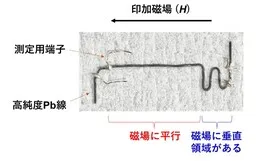
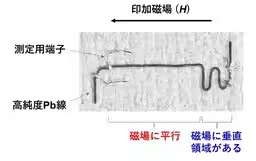
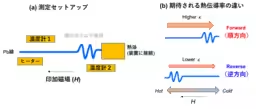
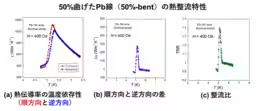
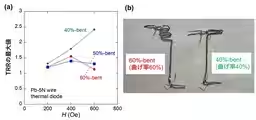
The thermal diode operates on the principle that when a temperature gradient is applied across the material, the ability for heat to flow is notably different depending on the direction—a phenomenon utilized similarly to electrical rectification. In typical applications, thermal flow is challenged by junction thermal resistance, which was a major hurdle in achieving effective thermal control. In the recent study, the team avoided this issue by partially bending a single high-purity lead wire, thus eliminating junction points entirely. Their experiments showcased a thermal rectification ratio exceeding two, confirming the diode's operational effectiveness.
Research Background
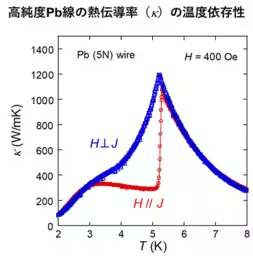
With the rapid integration of diverse electronics, there's an increasing demand for technologies capable of controlling thermal flow. Thermal switches and rectification materials are particularly critical. Historically, the transition to superconductivity drastically reduces thermal conductivity, making such materials viable thermal switches. Previous theoretical work suggested superconductors' potential in thermal diodes, yet experimental validations were scarce until the Tokyo Metropolitan University team’s recent findings.
Experimental Details
In their experiments, the team bent the high-purity Pb wire and applied a magnetic field. This bending influences the direction of the magnetic field the wire experiences, resulting in vastly different thermal conductivity properties based on the orientation of the applied magnetic field. Using a four-terminal method, the team accurately measured thermal conductivity in both flow directions under varying magnetic fields. The results showed significant advantages in thermal flow in one direction over the other, providing clear evidence of thermal rectification.
Understanding the Results
For bent samples, the observation of a thermal rectification ratio of over two confirms the efficiency of this novel approach. Even with minimal differences in temperature—around 1 K—effective thermal rectification was achieved. This development presents a promising new avenue for potential high-performance applications in low-temperature devices. As the research unfolds, optimizing the bending and material properties is expected to enhance rectification even further.
Implications and Future Directions
This innovative junctionless thermal diode could revolutionize the thermal management field, where competition is heating up. The ability to operate with minimal magnetic fields and achieve high efficiency with slight temperature gradients makes it an attractive solution for future electronic devices. Although current operational temperatures are limited due to superconducting properties, the implications of this research could pave the way for new materials and designs that extend applications across various fields. The findings will be published in the esteemed Journal of Physics: Materials, further ensuring the research's impact reverberates through the scientific community and industry.
Conclusion
The successful development of a junctionless thermal diode represents a significant leap forward in thermal management technologies, particularly for low-temperature systems. As researchers continue to refine these techniques, the possibilities for enhanced device performance continue to expand, promising exciting advancements in electronics and other fields related to thermal control.
Reference
- - Title: Thermal rectification in jointless Pb solid wire
- - Authors: Masayuki Mashiko, Poonam Rani, Yuto Watanabe, Yoshikazu Mizuguchi (responsible author)
- - Published in: Journal of Physics: Materials
- - DOI: 10.1088/2515-7639/ae24af
Topics Consumer Technology)
【About Using Articles】
You can freely use the title and article content by linking to the page where the article is posted.
※ Images cannot be used.
【About Links】
Links are free to use.