



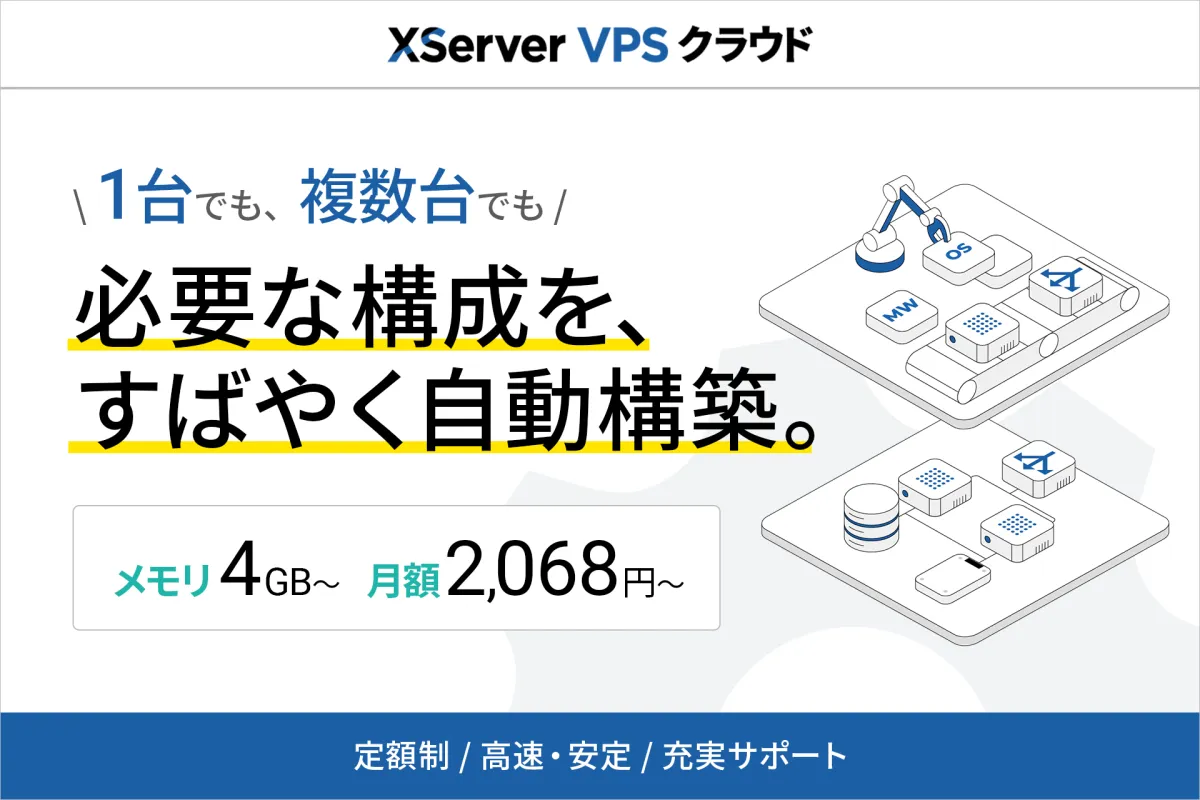
Introducing XServer VPS Cloud: Effortless Server Setup for All Business Needs
Overview of XServer VPS Cloud
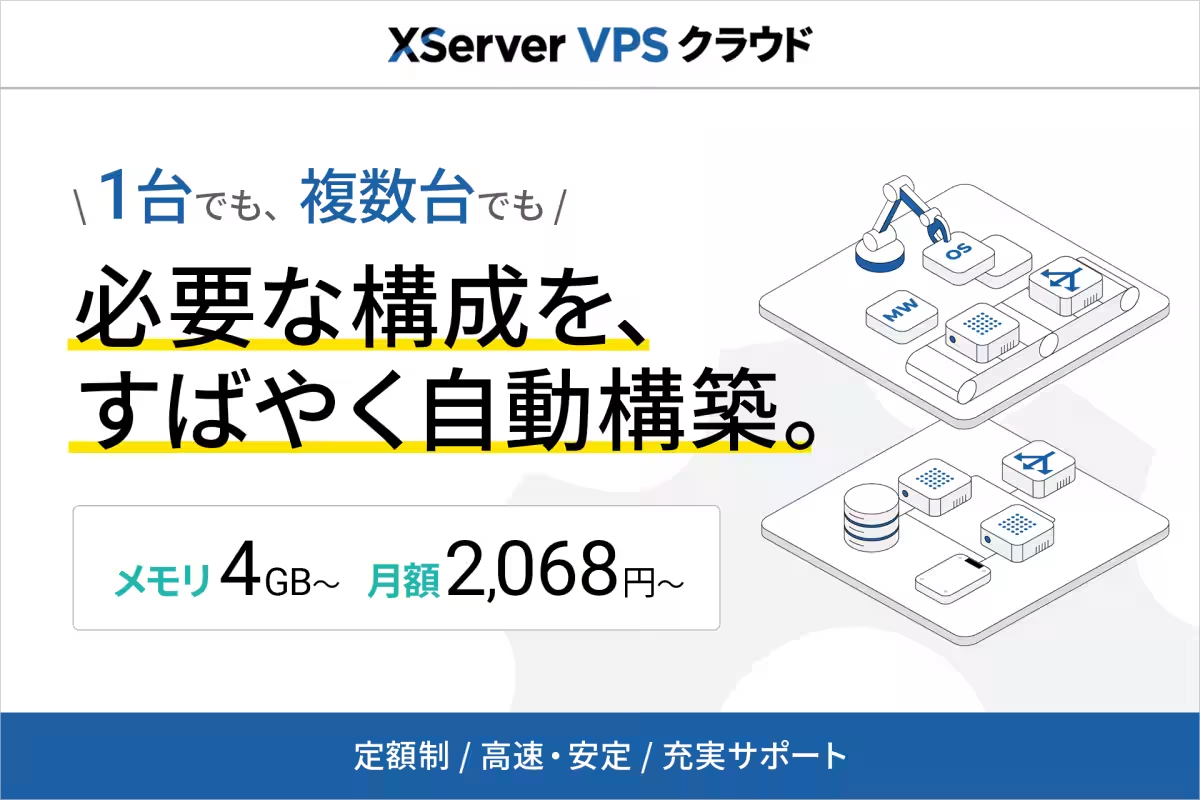
On August 31, 2026, XServer, Inc. launched its cloud-based VPS service, XServer VPS Cloud, designed to meet various business needs seamlessly. Whether you require a single VPS instance or a complex multi-server structure, this innovative service allows users to quickly set up an environment that suits their specific applications.
Users can choose from templates based on their requirements, such as 'Load Resistant Configuration' or 'Security-Focused Configuration', and set the number of VPS instances or plans. This service automatically combines multiple VPSs, database servers, NFS, and L4 load balancers to create a cohesive server environment without the hassle of manual configurations.
Key Features of XServer VPS Cloud
1. Effortless Multi-Server Configurations
Setting up complex multi-server configurations is simplified through the selection of tailored templates. Users can easily manage the demand of their web applications, allowing them to jumpstart their services with minimal effort.
2. Managed Database and Load Balancer Services
With XServer VPS Cloud, users gain access to managed services for database servers and load balancers. The platform takes care of setting up OS and middleware, greatly reducing the complexity and effort associated with infrastructure deployment.
3. Daily Automated Backups
To further enhance reliability, all VPS instances benefit from daily automated backups at no additional cost. This feature safeguards user data and ensures recovery from mishaps or configuration errors.
4. Scalability and Flexibility
The service is adaptable, allowing users to start with a single VPS and scale up according to their needs. Users can increase resources like VPS instances, select relevant plans, and adjust the operating system as their requirements grow.
5. Private Network Connectivity
A key advantage of XServer VPS Cloud is its ability to connect various components—including VPSs and database servers—via a private network. This segmentation enhances security by separating external communications and internal traffic.
6. Fixed Pricing Model
XServer VPS Cloud is built on a new hardware design optimized for performance and stability. Users enjoy a predictable cost structure free from sudden price hikes based on usage metrics such as data transfer or system adjustments.
7. Centralized Resource Management
Even with multiple servers or resources deployed, users can manage everything through a user-friendly web interface. This centralized control simplifies operations, from configuration changes to reboots.
8. Streamlined Initial Setup
The platform provides OS images and setup scripts, making it simple for users to initiate server creation alongside OS installations, reducing the hurdles before going live.
Ideal Use Cases
XServer VPS Cloud serves myriad applications, including:
- - Web services and SaaS infrastructure
- - E-commerce and membership site operations
- - Application development and testing environments
- - Load distribution using multiple web servers
- - Management of internal systems and applications
- - Development and operation of client-facing systems
Pricing Plans
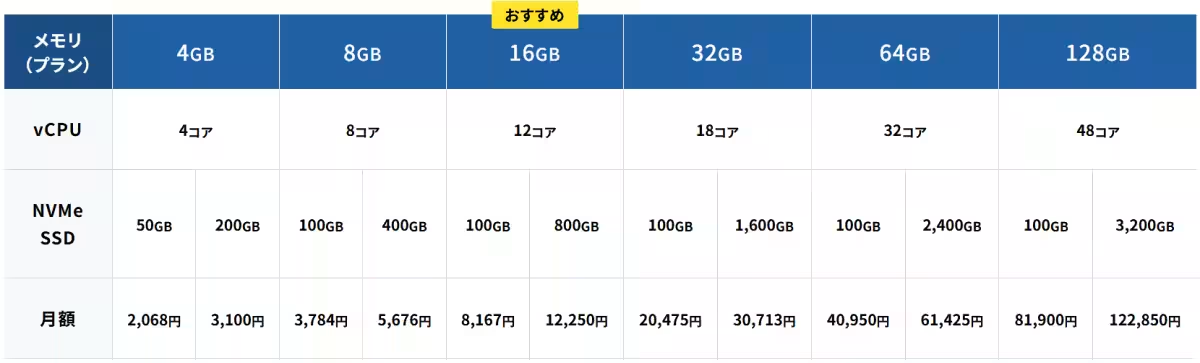
XServer VPS Cloud presents an array of flexible pricing plans to cater to diverse business needs, ensuring users get the best value.
Launch Campaign
To celebrate the launch, XServer offers a promotion from August 31 to October 26, providing an extension of the service duration by three months for those who sign up within this period.
Future Features Enhancements
XServer plans to continue expanding the capabilities of VPS Cloud, focusing on support for corporate usage. Future releases may include an API for server automation and integration with external tools, as well as tailored options for Windows environments and load balancing enhancements.
Company Information
XServer, Inc., headquartered in Osaka, Japan, specializes in cloud infrastructure services and web application development. Established in 2004, the company prides itself on delivering top-notch internet-related services. For more information, visit XServer.
Topics Consumer Technology)
【About Using Articles】
You can freely use the title and article content by linking to the page where the article is posted.
※ Images cannot be used.
【About Links】
Links are free to use.