



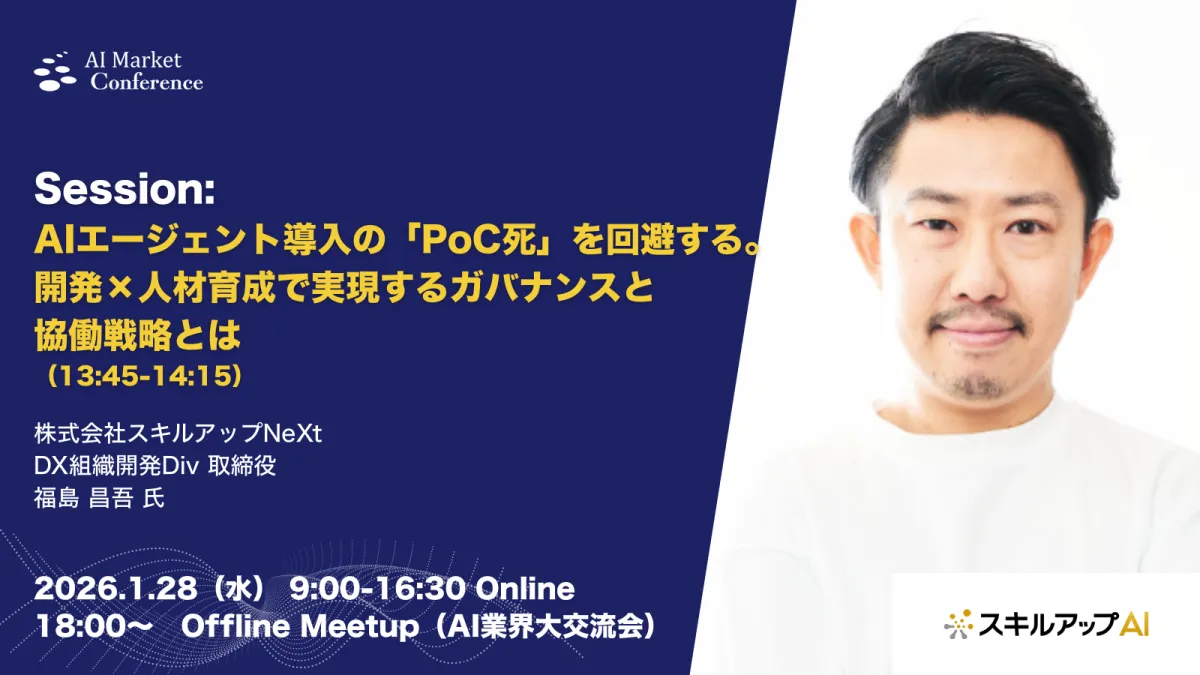
Navigating AI Agent Adoption: Strategies to Prevent 'PoC Failure' at the 2026 AI Market Conference
Exploring Effective Strategies for AI Agent Adoption
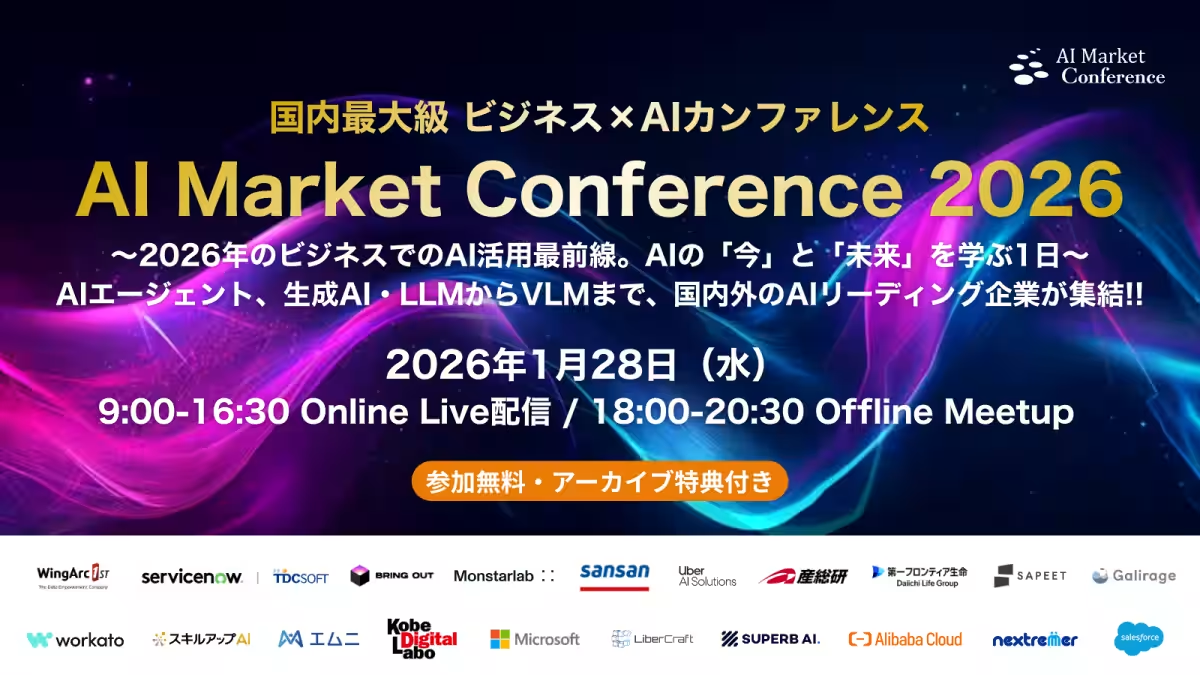
On January 28, 2026, the AI Market Conference will host a pivotal session that addresses a pressing challenge in the current AI landscape — avoiding 'Proof of Concept' (PoC) failures in implementing AI agents. Organized by BizTech Corporation in Tokyo, this conference is poised to be one of Japan's largest gatherings focusing on AI advancements.
The Current AI Landscape
The growth of generative AI has ushered in what many experts refer to as the era of self-sustaining AI agents. However, as organizations dive into this space, they face significant hurdles. Namely, the prevalence of 'PoC failures' due to absent strategic frameworks and the tendency for AI systems to become stagnant as mere unused assets. These issues highlight the urgent need for a well-structured approach to integrating AI into business processes.
Insights from SkillUpNeXt
One key presentation at the conference will be delivered by Shogo Fukushima, Executive Director of SkillUpNeXt. With a robust background in CRM strategy and product development, Fukushima will provide invaluable insights into how organizations can overcome the challenges posed by AI implementation. SkillUpNeXt, a prominent partner of Microsoft and a leader in digital transformation, aims to unveil strategies that blend development and human resource training to foster effective governance and collaborative practices.
The Three Engines of AI Success
Fukushima emphasizes the importance of moving beyond mere tool implementation. His session aims to elucidate the three critical 'engines' that drive successful AI adoption:
1. Education: Continuous learning and training are vital to ensure that all team members are equipped to utilize AI technologies effectively. Training not only enhances skills but also fosters a culture of innovation within the organization.
2. Rule Establishment: The creation of clear guidelines and best practices is essential for responsible AI usage. Establishing rules minimizes risks associated with AI misuse and ensures alignment with organizational goals.
3. Community Building: Encouraging collaboration among employees reinforces a sense of shared purpose and collective responsibility in leveraging AI for business success. Community initiatives enable knowledge sharing and facilitate a better understanding of AI's potential across departments.
A Live Discussion with Industry Experts
During the conference, attendees can expect a mix of keynote speeches and specialized tracks focusing on various aspects of AI implementation. Topics will include real-world applications of AI, case studies illustrating success stories, and strategies for aligning AI initiatives with business objectives. It’s an excellent opportunity for businesses facing challenges in AI adoption to gain insights directly from industry leaders.
Why Attend?
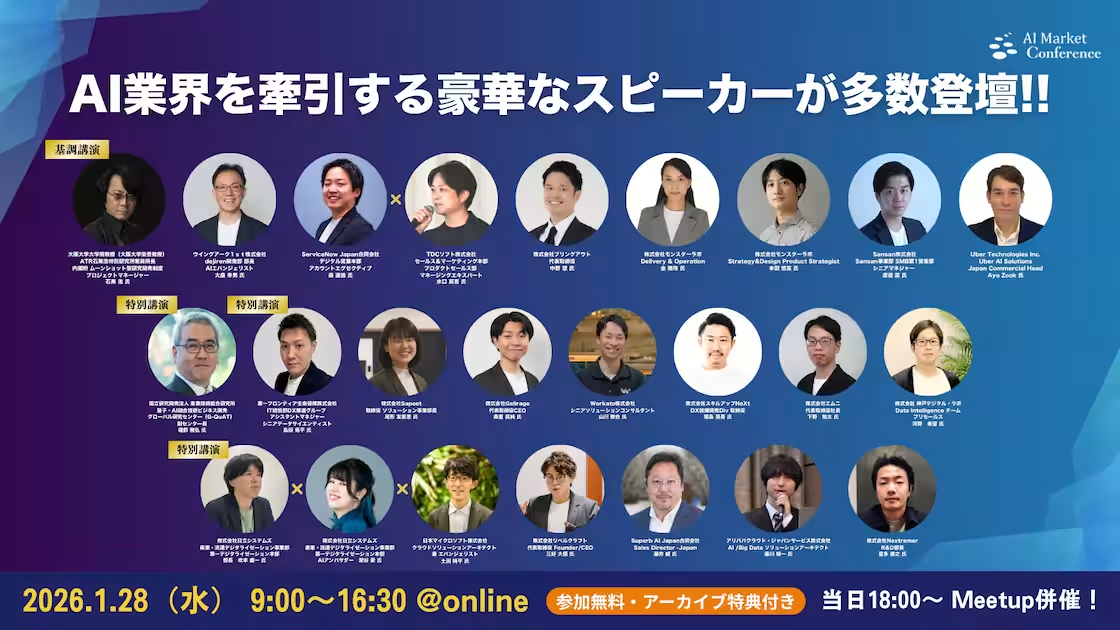
The AI Market Conference 2026 offers a unique platform for both seasoned professionals and newcomers aiming to understand the complexities of AI in business. With a lineup of expert speakers, including leaders in AI ethics, security, and application, the event promises to be enlightening.
Moreover, with free registration and options for both online and offline participation, the conference is accessible to a broad audience. Participants unable to attend live will also receive a link to exclusive recorded sessions, ensuring no one misses out on key learnings.
Future Implications
As organizations strive to integrate AI into their operations, understanding governance frameworks and collaboration strategies will be paramount. Fukushima's session at the conference will be an essential guide in building a sustainable AI ecosystem — one that thrives not on isolated experiments but on holistic, integrated approaches to technology and talent management.
The AI Market Conference 2026 is not just another event; it is a catalyst for transformation in how companies leverage AI to drive business success. Mark your calendars for January 28 and secure your spot in this engaging dialogue about the future of AI in business.
Topics Entertainment & Media)



【About Using Articles】
You can freely use the title and article content by linking to the page where the article is posted.
※ Images cannot be used.
【About Links】
Links are free to use.