



Exploring Solar Investment: Awareness vs. Tax Benefits Among Investors
Exploring Solar Investment: Awareness vs. Tax Benefits Among Investors
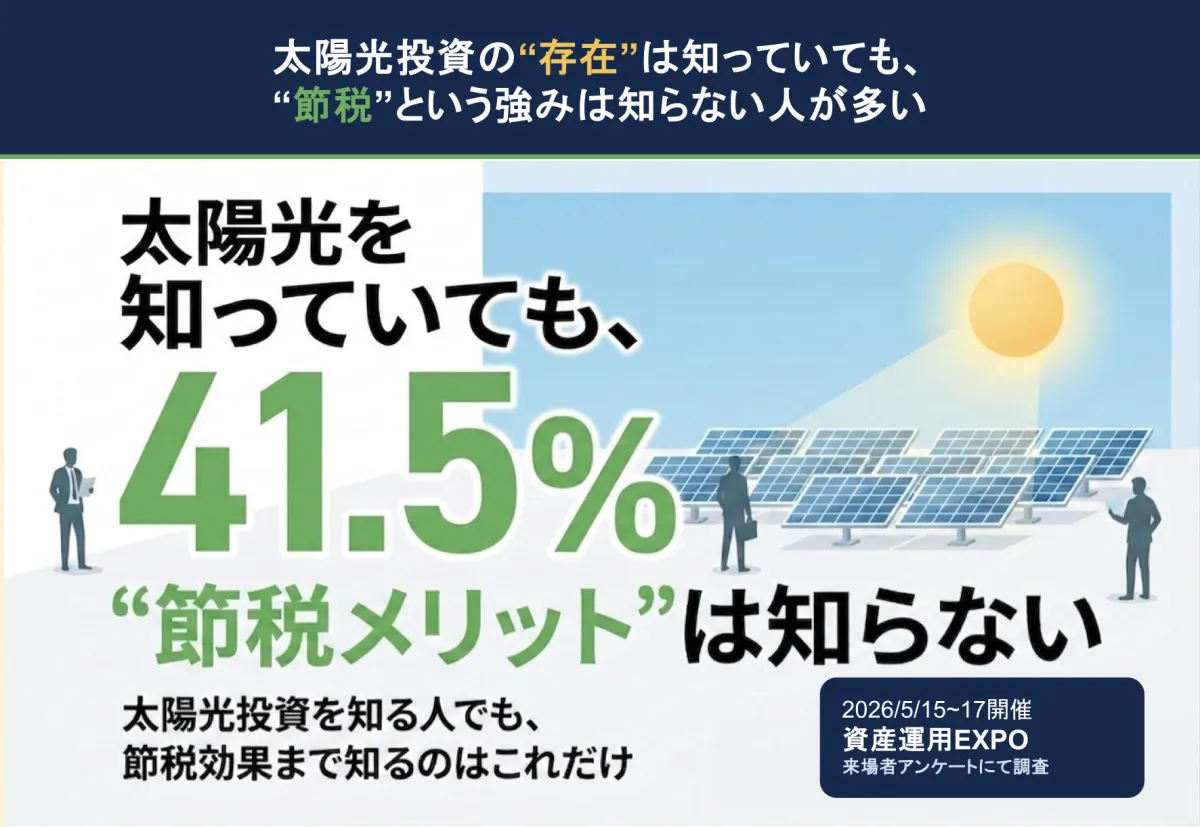
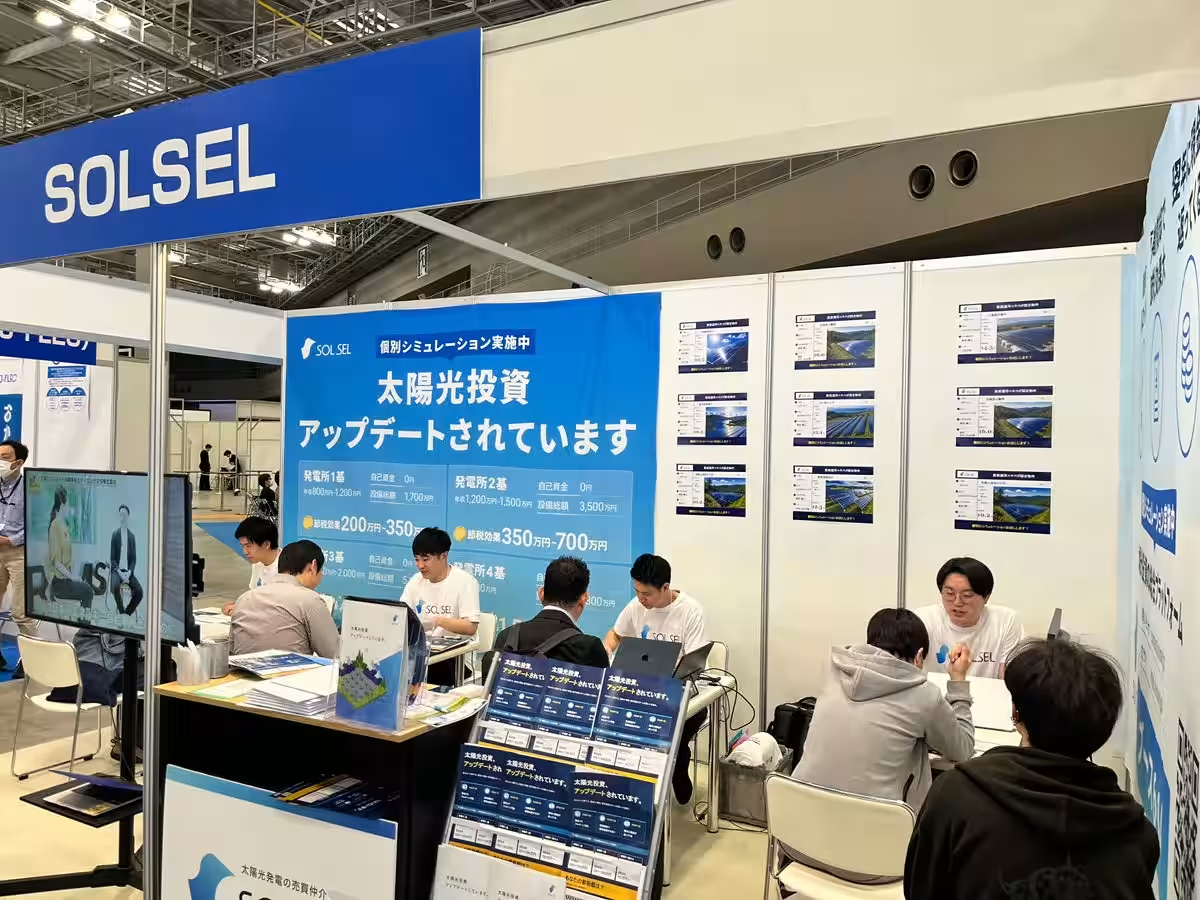
In a recent survey conducted by SOLSEL, a company specializing in brokerage services for second-hand solar power generation systems, significant insights emerged regarding investor awareness of solar energy investments and their tax benefits. The survey was conducted during the Asset Management Expo held at Tokyo Big Sight from May 15 to 17, 2026.
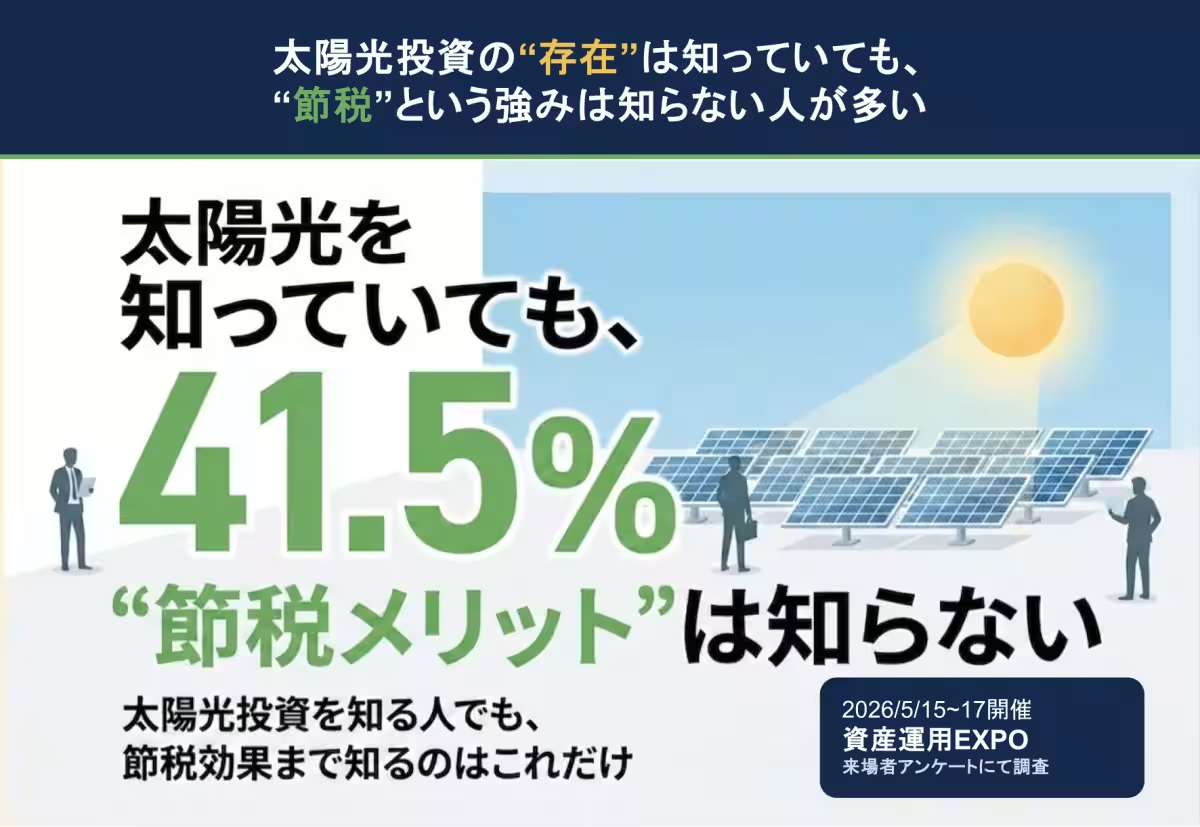
The results revealed that only 41.5% of the participants who acknowledged their awareness of solar investments were informed about the major advantage of tax savings. This calls into question the effectiveness of outreach and education related to solar investment benefits, particularly among a demographic that is not only knowledgeable about investments but is also characterized by a high average income.
The Survey Findings: A Gap in Understanding
Out of 134 valid responses collected from 161 total participants, those aware of solar investment were segmented. Among 41 respondents who recognized solar investment’s existence, only 17 (41.5%) understood the tax-saving benefits, while 24 participants indicated that though they were aware of solar investments, they were unfamiliar with the specific advantages that come with them. This means that over half of the participants could be missing out on substantial savings due to lack of information.
The implications of this knowledge gap are profound, especially within a group that is otherwise highly engaged in investment opportunities. The average age of survey participants was around 44, with nearly a third reporting incomes over 10 million yen. Despite their investment savvy, many continue to operate under the outdated belief that solar energy investment is no longer a viable opportunity.
Misconceptions About Solar Investments
Engaging with attendees at the expo, a prevalent sentiment expressed was, “Solar was good in the past, but it is difficult now.” Such opinions stem from historical context. Following the 2011 Great East Japan Earthquake, the government accelerated the adoption of renewable energy, establishing the Feed-in Tariff (FIT) system in July 2012. Initially, solar power offered attractive rates of around 40 yen/kWh, leading to a surge in investment as the expected returns seemed very promising. However, with increased installation and decreasing costs, the selling price has dropped significantly, falling to about 10 yen/kWh in recent years.
The robust initial profitability attached to solar investments, along with the perceived waning of high returns, has formulated a misguided narrative that solar energy investments have become obsolete. This perception fails to account for the evolution of the solar investment landscape towards a matured second-hand market where existing, operational solar plants can be traded, offering new opportunities for investment.
The Evolution of Solar Investment
Today’s solar investments have transformed drastically. The previous model focused on constructing new solar facilities for high returns has shifted to one that prioritizes purchasing existing facilities in the secondary market. This evolution encompasses several new facets:
- - Objective Shift: Investors are moving from seeking high returns to building stable portfolios through thoughtful tax planning.
- - Data-Driven Decisions: Instead of relying on intuition as in the past, investors can now base their evaluations on historical performance data and environmental assessments.
In essence, solar investments have transitioned from being a high-risk speculative endeavor to a strategic method of growing assets securely and sustainably, leveraging tax benefits, operational data, and second-hand market opportunities.
The SOLSEL Perspective
Takuya Ishino, the representative of SOLSEL, emphasized at the expo that despite the participants being generally informed and engaged in investments, many still clung to outdated perceptions about solar power investments. He expressed astonishment that the notable tax benefits of solar investments were not more widely appreciated.
“It is our role to educate investors about the current state of solar investment,” Ishino stated, indicating that disparities in understanding can be bridged through comprehensive education and awareness efforts.
The findings from this survey not only illustrate a gap in knowledge regarding solar investments but highlight the need for targeted initiatives to update and inform potential investors about the realities of the market, especially concerning tax benefits.
Moving forward, SOLSEL plans to initiate a series of discussions aimed at addressing the identified issues, including:
1. Cognitive Gap: Understanding that while many recognize the name, they do not grasp the benefits.
2. Behavioral Gap: Recognizing opportunities yet failing to act upon them.
3. Awareness Gap: Perception that personal tax strategies are not being fully utilized.
Conclusion
The survey underscores a critical moment for solar investment: addressing misconceptions and enhancing knowledge about tax-saving strategies could significantly influence how investors engage with this sector. As SOLSEL commits to reshaping this narrative, there lies potential for renewed growth in solar investments aligned with modern-day realities and benefits.
Topics Consumer Technology)
【About Using Articles】
You can freely use the title and article content by linking to the page where the article is posted.
※ Images cannot be used.
【About Links】
Links are free to use.