



Segway Honored with HKQAA Award for Sustainable Product Innovations
Segway's Commitment to Sustainability Recognized by HKQAA Award
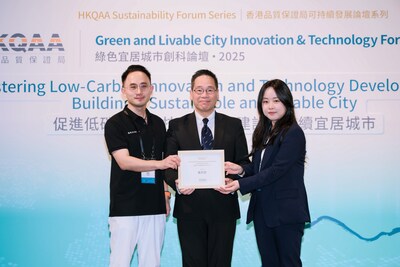
On December 22, 2025, Segway, a leading provider of mobility solutions, proudly announced that it received the Green and Sustainable Innovation and Technology Contribution Award from the Hong Kong Quality Assurance Agency (HKQAA). The prestigious award was presented at the HKQAA Green and Livable City Innovation Technology Forum held in Hong Kong Science Park on December 17. This honor highlights Segway's ongoing commitment to sustainability, particularly embodied in the eco-friendly design principles of its electric scooters, Apex D110 and Max S90L.
In recent years, Segway has expanded its commitment to sustainability by focusing on environmentally friendly product innovations, responsible supply chains, and clean energy production. The company continuously strives to meet the growing expectations of cities, operators, and end-users regarding clean and transparent mobility offerings.
Leading the Charge in Sustainable Design
Segway has integrated sustainability into its product design and manufacturing processes long before industry standards emerged. Notably, since 2023, the S90L has received the first Life Cycle Assessment (LCA) certification in the industry. This international benchmark allows for the assessment of the overall environmental impact of a product from raw material extraction to end-of-life disposal. Moreover, three other Segway models, including the D110, have also received LCA recognition, showcasing the company’s commitment to sustainable practices aligned with global standards and measurable environmental metrics.
A significant milestone in this journey has been Segway’s proactive use of recycled materials. Beginning in 2021, Segway became a pioneer in incorporating recycled materials into its e-scooters. The models Apex D110, Max Plus X, and Max S90L now contain approximately 36.5%, 31.84%, and 30.16% recycled materials (excluding batteries) as of 2025. This initiative demonstrates that sustainable design is not only certification-ready but also market-viable, achieving both ecological and operational excellence.
Clean Energy Production Initiatives
Segway's production facility has been equipped with a solar energy system that produces clean power for the company while supplying excess energy back to the grid. Between June and August 2025, more than 65% of the factory's electricity consumption derived from renewable sources. This commitment to sustainability not only benefits Segway but also extends its advantages to the local community through the feed-in of surplus clean energy. The company generated 143 Green Energy Certificates (GECs) during this period, quantifying its contribution to sustainable energy usage.
According to Zack Yan, deputy general manager of Segway's commercial mobility division, "Utilizing green energy in our production processes and feeding surplus electricity back into the national grid demonstrates our commitment to the environment and fits well within the larger picture of shared micromobility." He emphasizes that supporting the national energy transition aligns with both national and international goals for smart, low-carbon cities.
Building a Sustainable Ecosystem in Supply Chains
Sustainability in production is never the responsibility of a single entity; it relies heavily on a fully integrated, environmentally conscious supply chain. At Segway, the practice of environmental principles begins right at the outset of production. All supply chain partners are aligned with common sustainability goals. The company hosts an annual Supply Chain Convention where Segway and its partners work collaboratively to promote sustainable innovations and enhance product efficiency across all sectors.
Beyond the convention, Segway has implemented a robust supply chain management and assessment system to tighten expectations from its partners. A significant aspect of this system is an incentive mechanism for sustainability embedded within the annual supplier audit process. This system encourages partners to enhance their efforts and innovations regarding environmental, social, and governance initiatives.
The HKQAA Award serves as a significant affirmation of Segway's ambition to strengthen its role as a leader in fostering a more environmentally friendly and responsible industry future. By combining sustainable design, clean energy production, and a highly engaged supplier network, Segway showcases that carbon-neutral mobility is scalable, dependable, and primed for deployment worldwide. The company is set to continue pushing the boundaries of sustainable micromobility.
Conclusion
In conclusion, Segway's recognition by the HKQAA award symbolizes more than just an accolade; it reflects the company's relentless pursuit of sustainable innovation in mobility solutions. As urban environments evolve and the call for eco-friendly transport grows louder, Segway is not merely responding to demands but actively shaping the narrative of sustainable mobility centered around clean energy and responsible practices.
Topics Consumer Technology)
【About Using Articles】
You can freely use the title and article content by linking to the page where the article is posted.
※ Images cannot be used.
【About Links】
Links are free to use.