



Collaborative Initiative for Decentralized AI Data Centers to Enhance Power and Communication Infrastructure
Collaborative Initiative for Decentralized AI Data Centers
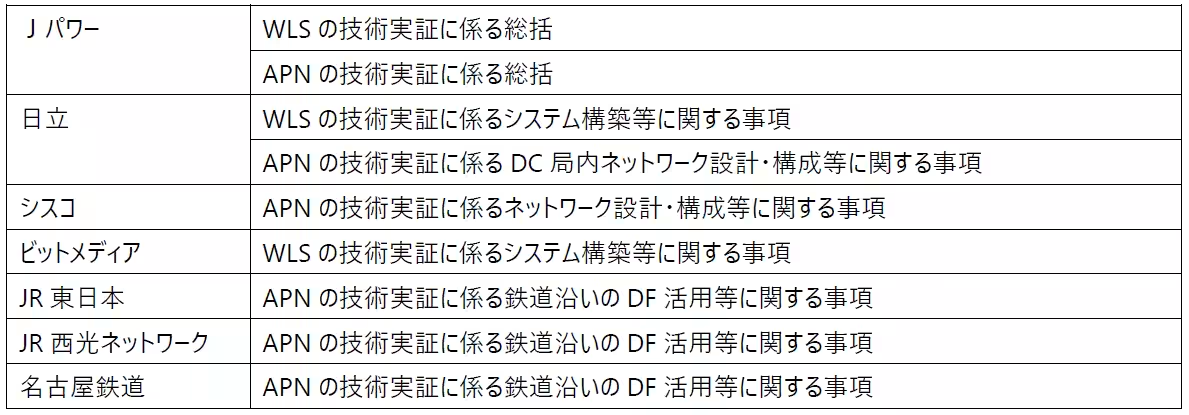
In a significant step towards enhancing the integration of decentralized artificial intelligence data centers (AI-DC), a consortium comprising J-Power, Hitachi, Cisco Systems, Bitmedia, East Japan Railway Company (JR East), West Japan Railway Company (JR West), Nagoya Railway, and other partners has embarked on a collaborative exploration of workload shift technology and wide-area all-optical networks. This follows the commencement of a joint examination aimed at establishing a robust operational model leveraging unused optical fiber networks owned by railway operators nationwide.
Objectives of the Initiative
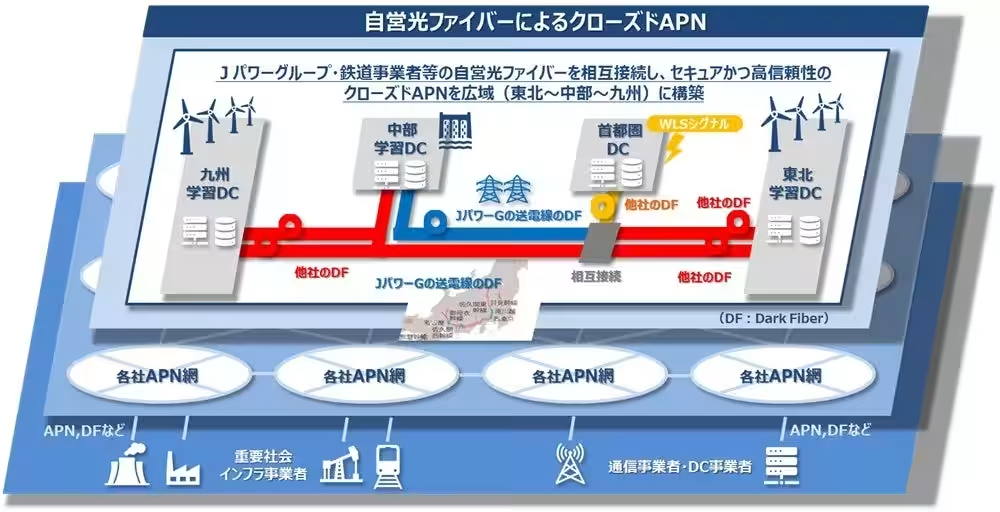
The main objective of this collaboration is to create a new paradigm for the operation of decentralized data centers that can stabilize and optimize energy systems. By utilizing unused or excess dark fiber lines from railway operators, the initiative aims to construct a secure, self-owned All-Optical Private Network (APN) that traverses the country. This network will enable the interconnected and coordinated operation of multiple AI-DCs, functioning collectively as a single large-scale data center.
The establishment of this model aims to contribute to the ‘Watt-Bit Coordination’ policy, which seeks to enhance both the power and information communication infrastructure in an integrated manner. This approach is anticipated to promote the stability and efficiency of the power system, facilitate the formation of decentralized digital infrastructure, and foster regional symbiosis.
Background and Context
With the increasing reliance on generative AI, the need for secure AI data centers that can handle sensitive and voluminous data safely is of utmost importance for social infrastructure providers. In response to this growing demand, J-Power and Hitachi have established a partnership focused on the construction and operation of AI-DCs. Their collaboration aims to combine J-Power's national carbon-neutral power sources and Hitachi’s expertise in IT equipment and operating know-how.
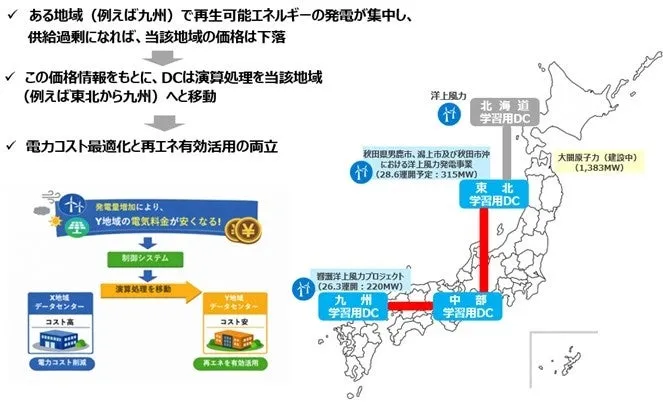
As both computing and power demands from data centers expand rapidly, they significantly impact power systems. This calls for a distributed operational model for data centers that minimizes regional and temporal concentrations, achieving stability and efficiency through flexible workload management using low-latency, high-capacity optical networks.
Key Roles of Participants
The strength of this initiative lies in the collaboration of each participating organization, leveraging their respective strengths in technology, knowledge, and expertise. Through mutual connection of their optical fiber infrastructures, the consortium aims to establish a cutting-edge, secure wide-area APN. The railway operators will play a crucial role by utilizing their idle or surplus fiber lines to create a reliable communication backbone across the nation.
Technical Exploration of Workload Shifts
The initiative involves rigorous technical examinations of workload shifts (WLS), optimizing how computational loads can be shifted in time and space to balance power supply and demand. This is critical for ensuring efficient utilization of computational resources while stabilizing power systems.
Research on Wide-Area APN Implementation
To facilitate a seamless operational integration of distributed data centers across various regions, this project will validate the interconnection of AI-DCs via wide-area APN, assessing requirements such as communication performance and transmission quality essential for decentralized operations.
Contributions to Sustainable Society
This collaborative effort not only prioritizes the advancement of technology but also aligns with sustainability goals. As the world gravitates towards renewable energy sources, integrating AI-DCs within a decentralized network can significantly enhance operational efficiency while promoting environmental consciousness. Together, these organizations are positioning themselves to respond adeptly to future challenges while creating sustainable and resilient energy infrastructures.
In conclusion, this joint initiative represents a crucial step toward revolutionizing the landscape of AI data management and energy distribution, striving for a harmonious fusion of technological advancement and ecological responsibility.
Topics Consumer Technology)

【About Using Articles】
You can freely use the title and article content by linking to the page where the article is posted.
※ Images cannot be used.
【About Links】
Links are free to use.