



Revolutionizing Electrical Characteristics Evaluation for Semiconductor Insulating Films
Introduction
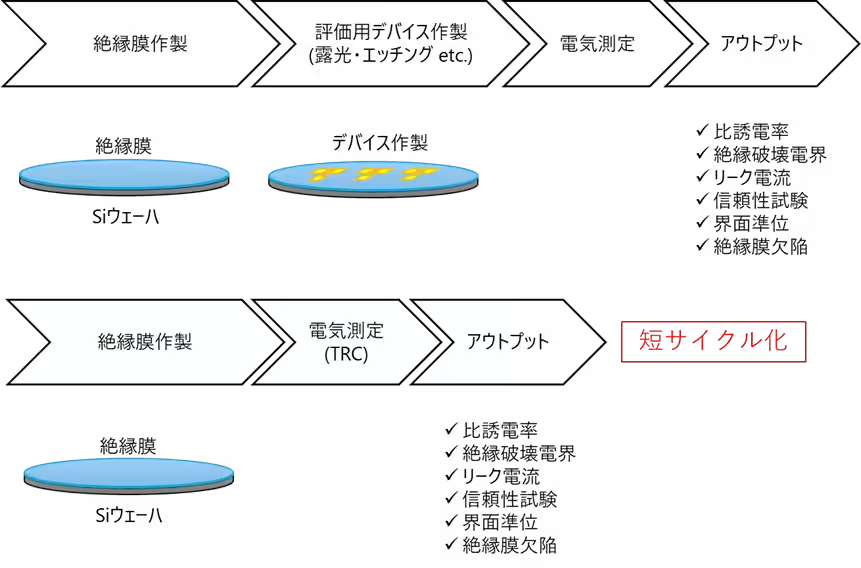
The Toray Research Center (TRC), located in Nihonbashi, Tokyo, has developed a state-of-the-art system designed to evaluate the electrical characteristics of insulating films for semiconductor substrates, allowing for assessments to be completed without the need to create evaluation devices. This innovative approach, utilizing a new type of mercury prober for 300 mm wafers, significantly accelerates the evaluation process, vastly reducing development cycles.
Background
The rising use of generative AI has placed emphasis on the need for low-power and high-performance data centers. To meet these demands, enhancing the insulating properties of films and minimizing defects is paramount. The quality of these insulating films is critical as it directly influences the performance and lifespan of advanced semiconductors. Given that insulating films can be less than 1 nm to several nm thick in cutting-edge semiconductors, evaluating their electrical properties and defects typically requires highly specialized techniques and significant time to fabricate necessary evaluation devices.
New Evaluation Technology
TRC has developed an integrated evaluation framework that employs the latest 300 mm mercury prober to conduct electrical characteristic assessments directly on unprocessed wafers. By combining this method with deep-level transient spectroscopy (DLTS), TRC can effectively evaluate defects within and at the interface of insulating films, facilitating a rapid screening of materials and enhancing development efficiency.
Features of the New Service
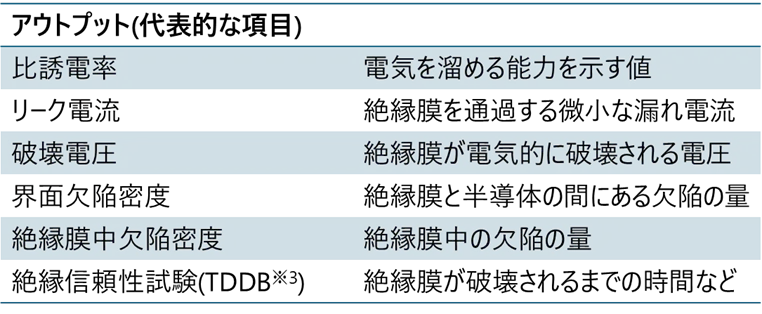
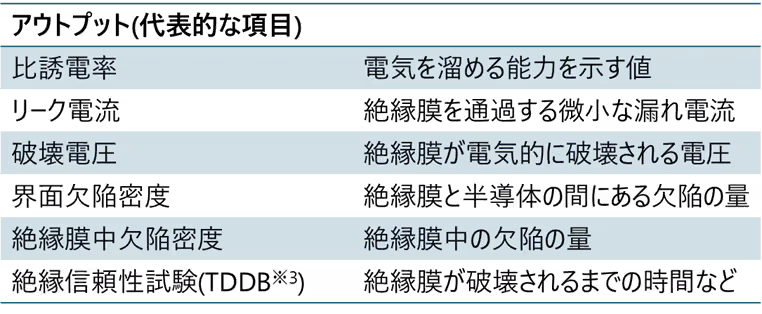
1. State-of-the-Art Mercury Prober: The introduction of the latest mercury prober for 300 mm wafers allows for tests to be conducted without the need for electrode formation. This avoids the lengthy electrode formation process traditionally required, thus shortening the time from material development to reliability screening. Key evaluation parameters include:
- Relative permittivity
- Leakage current
- Breakdown voltage
- Insulation reliability tests (such as TDDB)
2. Precision in Defect Analysis: By leveraging TRC’s unique advancements in using the DLTS method, the evaluation of electrical defects in ultra-thin insulating films has become much more reproducible. Through optimized measurement conditions and innovative electrode structures, TRC has achieved superior quantitativeness and improved activation energy resolution compared to conventional electrical measurements.
Future Developments
Looking ahead, Toray Research Center aims to enhance its electrical characteristics evaluation capabilities while combining them with its various existing analyses, such as material property evaluations and structural/chemical analyses. This will enable TRC to provide comprehensive analytical services tailored to the specific development stage and challenges faced by their clients.
Terminology
- - Mercury Prober: A device that temporarily forms electrodes on the wafer's surface using mercury to measure electrical characteristics.
- - DLTS (Deep Level Transient Spectroscopy): A technique that assesses the time-dependent changes in electrical characteristics to evaluate defects present within semiconductors or insulating films, critical for device performance.
- - TDDB (Time Dependent Dielectric Breakdown): A test that measures the time until dielectric breakdown occurs under a constant voltage, processed statistically to evaluate the durability and long-term reliability of insulating films.
Topics Consumer Technology)
【About Using Articles】
You can freely use the title and article content by linking to the page where the article is posted.
※ Images cannot be used.
【About Links】
Links are free to use.