




Mitsui Sumitomo Bank Launches Project to Enhance Security Token Transactions Using Stablecoins
Introduction
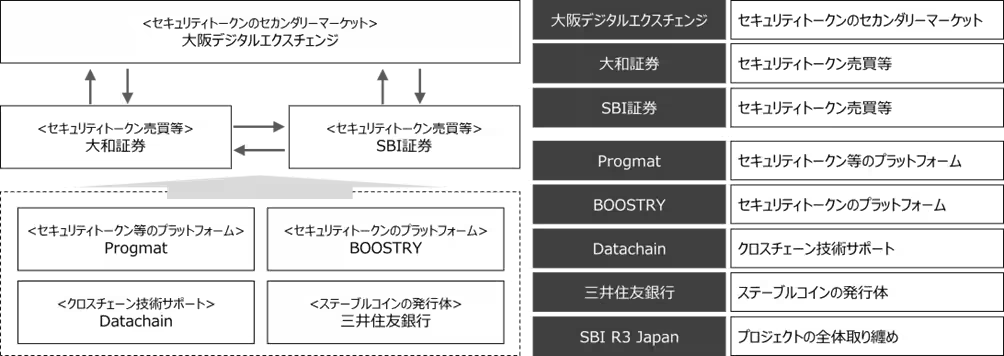
Mitsui Sumitomo Bank, alongside several major partners including Daiwa Securities, SBI Securities, and ODX, has launched a groundbreaking project known as Project Trinity. The aim of this initiative is to enhance the efficiency and reduce risks associated with payments in secondary market transactions of security tokens through the use of stablecoins. Initial discussions on this project began in April 2023 with a select group of companies, but it has now expanded to include more participants and is officially underway.
Background and Objectives
The security token market in Japan is witnessing substantial growth, having surpassed ¥193.8 billion in cumulative issued amount by July 2025. It is anticipated that the issuance of real estate security tokens will accelerate from 2025 onwards, especially with upcoming tax reforms allowing more asset-backed security tokens. Moreover, the launch of the secondary market for security tokens, START, by Osaka Digital Exchange in December 2023, is expected to facilitate trading, further expanding the market's scope.
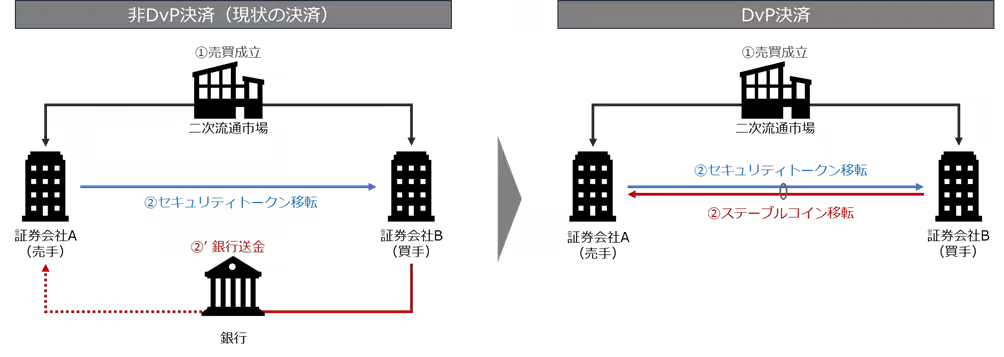
However, a significant issue has emerged in the settlement of trades in the secondary market. The simultaneous exchange of security tokens and funds does not currently occur, which poses counterparty credit risks. Fortunately, the issuance of stablecoins compliant with money settlement laws is becoming a feasible solution. Stablecoins are being recognized as a promising means to streamline and enhance the securities settlement process in the future. Project Trinity aims to leverage blockchain smart contracts to facilitate Delivery Versus Payment (DvP) settlements, thereby improving payment efficiency and structurally eliminating counterparty credit risks in secondary market transactions.
Future Vision
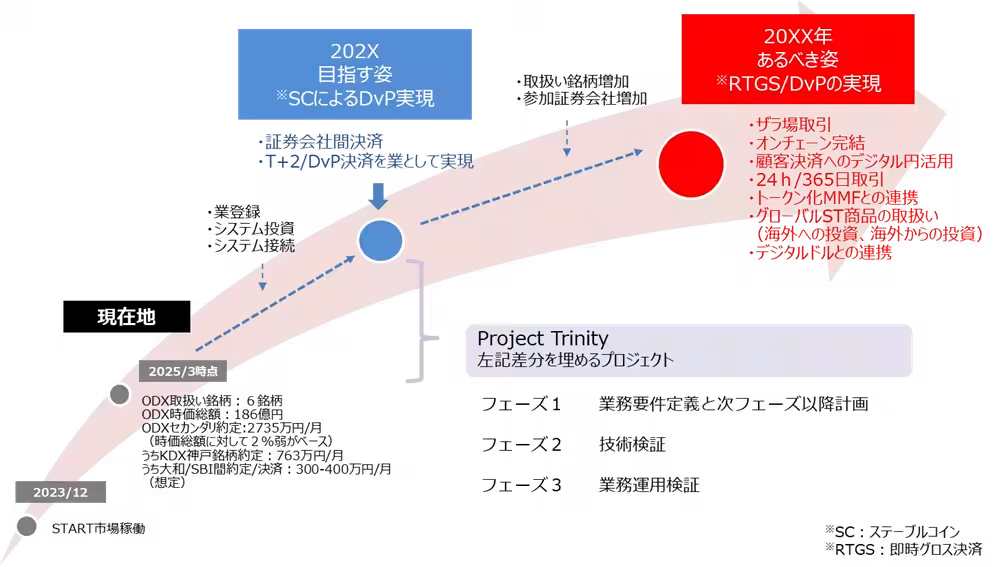
By utilizing stablecoins, Project Trinity envisions real-time gross settlements of individual trades, effectively eliminating counterparty credit risks. Once a trade is finalized, the transaction details will be linked to a blockchain-based payment infrastructure, enabling instantaneous gross settling post-agreement. This approach is expected to support continuous trading, 24/7, unaffected by traditional financial system maintenance downtime.
The project is not only focused on the long-term vision but also aims to achieve a more immediate goal: the DvP settlement utilizing stablecoins across securities firms with a T+2 standard. By addressing the existing gaps between current practices and the desired operational model, the initiative is making meaningful strides toward its objectives.
Next Steps
To realize T+2 DvP settlements among securities firms utilizing stablecoins, Daiwa Securities and SBI Securities will conduct operational testing of real-world security token transactions using stablecoins issued by Mitsui Sumitomo Bank. Throughout this project, the necessary operations, systems, and regulatory compliance for stablecoin-based T+2 DvP settlements will be assessed and refined. Identifying and addressing pending tasks and solutions is also key.
The project will progress through three defined phases, starting with Phase 1 focused on requirements gathering and planning for subsequent phases. This includes identifying gaps between the current state and the targeted outcome, along with determining potential solutions and their priority levels.
Conclusion
The outcomes from the operational validation within Project Trinity will be shared with relevant market stakeholders to contemplate broader implementation in real-world operations. This initiative marks a critical step forward in the journey to enhance the Japanese financial landscape, instilling confidence in the efficiency and security of security token transactions.

Topics Financial Services & Investing)
【About Using Articles】
You can freely use the title and article content by linking to the page where the article is posted.
※ Images cannot be used.
【About Links】
Links are free to use.