



Expansion of Sustainable Aviation Fuel Supply with Used Cooking Oil in Kanagawa Prefecture
Expanding the Supply of Sustainable Aviation Fuel in Kanagawa
In November 2023, Plenus Inc., known for its takeaway bento chain Hotto Motto and other dining establishments, is set to broaden its supply area for used cooking oil sourced from its locations within Kanagawa Prefecture. This initiative aligns with the company's commitment to employing this waste oil in the production of Sustainable Aviation Fuel (SAF), thereby actively participating in climate change mitigation efforts.
Overview of the Initiative
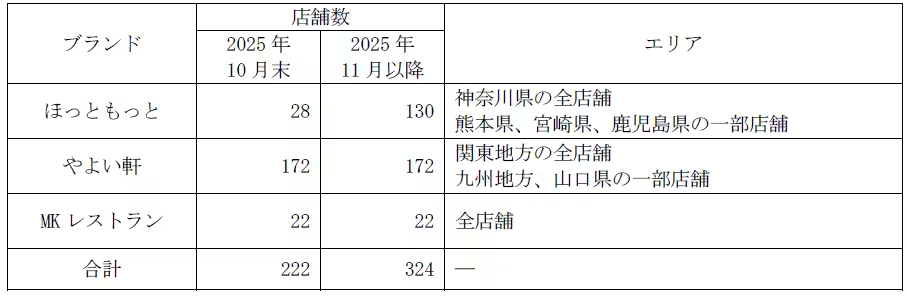
Plenus operates a vast network of 2,809 stores across Japan, including Hotto Motto and restaurants like Yayoi Ken, MK Restaurant, and KAYAVA. The company collects used cooking oil from 222 of its nationally spread outlets, utilizing it to manufacture SAF, which marks a substantial step toward resource efficiency and climate responsibility.
The latest announcement highlights the company’s plan to extend this initiative to all Hotto Motto stores in Kanagawa starting this November, further amplifying their impact on sustainable practices within the food industry.
The expected supply volume is approximately 510 tons of used cooking oil annually, projected to result in a CO2 reduction of about 1,275 tons per year through this re-purposing effort. This significant contribution underscores the importance of sustainable approaches in business activities for a safer and tastier future for customers.
Collaborating for a Sustainable Future
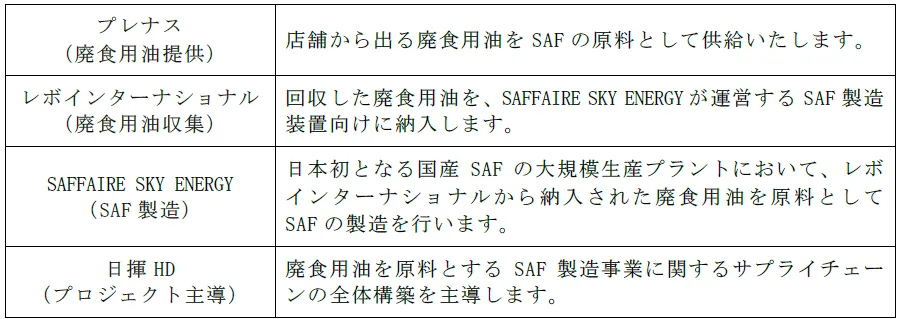
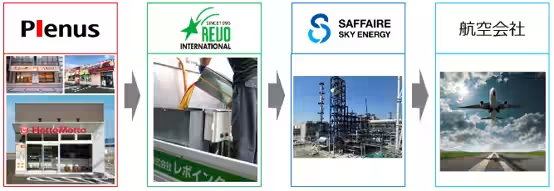
Plenus is not alone in this effort. It collaborates with key players in the SAF supply chain, including JGC Holdings Corporation, Revo International Inc., and SAFFAIRE SKY ENERGY LLC. Together, these organizations aim to bolster domestic SAF supplies and ensure that the transition to more sustainable fuel sources is achievable. Notably, Plenus is also an active participant in the Fry to Fly Project, spearheaded by JGC Holdings, which focuses on harnessing domestic resources for SAF production.
Understanding SAF
Sustainable Aviation Fuel (SAF) is derived from non-fossil fuel materials, with various production methods from different raw materials. When SAF is produced using 100% used cooking oil, it is reported to reduce CO2 emissions by approximately 80% across its lifecycle—from collection to manufacturing and combustion—compared to traditional jet fuels.
In Japan, the Ministry of Land, Infrastructure, Transport and Tourism aims for domestic airlines to replace 10% of their fuel use with SAF by 2030, aspiring further towards achieving carbon neutrality by 2050. For this vision to be realized, securing a stable supply of used cooking oil as SAF's raw material remains a critical challenge.
Despite this, it is estimated that approximately 100,000 tons of used cooking oil is exported annually, leading to CO2 emissions from transportation and the loss of a valuable resource essential for producing domestic SAF.
Fry to Fly Project: A Vision for Aviation
The Fry to Fly Project champions the use of domestically sourced waste cooking oil to create SAF, welcoming a new era where airplanes can operate using sustainable fuel derived from everyday kitchen waste. This innovative approach not only reduces greenhouse gases but also promotes the effective reuse of resources, showcasing Plenus's commitment to sustainable development and climate action. By participating in such initiatives, the company aims to set a precedent for the industry, supporting a greener tomorrow.
This expansion of the SAF supply is yet another step forward in Japan’s efforts to address climate change, utilizing existing resources more responsibly while fostering innovation in the aviation sector.
Topics Environment)
【About Using Articles】
You can freely use the title and article content by linking to the page where the article is posted.
※ Images cannot be used.
【About Links】
Links are free to use.