



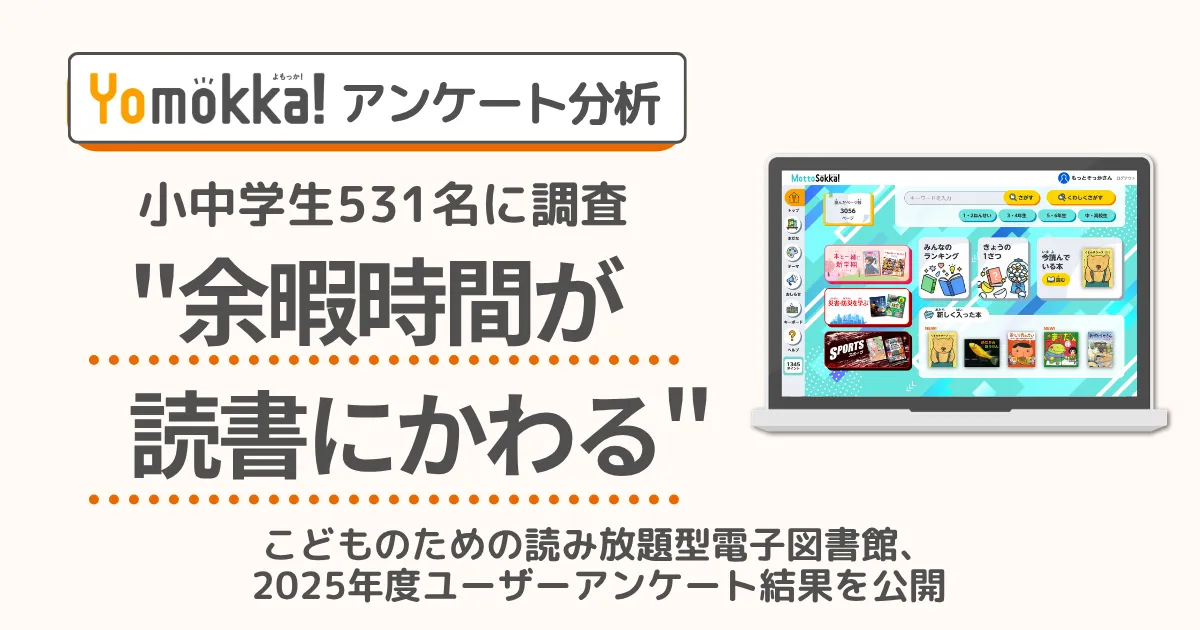
Survey Reveals Shift in Children's Leisure Time Towards Reading with Yomokka! Digital Library
Introduction
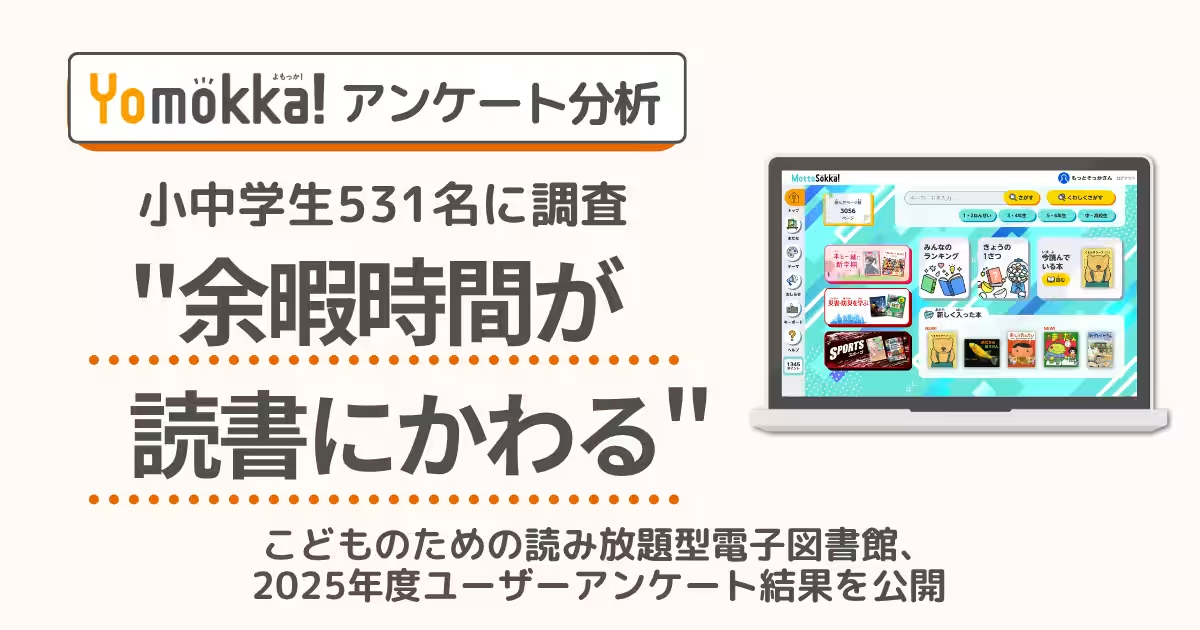
In a significant stride towards enhancing reading habits among children, Poplar Co., based in Shinagawa, Tokyo, released results from a survey involving 531 elementary and middle school students. The survey focused on the feedback for their subscription-based digital library service, Yomokka!, which is part of the education ICT platform, MottoSokka!. The findings indicate a remarkable shift in children’s leisure activities, with many students now allocating time for reading.
Survey Insights
The survey was conducted via a web form in March 2026, targeting students currently using Yomokka!. Approximately 40% of the respondents reported using Yomokka! at home, highlighting a trend where leisure time previously spent on activities like watching videos or gaming is now being redirected towards reading.
Shifting Leisure Activities
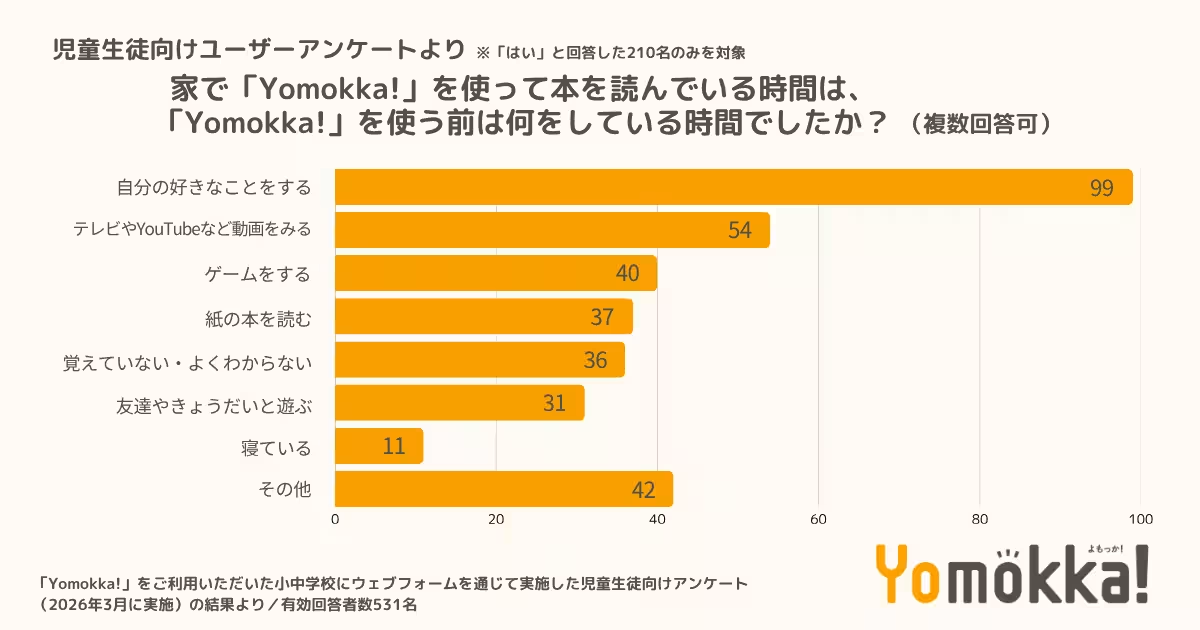
Among the students who use Yomokka! at home, one common activity they replaced was "doing things they enjoy." This was followed by watching videos on platforms like YouTube and playing games. These results suggest that reading is being recognized as a rewarding leisure activity, gaining equal footing with more traditional pastimes like screen time.
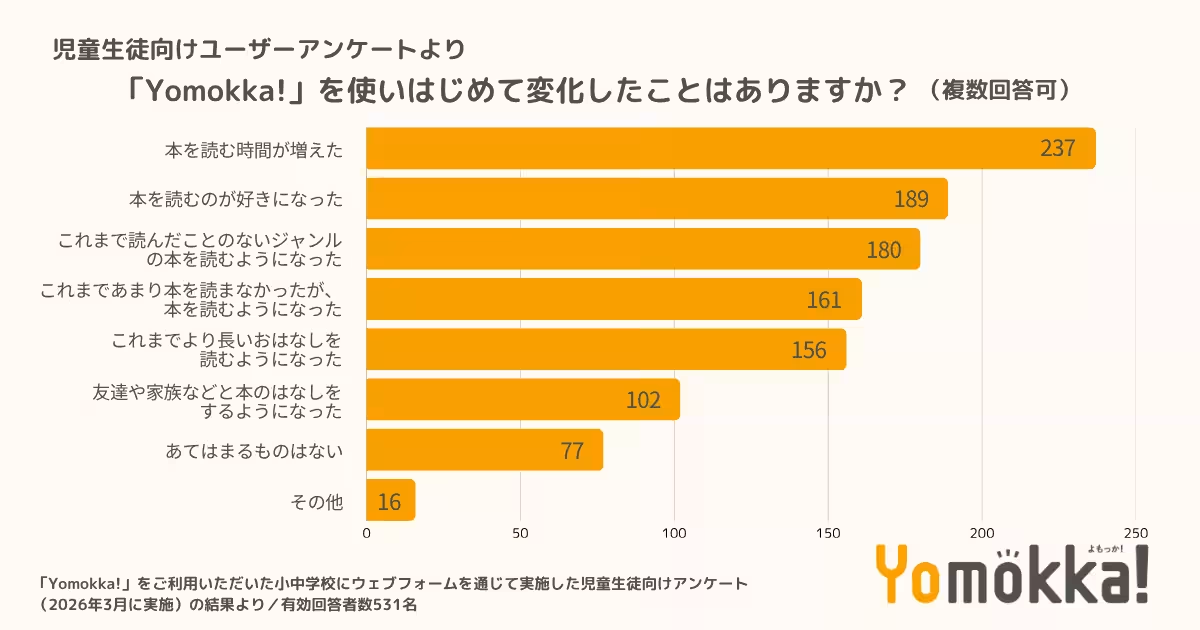
Positive Changes in Reading Attitudes
The survey also inquired about changes in reading habits since using Yomokka!. Approximately 45% of respondents stated that they increased their reading time, and 36% expressed a newfound enjoyment for reading. Notably, 161 students reported that they had begun reading books more frequently, indicating a positive shift in their reading motivation and interests.
Moreover, around 34% mentioned that they started exploring genres they had not previously engaged with, and about 29% noted they were reading longer stories now. This diversification in reading content demonstrates a broader appeal of literature driven by the Yomokka! platform.
Bridging to Physical Books
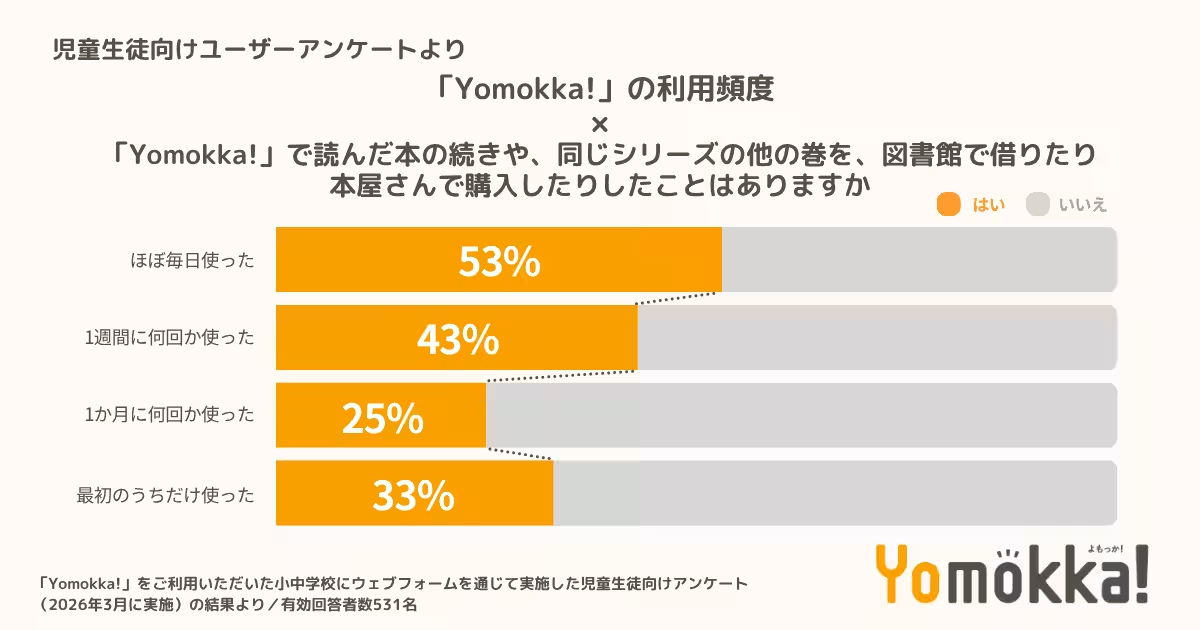
When asked whether they had pursued physical copies of books after reading them through Yomokka!, over 40% affirmed that they had either borrowed or purchased books at libraries or bookstores. This trend was even more pronounced among students who used the service daily, with 53% of those active users confirming they sought out physical books, showcasing a seamless transition from digital to traditional reading formats.
Language Diversity in Households
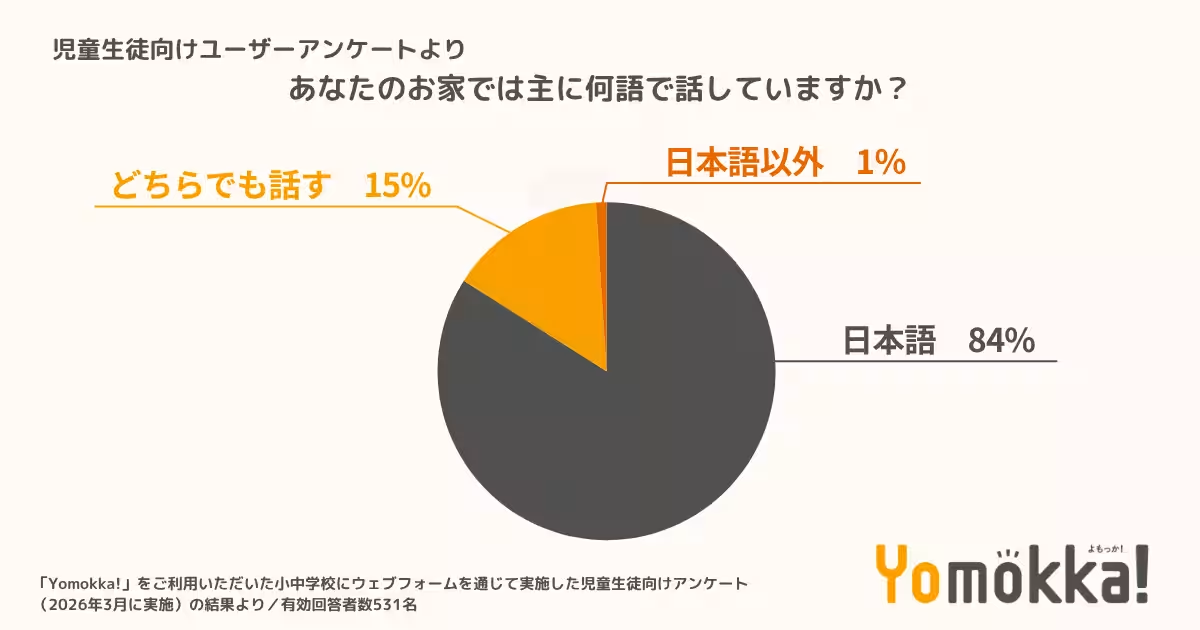
Reflecting the increasing diversity among students, roughly 16% of respondents reported speaking languages other than Japanese at home. The respondents indicated that the most common non-Japanese language spoken was Chinese, followed by English, with additional mentions of Taiwanese Chinese and Korean. These findings emphasize the necessity for educational platforms to offer diverse language resources.
About Yomokka!
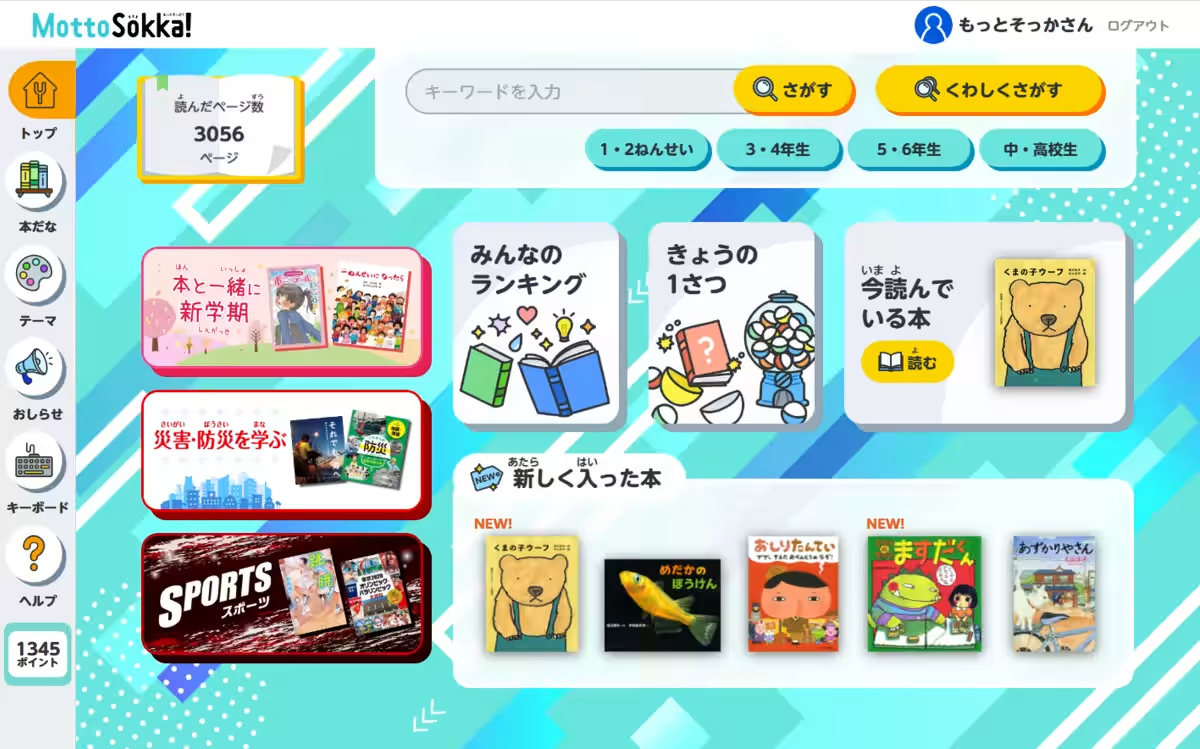
Yomokka! is designed under the motto, "Anytime, Anywhere, As Much as You Like!" aiming to provide children with a unique reading experience. As of August 2025, it features works from 43 participating publishers, offering around 5,000 books. The platform not only allows children to read but also encourages them to discover various titles, thereby broadening their literary horizons.
MottoSokka!: A Learning Platform
MottoSokka! is a comprehensive learning platform that supports children’s curiosity through reading and exploration experiences. It includes the Yomokka! digital library and an online encyclopedia service, Sagasokka!. Both are critical tools for enhancing self-directed learning among students.
Poplar Co.’s Educational Initiatives
Poplar Co. has been committed to fostering children's learning since the launch of its initiative, Kodomo Motto Lab, in 2021, inspiring curiosity and self-improvement through engaging content and publications.
Conclusion
These insightful findings illustrate the growing impact of digital libraries like Yomokka! on children's leisure activities and reading interests, representing a broader movement towards integrating reading into everyday life. With a commitment to continual improvement, Poplar Co. aims to foster a love for reading and learning among young individuals.
Topics Other)
【About Using Articles】
You can freely use the title and article content by linking to the page where the article is posted.
※ Images cannot be used.
【About Links】
Links are free to use.