




The Breakthrough in Rheumatoid Arthritis Drug Synthesis Using Continuous Flow Technology
Innovative Synthesis of Igranimod: A Leap Towards Sustainable Pharmaceuticals
In a recent collaborative effort, Japan Soda, a prominent chemical manufacturer, and Active Pharma, a group company of Mitani Industry, have made significant strides in the synthesis of the rheumatoid arthritis medication Igranimod. Through partnerships with esteemed professors from the University of Tokyo, a new environmentally friendly production process utilizing continuous flow technology has been crafted. The details of this research have been published in the esteemed journal, ACS Sustainable Chemistry & Engineering.
The Innovation Behind Continuous Flow Synthesis
The collaboration is a part of a broader strategic technological partnership aimed at the practical application and commercialization of continuous flow techniques in pharmaceutical and agricultural chemical manufacturing, formalized in 2023. By merging Japan Soda's expertise in chemical process technology with Active Pharma's capability in active pharmaceutical ingredient (API) production, this innovative synthesis process was developed.
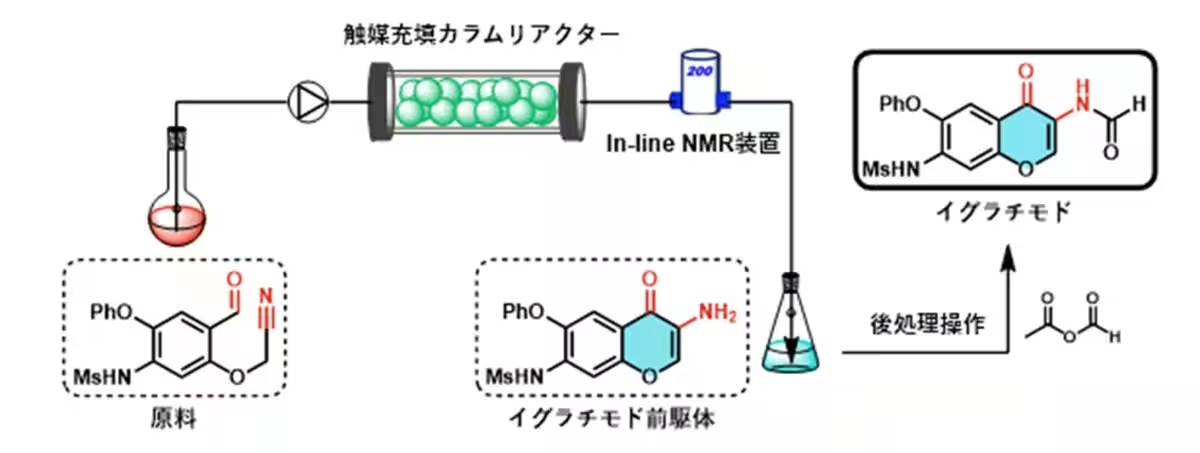
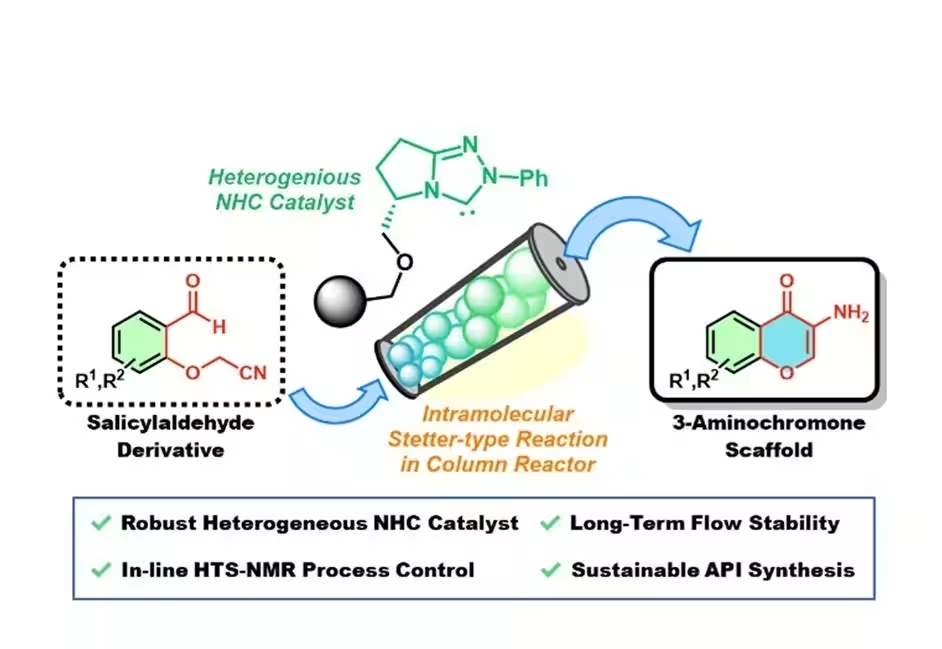
One of the key features of this research is the employment of a polystyrene-immobilized NHC (N-Heterocyclic Carbene) catalyst, allowing for the successful synthesis of Igranimod while minimizing environmental impact. This organic catalyst functions without metals, granting high reactivity and reducing ecological harm.
Advantages of Continuous Flow Technology
Continuous flow synthesis presents itself as a revolutionary, eco-friendly methodology, hailed for its potential to enhance the efficiency of chemical reactions. This method employs a custom-developed catalyst, which has been tested for long-duration continuous operation, demonstrating stable reactivity over extended periods. Additionally, the process is characterized by simple post-reaction procedures that allow for the straightforward collection of Igranimod.
Key Research Points:
- - High Stability of NHC Catalysts: The research team designed polystyrene-supported NHC catalysts that significantly outperformed conventional immobilized catalysts in terms of durability. Through optimized conditions, approximately 1.8 grams of Igranimod precursor were consistently obtained over 24 hours of operation.
- - Real-Time Reaction Monitoring: By integrating inline NMR (Nuclear Magnetic Resonance) technology, the team precisely controlled various reaction conditions, such as feed flow and temperature, ensuring stable operation over time.
- - Efficient Extraction: Post-flow reactions involved simplified procedures including acid washing and recrystallization, achieving a remarkable overall yield of 75% from the starting materials.
Background and Significance of Igranimod
Igranimod has gained prominence as a treatment for rheumatoid arthritis, with its relevance further underscored by recent reports of its potential application in mitigating severe COVID-19 cases. However, traditional synthesis methods have posed challenges, including multi-step processes and high solvent usage that contribute to environmental degradation. Consequently, there has been an urgent demand for more sustainable and efficient drug manufacturing processes.
This research addresses that demand by focusing on the innovative construction of Igranimod's molecular backbone through the NHC catalyst facilitated by continuous flow methods combined with heterogeneous catalysis.
Future Prospects
The established method of combining heterogeneous organic catalysts with continuous flow synthesis is expected to lay the groundwork for sustainable drug manufacturing. Future advancements will focus on further enhancing catalyst longevity and exploring the scalability of this synthesis process. Additionally, the principles derived from this research may extend to other APIs and agricultural chemicals, fostering broader applications within the chemical industry. The goal remains clear: to reduce waste, lower costs, and enhance safety throughout manufacturing processes.
The Continuous Flow Method: A Brief Overview
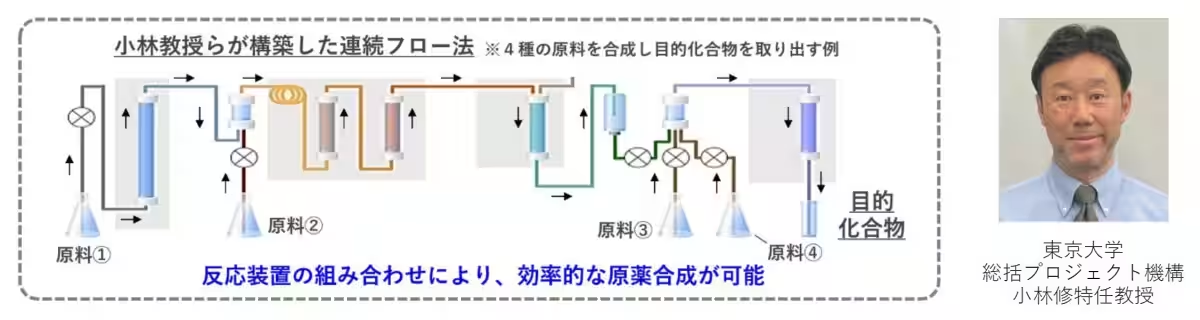
The concept of continuous flow synthesis was pioneered in 2015 by a research group led by Professor Kobayashi from the University of Tokyo, successfully synthesizing pharmaceutical active ingredients with high selectivity and yield. By connecting multiple reactors utilizing heterogeneous catalysts, complex compounds can be synthesized while leveraging the benefits of flow techniques.
Conclusion
In conclusion, the collaborative research between Japan Soda, Mitani Group, and the University of Tokyo marks a significant milestone in the realm of pharmaceutical synthesis. The ongoing commitment to sustainable practices in drug manufacturing positions these companies at the forefront of innovation in the industry.



Topics Consumer Products & Retail)
【About Using Articles】
You can freely use the title and article content by linking to the page where the article is posted.
※ Images cannot be used.
【About Links】
Links are free to use.