



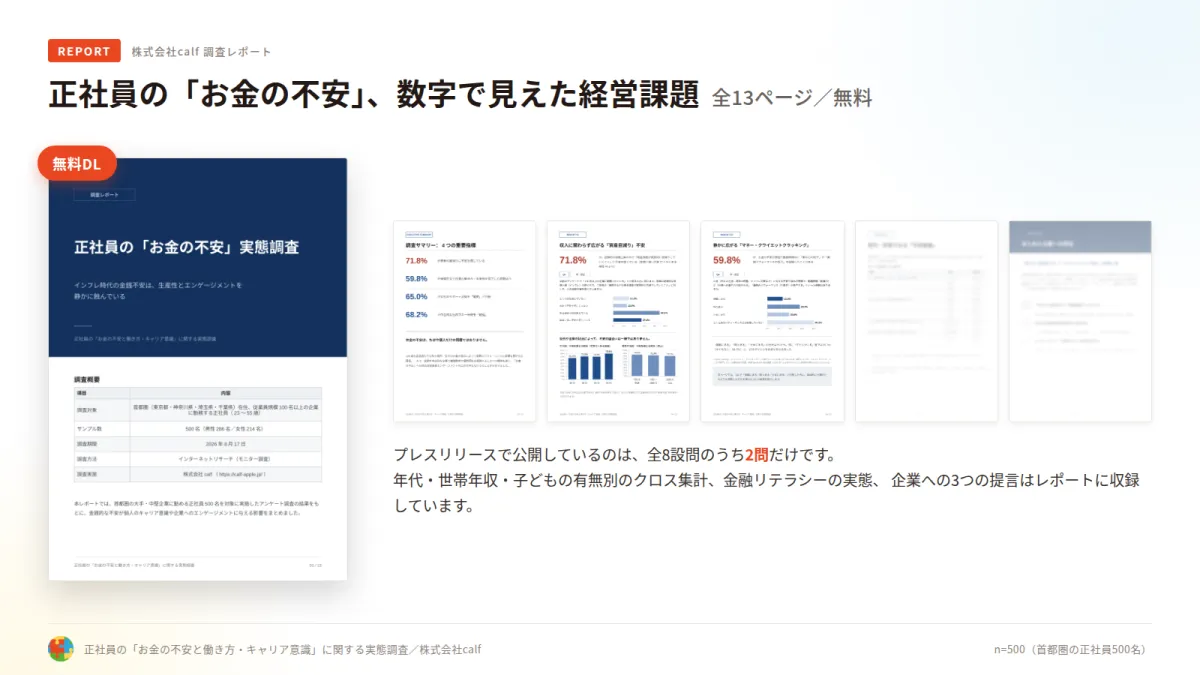
Financial Anxiety Among Full-Time Employees: A Comprehensive Report on Workplace Productivity Challenges
Understanding Financial Anxiety in the Workplace
In a recent study conducted by calf, a Tokyo-based consulting firm, striking statistics emerged highlighting the impact of financial anxiety on workplace productivity among full-time employees. This report, titled "Financial Anxiety Among Full-Time Employees: A Comprehensive Report on Workplace Productivity Challenges," was based on a survey of 500 full-time employees aged 23-55, working at companies with over 100 employees in the Tokyo metropolitan area.
Key Findings
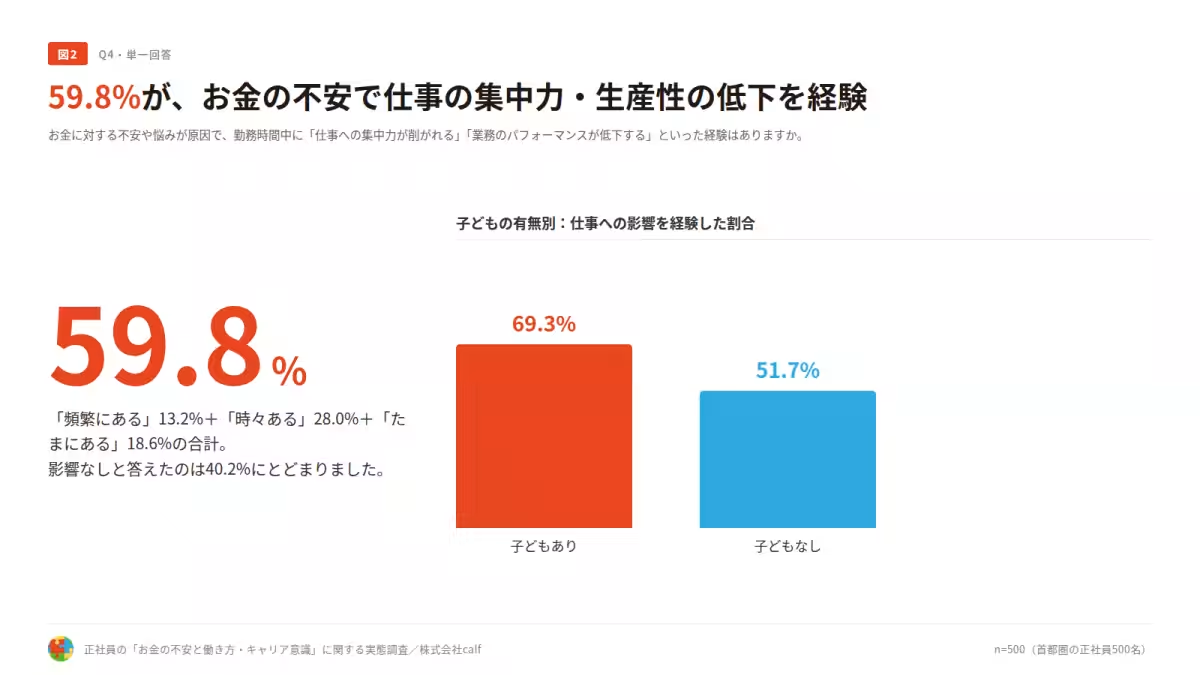
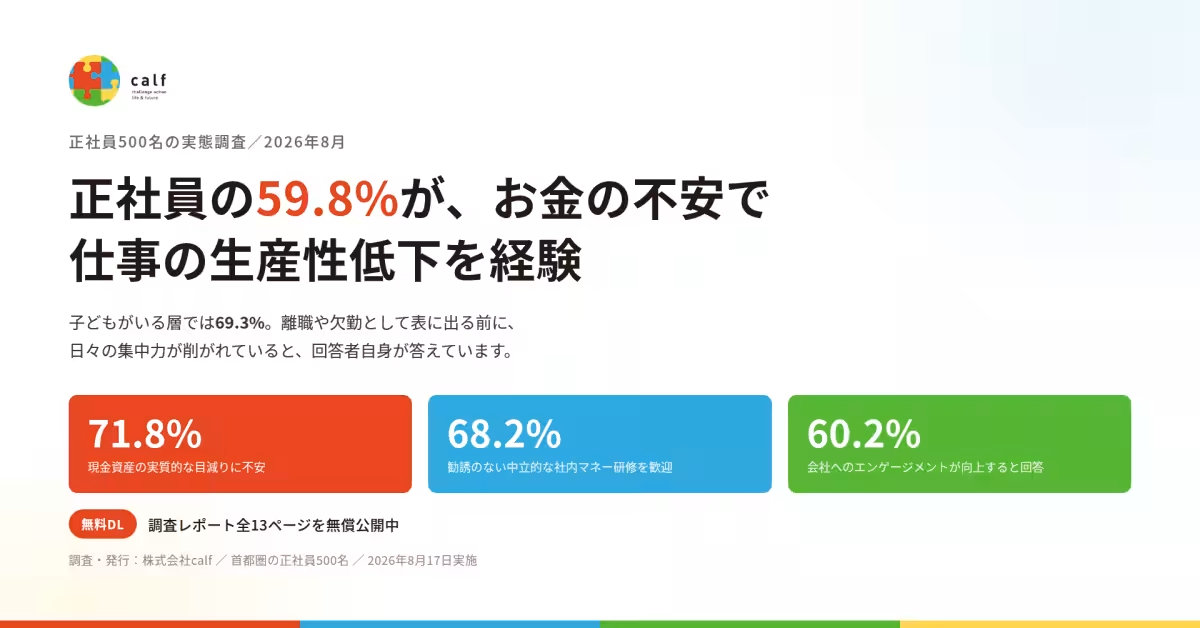
The survey revealed that a significant 59.8% of respondents admitted to experiencing difficulties in maintaining focus and work performance due to financial concerns. The report emphasizes that financial stress is a growing problem that transcends individual households, affecting career choices and overall job performance. For parents, the impact is even more pronounced, with 69.3% reporting similar struggles.
One of the essential takeaways from the report is that a surprising 68.2% of participants expressed a preference for neutral, company-sponsored financial training sessions that would not promote specific products. This type of training could enhance company attachment and retention rates, as noted by 60.2% of the respondents who felt positively about such initiatives.
However, it’s worth noting that 10.2% of participants believed that such sessions could, conversely, lead to distrust in the company. This highlights the importance of maintaining neutrality when designing financial education programs for employees.
The Background of the Study
The report's release comes amid a backdrop of unprecedented inflation, causing financial anxiety that has permeated various aspects of employees' lives, including their work environments and career aspirations. Despite the significant findings, there have been limited data sets focused on how financial anxiety manifests in the workplace.
Calf's mission is to act as a "CFO for Life," offering comprehensive consulting services that integrate asset management, career planning, and life strategies. The findings of this report elucidate the relationship between financial anxiety and workplace performance, answering the pressing need for data-driven insights into this crucial issue.
Detailed Insights from the Survey
Diminishing Cash Assets
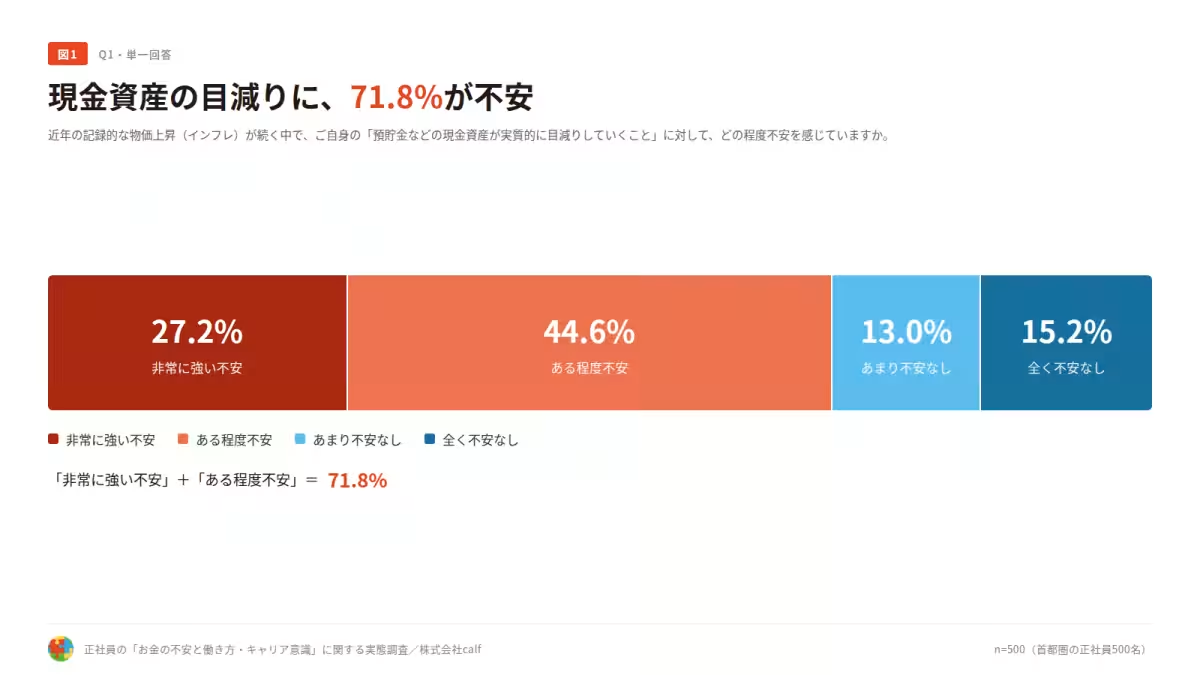
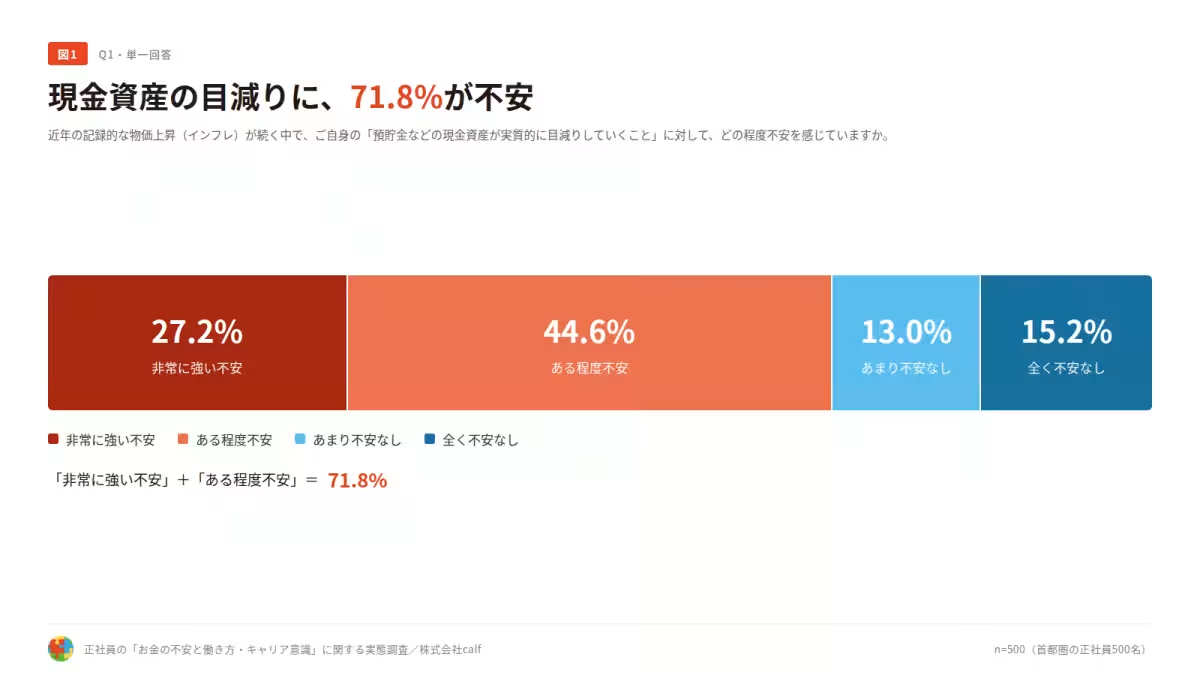
A staggering 71.8% of respondents expressed anxiety over the perceived erosion of their cash assets. Specifically, the survey asked about concerns related to the dwindling real value of savings and deposits. Of those surveyed, 27.2% reported feeling a "very strong" anxiety, while 44.6% felt "somewhat anxious," culminating in over 71% expressing concern. Notably, this high level of anxiety was reported even among participants from relatively affluent households, with nearly 40% earning over 10 million yen annually.
Impact on Productivity
The data also indicates a significant decline in workplace productivity, with 59.8% acknowledging that financial worries have negatively impacted their focus and performance at work. This figure comprises those who reported such troubles frequently (13.2%), sometimes (28.0%), or occasionally (18.6%). A notable distinction was observed between employees with children (69.3%) and those without (51.7%), signifying an emotional load that impacts parents more significantly.
Such financial distress may not always translate into visible consequences like high turnover rates or absenteeism. Instead, it often accumulates silently, resulting in diminished engagement in a phenomenon now termed "Quiet Cracking." This term represents the subtle decline in employee engagement, which the current study suggests is deeply rooted in financial stress.
What the Report Provides
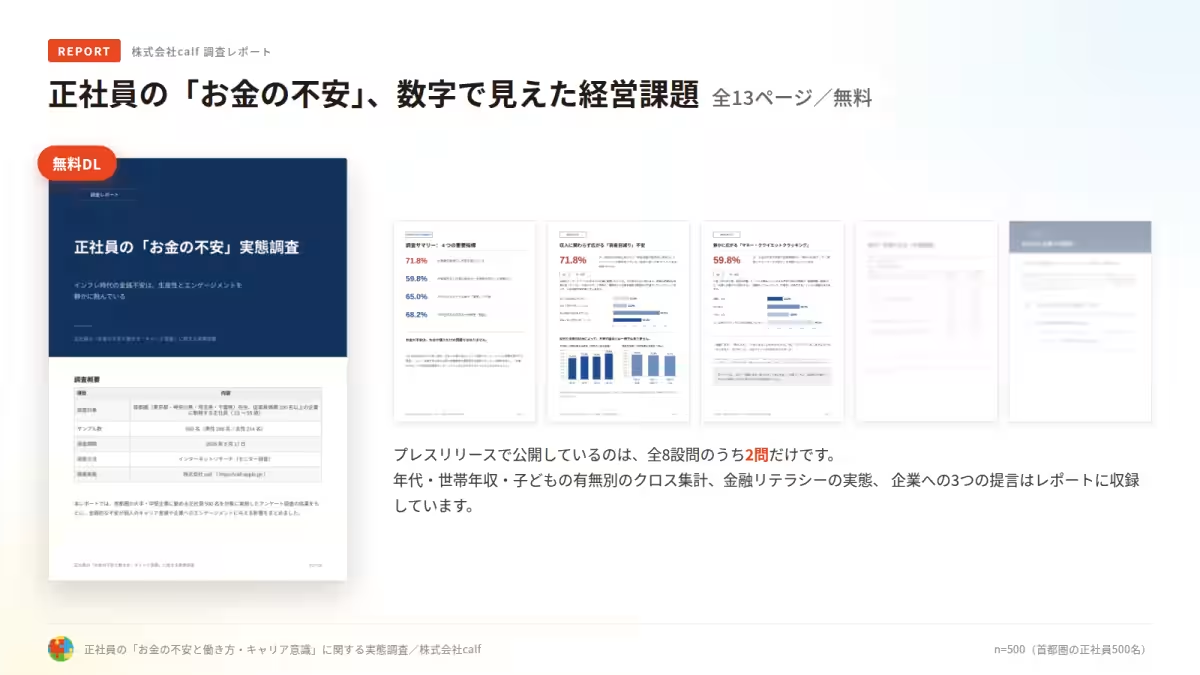
The report covers the following essential revelations:
- - The prevalence and intensity of financial anxiety among full-time employees.
- - Employee self-assessment of financial literacy and the overwhelming complexity leading to indecision.
- - Observable behaviors linked to financial stress during work hours.
- - A breakdown of financial anxiety across age groups, household incomes, and parental status.
- - Insights into what employees expect from companies in terms of financial support and education.
- - Recommendations for employers based on the findings.
This report is particularly valuable for:
- - Executives and decision-makers looking to address unseen productivity losses within their organizations.
- - HR and workforce engagement professionals interested in using data to design meaningful engagement strategies.
- - Welfare and benefit coordinators seeking to enhance their employee support offerings.
- - Corporate strategists compiling data for human capital disclosure and retention efforts.
For further details and to access the complete report, visit calf’s official website. The insights garnered from this investigation can serve as a catalyst for companies aiming to support their employees in managing financial stress while enhancing overall workplace efficiency.
Additional Resources
Download the full report here.
This resource is free and can be accessed by providing necessary details through the form. The findings and data can be utilized in articles and internal documents with appropriate citation of the source. For specific queries about the data or consultations regarding company financial education programs, please reach out through the provided contact details.
Topics Business Technology)







【About Using Articles】
You can freely use the title and article content by linking to the page where the article is posted.
※ Images cannot be used.
【About Links】
Links are free to use.