




New Mechanism Discovered for Long-Distance Transport of Cytokinin in Plants
Unveiling the Mechanism of Cytokinin Transport in Plants
Recent research led by a collaborative team from Shimane University, Chubu University, RIKEN, The University of Tokyo, Okayama University, and Nagoya University has unveiled important insights regarding plant hormones, specifically cytokinin, and its receptor, AHK3, which plays a crucial role in the long-distance transport of this hormone from roots to leaves.
Commonly known for promoting leaf growth, cytokinins are produced in roots and are transported through the xylem to leaves. The collaboration resulted in the pivotal discovery that the AHK3 gene regulates this transport mechanism, elucidating how plants can control their growth and development at considerable distances.
Significant Findings
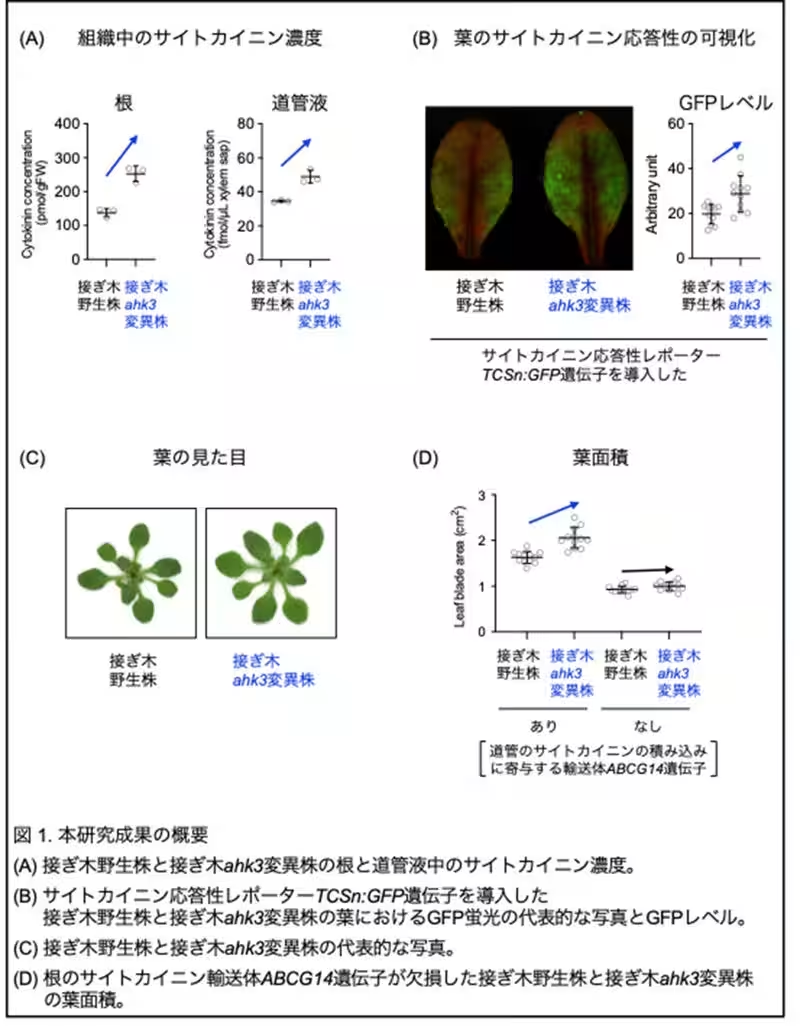
The study, conducted by Kohta Monden from Shimane University’s Graduate School of Natural Science and other esteemed colleagues, identified that by utilizing grafting techniques to reduce the function of the AHK3 gene exclusively in the roots of the model organism Arabidopsis thaliana, there was a notable increase in the concentration of cytokinins in both the roots and the xylem sap. Not only did this increase cytokinin levels, but it also resulted in a raised responsiveness in leaves, facilitating accelerated leaf growth.
AHK3 serves as a significant target for agricultural practices aimed at boosting crop yield. This research signifies a leap forward in our understanding of plant hormone dynamics, allowing for potentially groundbreaking methodologies to manipulate plant growth.
Published in the renowned journal Plant and Cell Physiology, the findings reveal promising prospects for how crops can be engineered to grow more efficiently and effectively by altering hormonal levels. The online publication date was June 12, 2026.
Implications for Agriculture
This breakthrough research can have transformative implications for agricultural practices. As modern farming increasingly confronts the dual challenges of feeding growing populations while ensuring sustainable practices, understanding the genetic control of plant growth is paramount. By focusing on key genes like AHK3, agriculturalists can devise strategies to enhance crop productivity without intensive resource input.
Moreover, the methodologies derived from this study can innovate the breeding programs aimed at developing high-yielding and resilient crop varieties. With more controlled growth patterns and responses to environmental stimuli, farmers could benefit from plants that not only yield more but also adapt better to changing climate conditions.
Collaboration and Future Research
This landmark study was supported by several research grants, including the Japan Society for the Promotion of Science (JSPS), reflecting a robust commitment to advancing agricultural science. Future research will likely delve deeper into other elements of the cytokinin signaling pathway and how they might be manipulated for greater agricultural benefits.
The researchers encourage further exploration into the regulatory networks of plant hormones, as this knowledge could give rise to novel agricultural techniques that align with sustainability goals set forth by the United Nations.
In summary, the investigation into the long-distance transport of cytokinins and the pivotal role played by the AHK3 gene opens the door to innovative agricultural practices aimed at yield enhancement while adhering to modern sustainability principles. The future of plant biotechnology holds immense potential, and studies like this pave the way for fostering a farming landscape capable of meeting upcoming challenges.





Topics Other)
【About Using Articles】
You can freely use the title and article content by linking to the page where the article is posted.
※ Images cannot be used.
【About Links】
Links are free to use.