



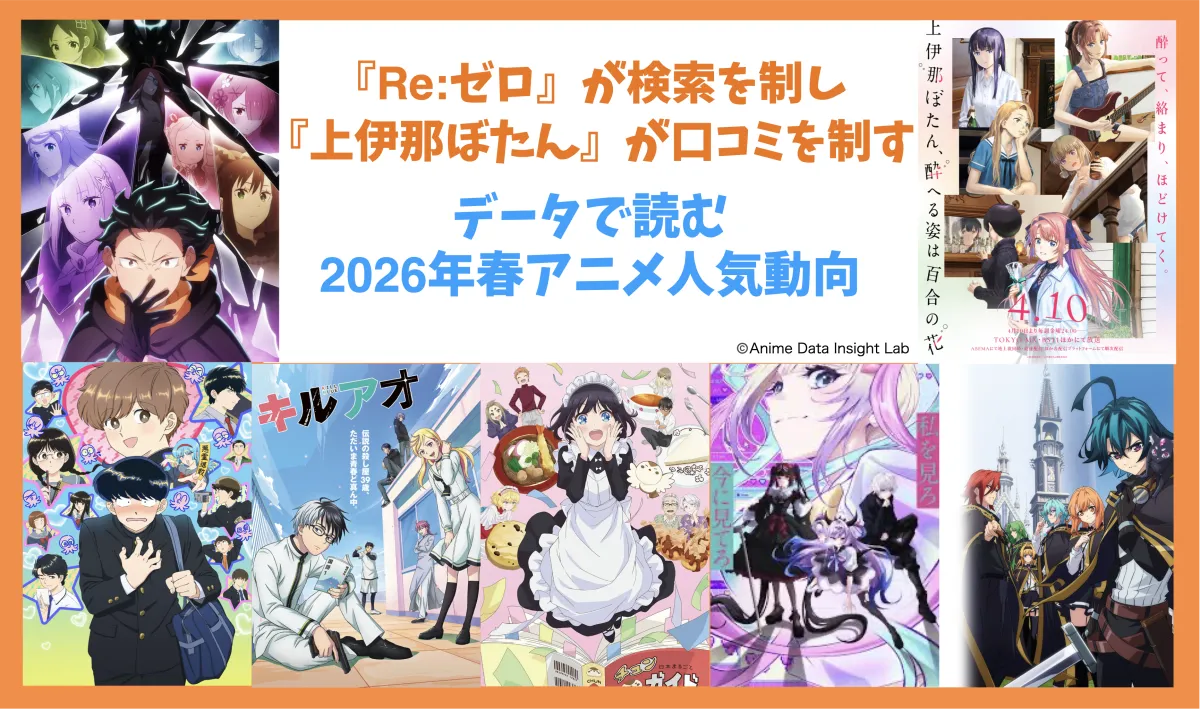
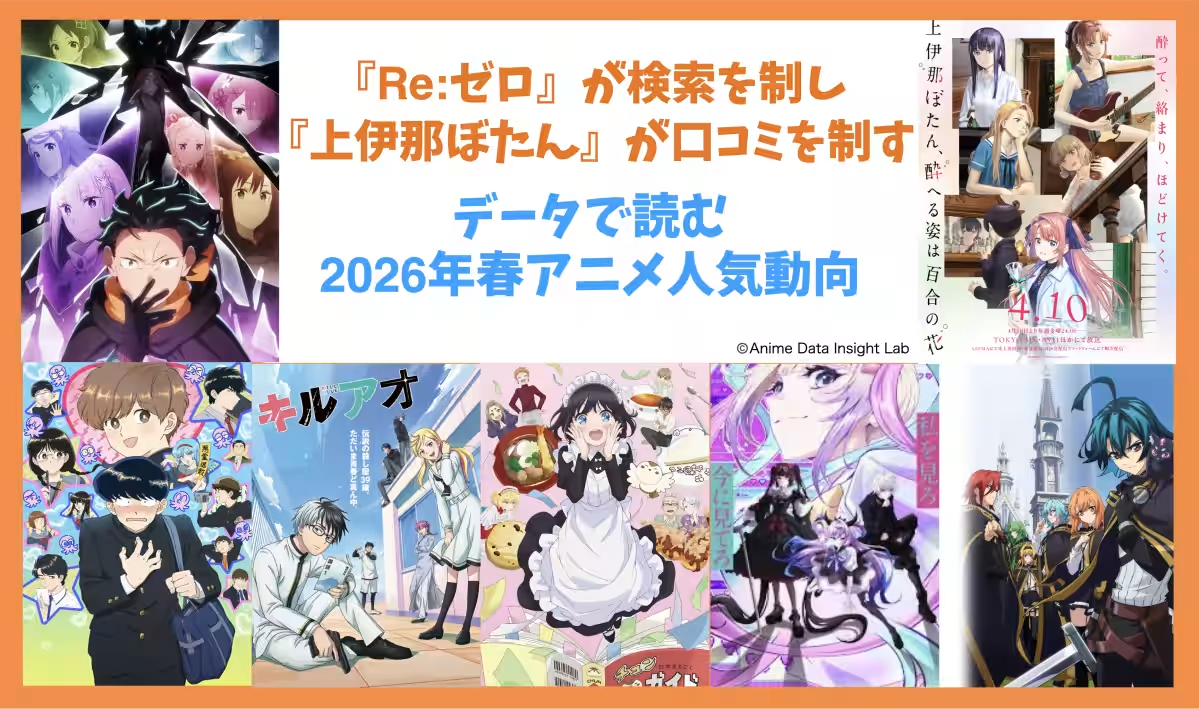
Analyzing Trends of Spring 2026 Anime: Search vs. Word of Mouth
Understanding Spring 2026 Anime Trends
The Spring 2026 anime season has just completed its first four weeks of airing. This season features a hefty lineup of 71 projects, comprising 52 new titles and 19 sequels. In this article, we utilize Google Trends and X-post volume data to analyze audience engagement and behavior changes regarding different anime titles during the initial broadcasting stages.
Week 1 Fan Score and Trends
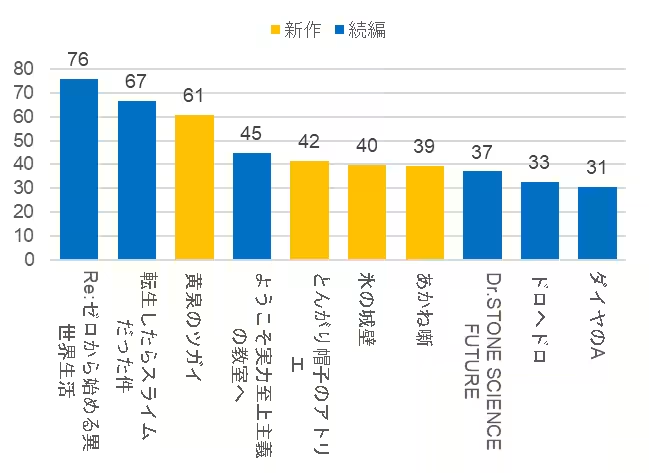
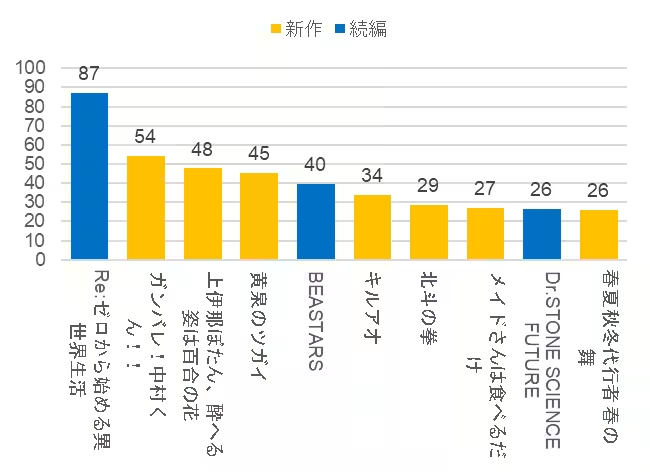
In the first week, the top 10 fan scores featured 7 sequels while the trends were dominated by new works. However, by the fourth week, a notable shift occurred where the fan scores overwhelmingly favored new shows. The trend score, measured by Google searches, presented the opposite scenario in week four, indicating a unique phenomenon: the contrast between what audiences search for versus what they discuss.
Initial Trend Score Top 10 Analysis
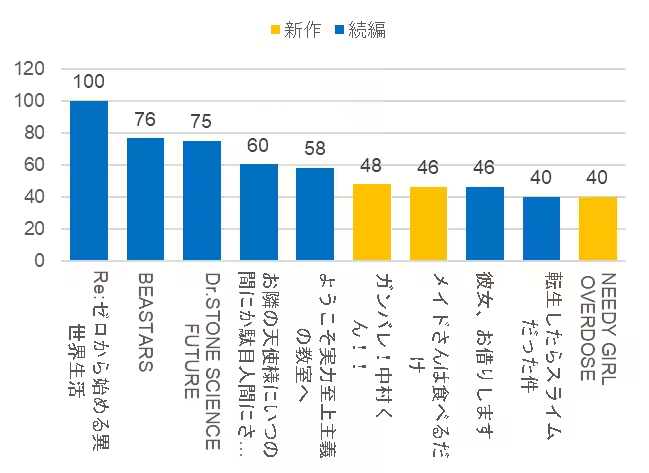
During the first week, the trend scores highlighted 4 new titles compared to 6 sequels. This is a stark contrast from the previous winter season that saw an 8-2 ratio in favor of sequels. Notable new titles such as 'Yomi no Tsugai', 'Tonkori Bōshi no Atelier', and 'Koori no Jōheki' demonstrated high initial search scores, reflecting strong original source materials.
Initial Fan Score Top 10
Switching to fan scores revealed a tilt towards sequels; 7 out of the top 10 were established series. The only new entries were 'Ganbare! Nakamura-kun!!', 'The Maid Only Eats', and 'NEEDY GIRL OVERDOSE'.
Conditions for Stronger Works based on Retention Data
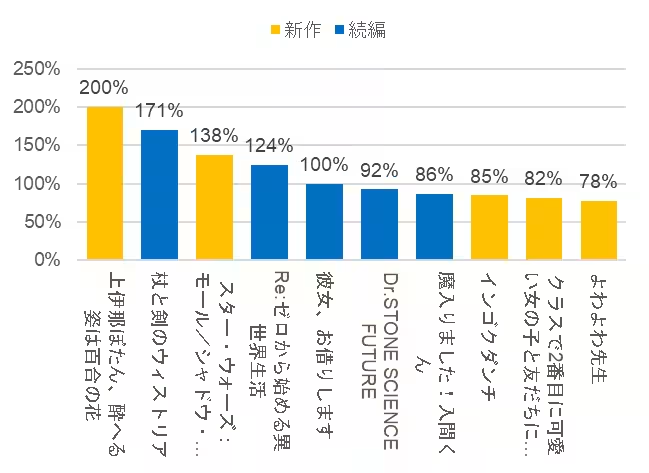
We calculated the retention rate as 'Week 4 ÷ Week 1'. The median retention rates were 49.0% for new titles and 58.9% for sequels based on trend scores, while fan score medians were 53.7% for new series and just 40.4% for sequels.
Trend Score Retention Rate Top 10
Leading with exceptional performance, 'Ue Ina Botan, the Tipsy Figure is a Lily' reached a 200% retention rate. This title saw its score significantly increase from 8.8 to 17.5 as the weeks progressed, marking a growing viewer interest. In terms of its impact, this is comparable to 'Isekai no Sata wa Shachiku Shidai' from the winter season, showing how compelling new content can capture audience attention.
Fan Score Retention Rate Top 10
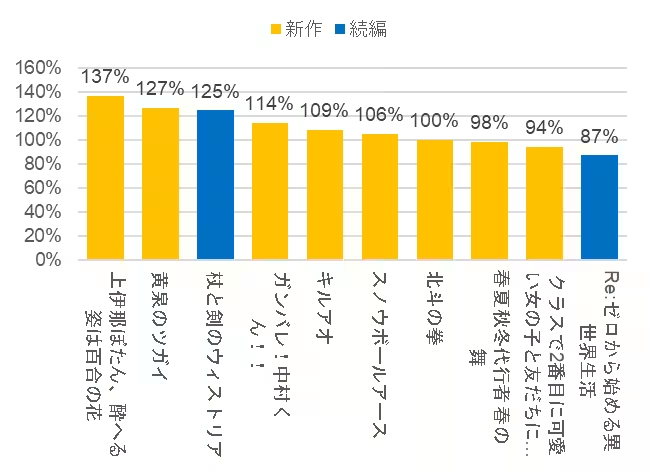
Interestingly, the top 10 for fan score retention was dominated by new shows, with 8 of them being new titles. This data reinforced our earlier hypothesis that, while new shows might struggle with search visibility, they possess an undeniable ability to resonate with viewers.
Week 4: A Shift in the Landscape
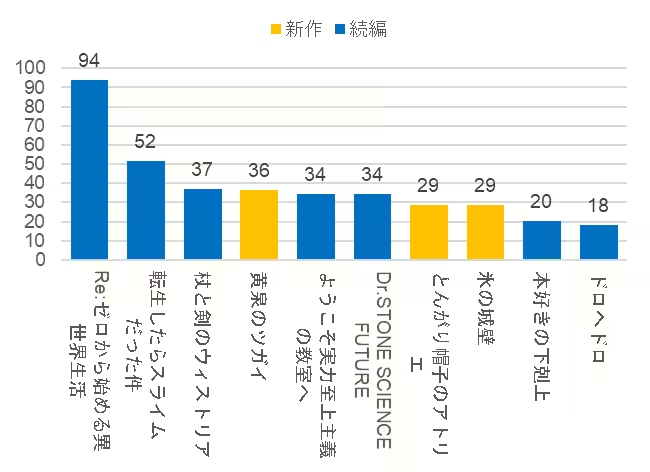
The fourth week revealed a further shift; while the trend score top 10 maintained a balance of 7 sequels and 3 new titles, the fan score dynamic completely flipped. The results transitioned from 7 sequels and 3 new titles in week one to 7 new titles and 3 sequels in week 4. Works like 'Ue Ina Botan', 'Yomi no Tsugai', and 'Killer A' gained significant traction, signaling a turning point in audience engagement.
The initial fan scores for sequels were largely buoyed by brand expectations, whereas the fan scores in week 4 illustrated satisfaction derived from actual viewing experiences.
Insights on the Current Anime Industry Landscape
The data from this season emphasizes a key fact: the dominant conversation pieces in anime evolve within just four weeks. Watching trends of initial interest pivot entirely by the fourth week reinforces the importance of viewer satisfaction and engagement.
As this article provides a snapshot of viewer behavior, it remains to be seen whether the newfound momentum of these new titles continues as the season progresses. For those contemplating a career change into the anime industry, platforms like 'Enter Entertainment' can offer invaluable insights and connections.
Conclusion
Understanding these dynamics is crucial for marketers and producers in the anime space. As illustrated in our analysis, the time frame for maintaining viewer interest can be swift and ever-changing, a factor that cannot be overlooked in planning future projects.
Topics Entertainment & Media)




【About Using Articles】
You can freely use the title and article content by linking to the page where the article is posted.
※ Images cannot be used.
【About Links】
Links are free to use.