



Sekisui Chemical Collaborates with USC and Cytopathfinder for Gene Delivery Innovations
Sekisui Chemical Collaborates for Gene Delivery Innovations
Sekisui Chemical Co., Ltd., under the leadership of President Ikusuke Shimizu, has announced a groundbreaking collaboration with the University of Southern California (USC) and Cytopathfinder, Inc., spearheaded by President Ryuji Yamamoto. The partnership aims to explore gene delivery technologies within drug discovery, marking the beginning of a joint pilot project that focuses on social implementation in this critical field.
Context of the Collaboration
Research using animals has long faced challenges in accurately replicating human diseases and responses to medications. This limitation has posed significant hurdles in drug development, where predicting efficacy and safety is crucial. Regulatory authorities in Japan, the U.S., and Europe are gradually reducing animal testing and advocating for research models that more closely resemble human physiology.
In this shifting landscape, primary human hepatocytes play an essential role in understanding drug metabolism, yet their cultivation has presented several challenges. These cells are notoriously difficult to adhere to culture dishes, making it hard to maintain the proper cell density, which often leads to a loss of their innate functions and properties. Typically, materials like collagen are used to assist adhesion, but their variable characteristics can introduce inconsistencies in cell handling.
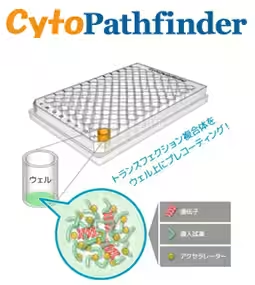
Furthermore, primary human hepatocytes are known to be difficult for genetic modification. Even when combined with Cytopathfinder's solid-phase transfection technology, the cells often struggle to effectively incorporate gene delivery reagents fixed to the culture dish, making it a long-standing challenge to introduce genes without compromising cell quality.
Professor Saito from USC's Keck School of Medicine has demonstrated through this collaboration with Sekisui Chemical that utilizing Ceglu™, a novel and highly uniform material, enables stable and uniform cultivation of primary human hepatocytes. Remarkably, the combination of Ceglu™ with Cytopathfinder’s transfection technology has made it possible to introduce genes into these challenging cells, paving the way for advanced research.
By employing primary human cells, the collaboration anticipates breakthroughs in high-precision cellular function analysis, profound understandings of liver disease pathology, and expedited drug discovery efforts. This joint project aims to investigate the widespread applicability of such technologies in drug development.
Details of the Pilot Project
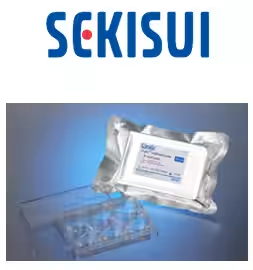
As part of the pilot project, Sekisui Chemical will offer testing samples that combine Ceglu™ with solid-phase transfection technology to research institutions and companies working toward social implementation. USC will utilize high-quality human hepatocytes derived from Phoenix Bio's humanized liver chimeric mice, along with other primary human hepatocytes, to conduct several objectives:
- - Enhance gene delivery efficiency and evaluate reproducibility.
- - Assess the maintenance of hepatocyte function and phenotype post-gene introduction.
The project will commence on March 16, 2026, and run for a year.
With a commitment to leveraging its advanced materials technology, Sekisui Chemical developed the synthetic scaffold material Ceglu™ - capable of stably supporting the culture of pluripotent stem cells, released in 2025. This initiative aims to address challenges in drug discovery alongside the company’s ongoing focus on regenerative medicine.
Professor Saito, an expert in liver biology and disease modeling, has been an advocate for leveraging humanized liver mouse models. As an esteemed physician and researcher, he holds key positions in significant academic pursuits such as the American Association for the Study of Liver Diseases and the National Institutes of Health. Starting in 2024, he will also be recognized as a member of the American Society for Clinical Investigation (ASCI), affirming his goal of contributing academically to the project from cellular biology and medical viewpoints.
Cytopathfinder has continuously engaged in the research and development of solid-phase transfection technology, a unique patented approach to gene delivery for challenging cells. Through this pilot project, they aim to expand contributions to the drug discovery field while also embarking on initiatives within the realm of regenerative medicine.
For more information, visit the following websites:
Topics Health)
【About Using Articles】
You can freely use the title and article content by linking to the page where the article is posted.
※ Images cannot be used.
【About Links】
Links are free to use.