



The Impact of Back Office Operations on BtoB Transactions and Corporate Growth
The Impact of Back Office Operations on BtoB Transactions and Corporate Growth
In today's competitive business landscape, the efficiency of back office operations is critical for BtoB enterprises. Recent research conducted by Raccoon Financial reveals that a significant portion of companies face challenges related to unpaid invoices and delayed payments. Approximately 70% of businesses experience these issues frequently, illustrating the pervasive struggles with manual processes that can hinder growth.
Research Background
Businesses engaged in BtoB transactions rely heavily on invoicing. Yet, many companies report that generating invoices and verifying payments consume a considerable amount of their resources. The survey aims to uncover how much time these companies dedicate to essential back office tasks like invoicing, payment confirmation, and follow-ups.
Raccoon Financial targeted business leaders, accounting heads, and sales managers in BtoB companies for their study on the labor involved in back office operations. The survey was conducted over a two-day period using PRIZMA's online research tools, with participation from 1,006 individuals representing various companies.
Recent findings indicate that while invoicing remains a fundamental task, it often becomes a liability weighing down growth due to operational inefficiencies.
Survey Results Overview
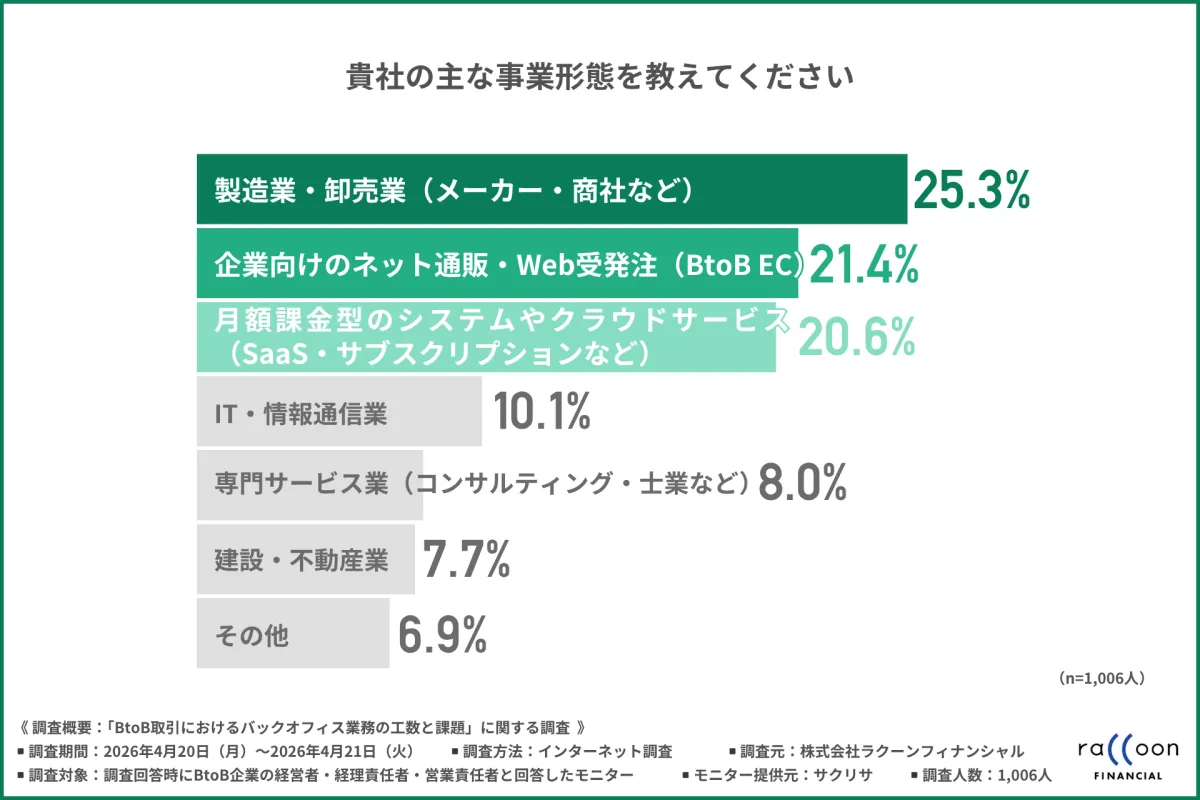
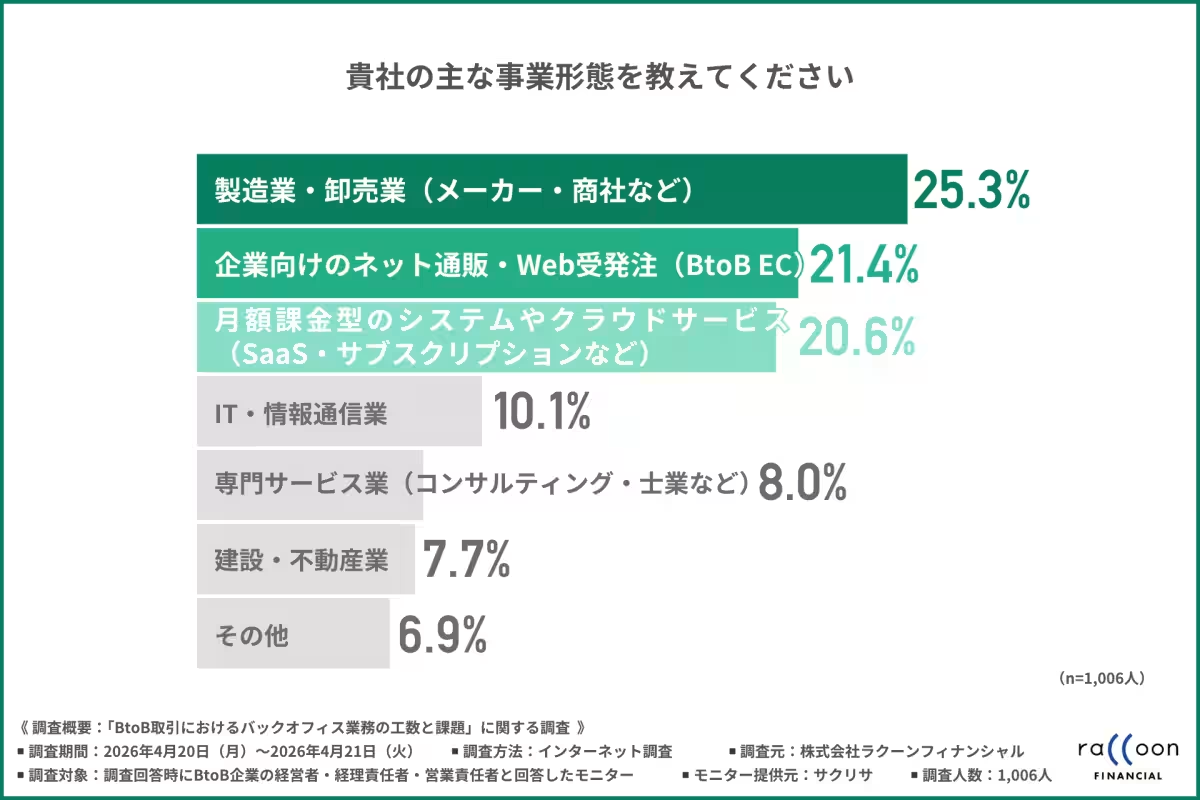
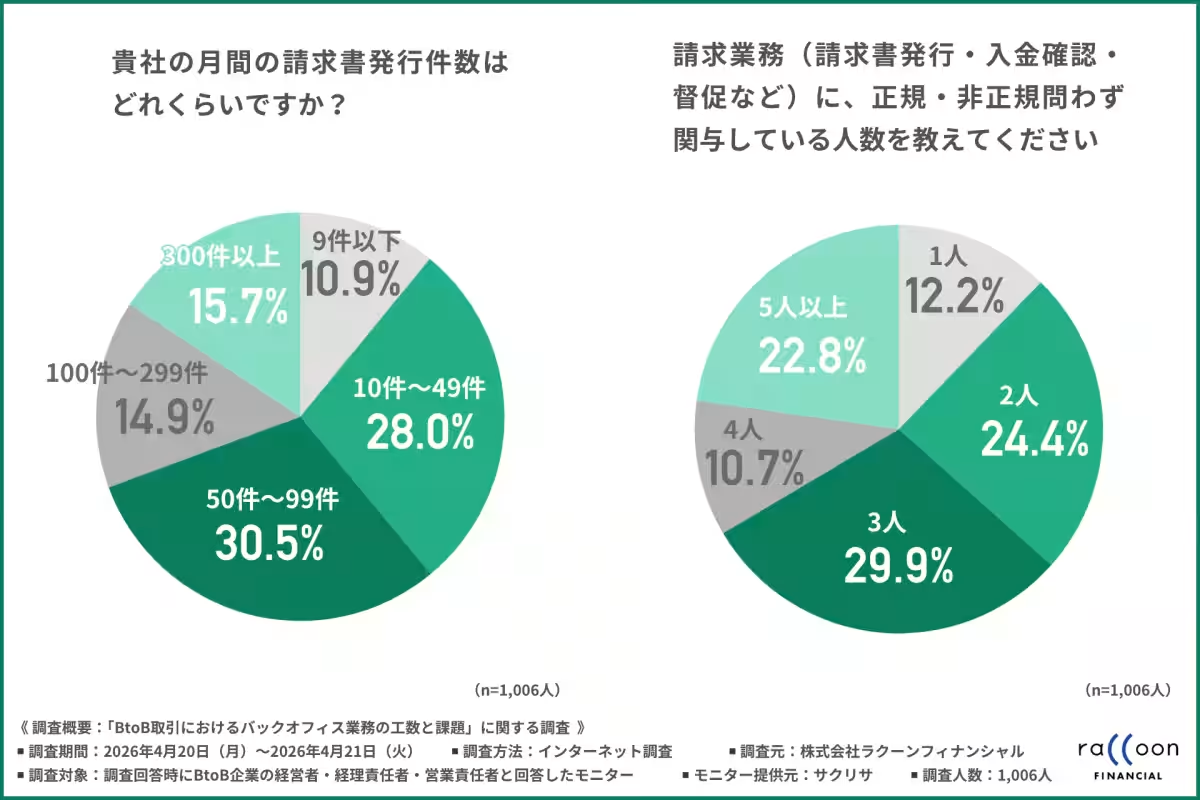
In terms of operational structure, the greatest number of respondents identified with sectors such as manufacturing, wholesale, and BtoB e-commerce. A staggering 30.5% of companies reported issuing between 50 to 99 invoices monthly, with others in the 10 to 49 range (28%) and over 300 invoices making up 15.7%. This reveals that a significant number of businesses are caught in a dilemma between managing a high volume of invoices while grappling with the return on investment in specialized systems.
Employee Allocation for Invoicing Tasks
When asked about personnel dedicated to invoicing tasks, nearly 30% of respondents revealed that three employees handle these functions, highlighting how multiple parties are often required to navigate the time-consuming process of issuing invoices and confirming payments.
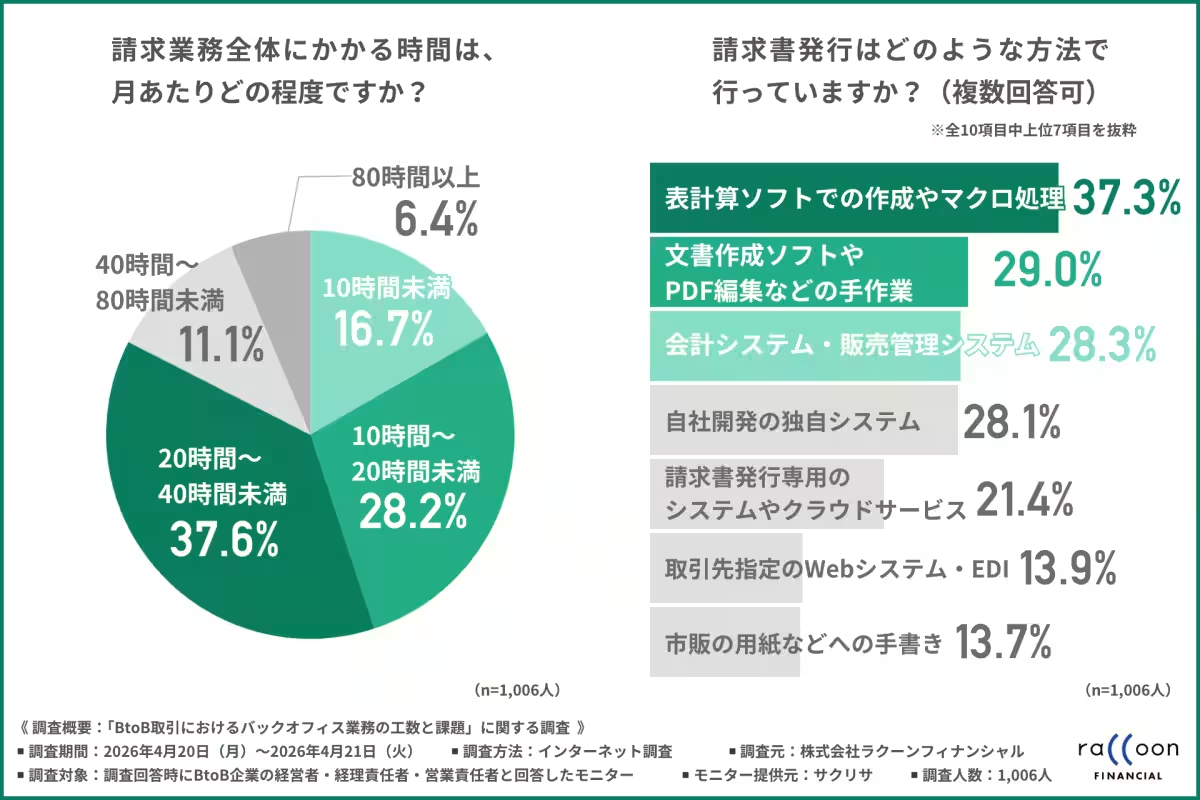
Furthermore, about 40% of businesses indicated they spend between 20 to 40 hours monthly on invoicing-related work. This data underscores the substantial labor burden that not only pulls resources from core business activities but also contributes to inefficiencies. The manner of invoice creation predominantly relies on spreadsheet software (37.3%), followed by manual approaches with document creation and editing tools.
Challenges in Payment Verification
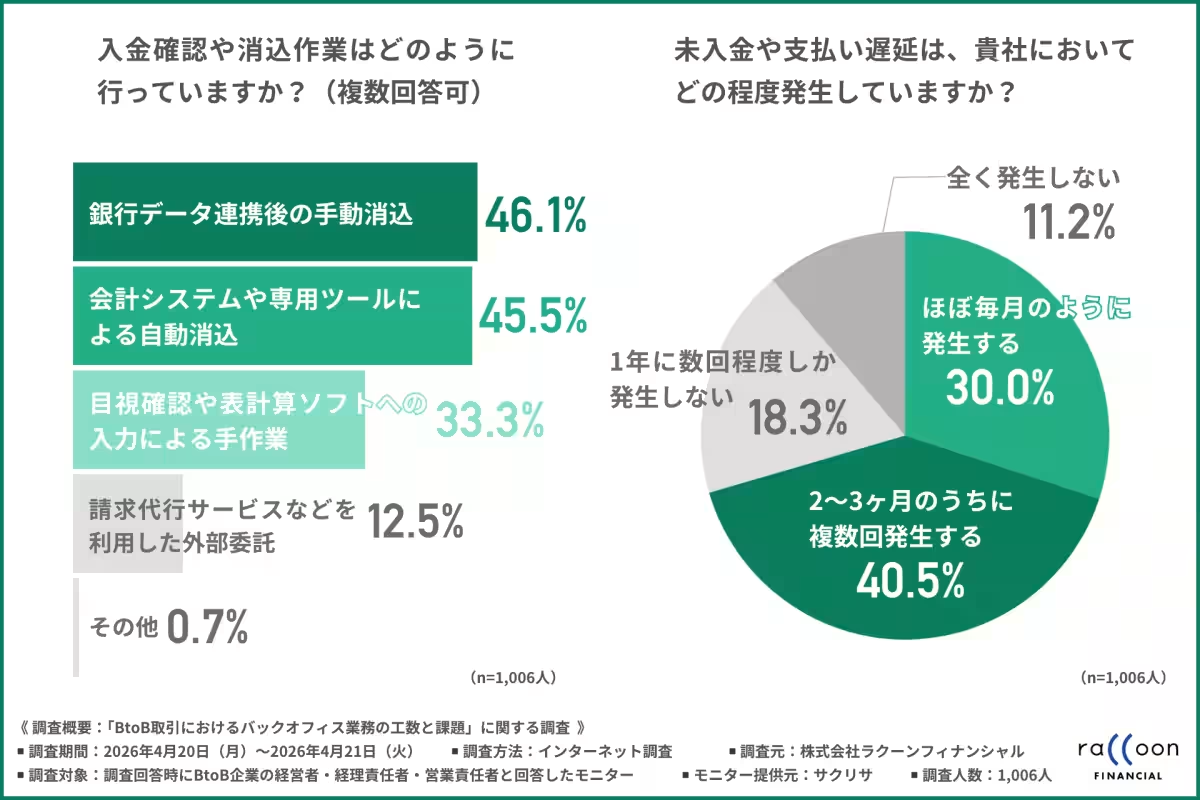
Payment verification remains another critical aspect of the invoicing cycle. Most companies (46.1%) still depend on manual reconciliation following bank data integrations, rather than leveraging automated accounting systems, suggesting a continuing reliance on outdated methods despite the presence of technology.
Over 70% of businesses reported experiencing unpaid or late payments regularly, reinforcing the notion that these challenges are not anomalies but rather systemic issues that affect day-to-day operations and strain resources.
The Ripple Effect of Invoicing Burdens
The burden of invoicing and collection processes has far-reaching implications beyond the finance department. Many businesses noted delays in initiating transactions, disruptions to other vital functions, and strained relationships with clients due to collection efforts. These issues collectively hinder opportunities for sales growth and harm overall satisfaction among customers.
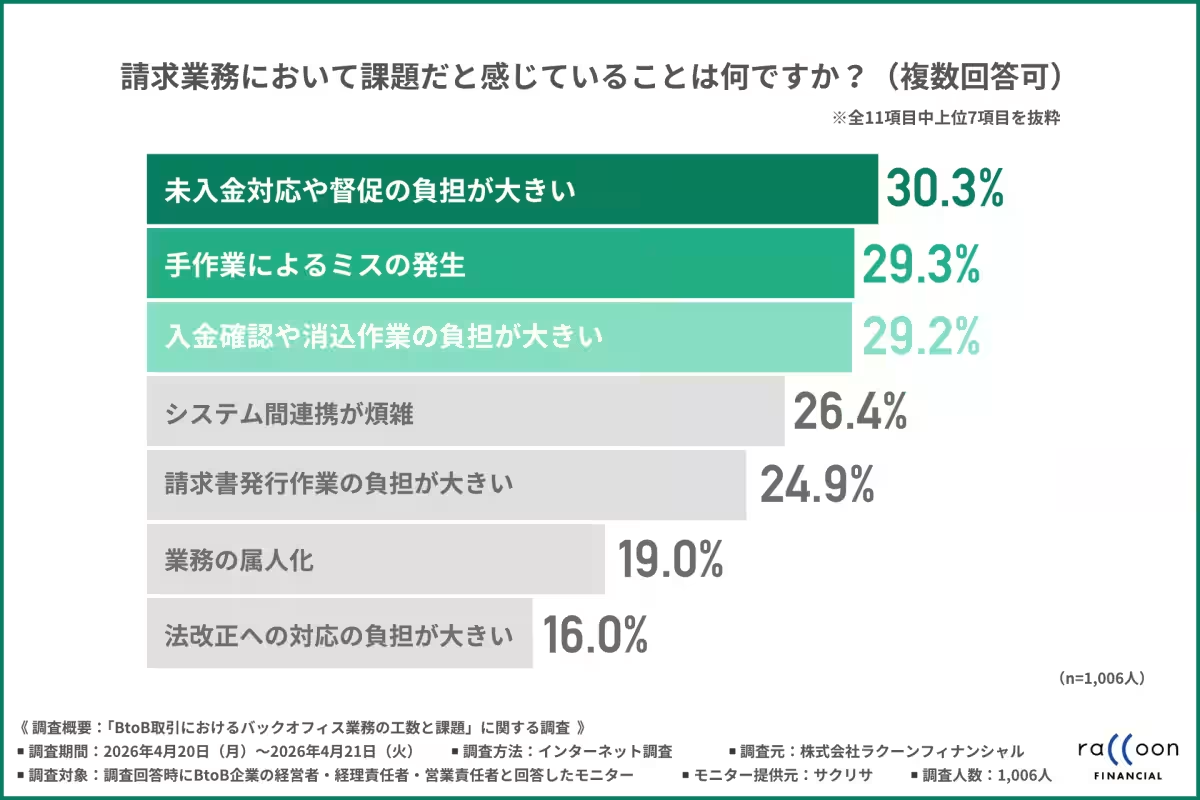
According to the survey, the most frequently cited challenges in managing invoicing included the heavy burden of dealing with unpaid accounts (30.3%) and the occurrence of manual errors (29.3%). This suggests a negative feedback loop whereby errors compound the difficulties in payment follow-up, further exacerbating the initial problems.
Strategies for Improvement
In response to these challenges, many companies are considering various strategies to enhance the efficiency of their invoicing processes. The top approaches involve leveraging existing systems more effectively (25.5%) and transitioning to fully paperless invoicing (24.8%). However, these solutions often reflect incremental adjustments rather than comprehensive overhauls, indicating that broader systemic changes may be needed to fully address these pervasive issues.
Conclusion
The findings from Raccoon Financial’s research highlight the heavy toll manual invoicing processes take on BtoB companies. As businesses continue to struggle with high invoice volumes and persistent payment issues, transitioning away from analog methods and reassessing operational workflows will prove essential for fostering growth.
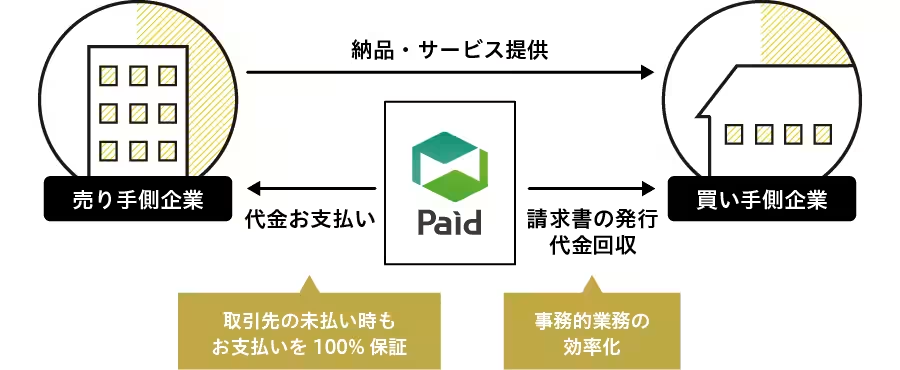
As the industry moves forward, corporations must prioritize not merely reducing task durations but fundamentally revolutionizing the invoicing process to align human resources with strategic business growth. Raccoon Financial's commitment to improving these operations through innovative solutions like their Paid service exemplifies the crucial shift towards achieving efficiency and sustainability in BtoB transactions.
For more detailed data on the burdens of invoicing, ongoing research, and potential improvements, interested parties can access Raccoon Financial’s white paper on this subject.
References
- - Raccoon Financial: Offers the Paid service, aimed at eliminating risks associated with collecting payments and streamlining invoicing processes in BtoB transactions. Access their site here.

Topics Business Technology)
【About Using Articles】
You can freely use the title and article content by linking to the page where the article is posted.
※ Images cannot be used.
【About Links】
Links are free to use.