


Significance of Disaster Preparedness Training in Corporations: Latest Survey Insights
Importance of Disaster Preparedness Training in Businesses
Recent research conducted by IKUSA, a company dedicated to solving social issues through unique experiential training programs, has shed light on the current state of disaster preparedness training in corporations. The survey, which involved 400 employees from companies with over 300 staff, revealed interesting insights just before the annual Disaster Prevention Day, observed on September 1, and the Japan Disaster Prevention Week from August 30 to September 5.
Background of the Survey
As companies across Japan prepare for natural disasters by conducting evacuation drills and disaster preparedness training sessions, IKUSA initiated this survey to examine two critical aspects: the extent to which these trainings are being implemented, and the degree to which employees feel these practices have become part of their daily lives. The assumption was that merely conducting training does not necessarily guarantee a heightened sense of awareness or preparedness among employees.
Key Findings
The survey yielded a few compelling data points:
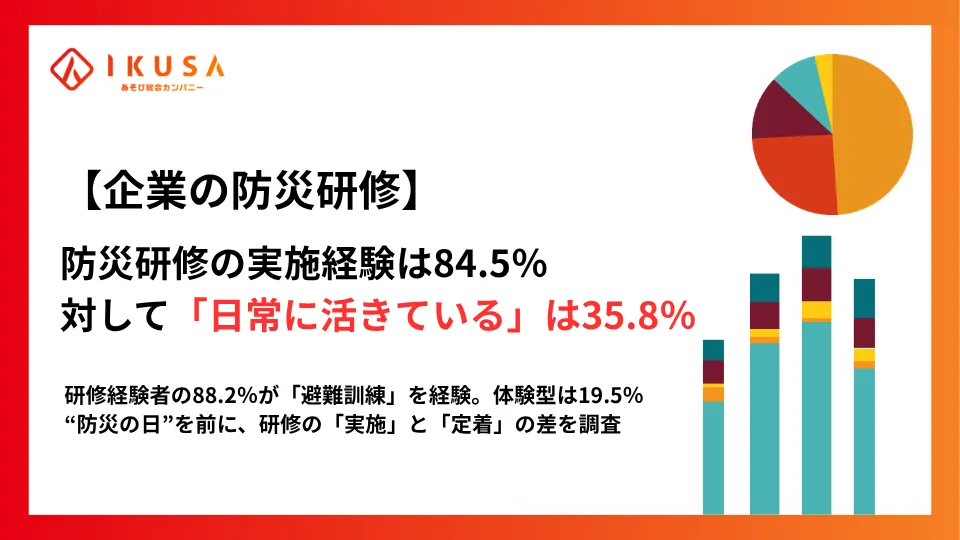
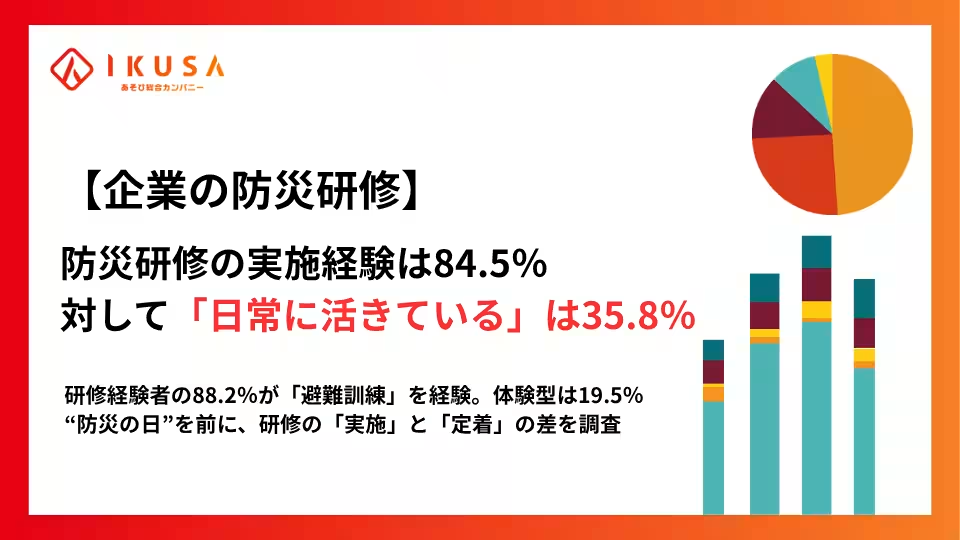
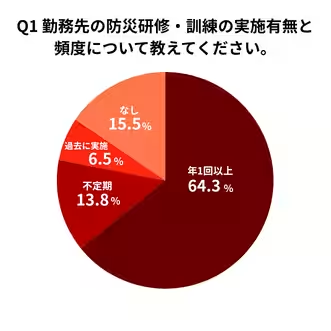
- - An impressive 84.5% of respondents reported having participated in some form of disaster preparedness training, with 64.3% having attended these sessions at least once a year.
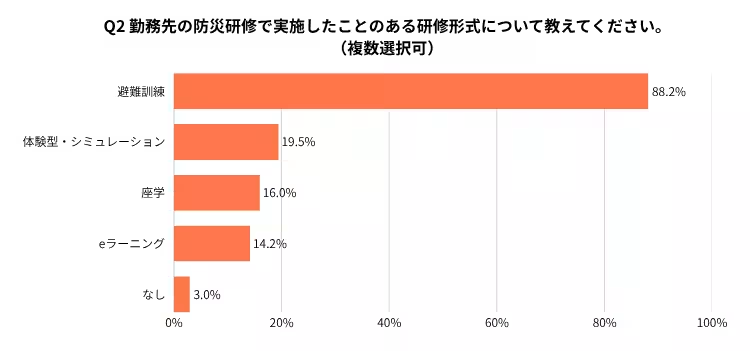
- - Among those who had undergone training, the most common format was the evacuation drill, experienced by 88.2%, followed by hands-on simulation activities at 19.5%, classroom training at 16.0%, and e-learning at 14.2%.
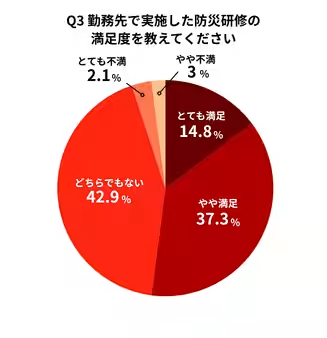
- - Satisfaction levels were moderate, with 52.1% of respondents indicating they were satisfied with their training experience.
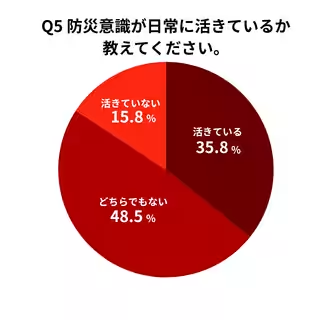
- - Despite high participation rates, only 35.8% of employees felt their disaster preparedness training had effectively translated into their daily lives, while the majority, 48.5%, maintained a neutral stance on the matter.
Nature of Disaster Training Experiences
The survey aimed to dive deeper into the nature of experiences offered during these training sessions. While evacuation drills emerged as the dominant form of training, the response also indicated a potential gap in the effectiveness of these sessions in fostering a resilient culture of preparedness.
Interestingly, even with a solid foundation of training, employees' ability to translate these practices into real-life application remains puzzling. The growing concern is about how to extend the benefits of disaster training beyond the classroom or simulation games and into everyday decision-making and behavior.
Exploring New Approaches
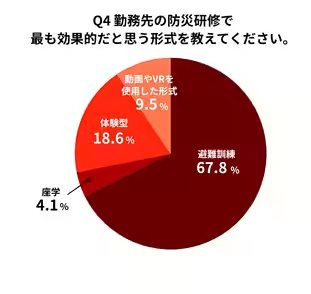
67.8% of respondents suggested evacuation drills were the most effective training format, but surprisingly, about one in three participants cited alternate methods such as experiential, game-based learning, and digital content as potent alternatives. This reflects an emerging trend in educational settings that demand interactive and engaging formats to enhance learning and retention.
Moreover, in terms of altering perceptions and behaviors regarding disaster preparedness, blending traditional formats with new-age learning methods could offer substantial leverage. Ideas such as crisis simulations, scenario-based problem-solving games, and virtual reality experiences could engage participants and encourage proactive behavior about disaster risk into their everyday lives.
A Shift Towards Action-Oriented Training
The results prompt a deeper reflection on effective training methodologies that do not solely focus on attendance but strive to foster a mindset change among employees. The goal is to design training programs that encourage participants to actively engage and apply the knowledge acquired.
As occasions such as Disaster Prevention Day approach, firms should evaluate their training strategies not just on participation statistics but more importantly, on the tangible changes in behavior that follow.
IKUSA's Innovative Programs
IKUSA has been at the forefront of integrating play in disaster preparedness training. One notable program is the Escape from Unforeseen Disaster mystery-solving workshop, where teams must collaborate to solve puzzles that educate them on disaster preparedness. Each participant contributes to discussions about emergency protocols, misinformation management during crises, and the essence of mutual aid. Such innovative methodologies culminate in greater awareness and preparedness skills among employees, preparing them for actual emergencies.
Similarly, IKUSA's Difficult Return Home Survival Game emphasizes consensus-building during disasters, illustrating the importance of team collaboration under duress. Feedback from participants highlights that 91.6% felt they could forget hierarchical barriers during these activities, indicating a potential for enhanced teamwork during real crises.
Adding these experiential components to existing training will not only revitalize the programs but will likely enhance the efficacy of disaster preparedness across corporations.
Conclusion
In conclusion, while disaster preparedness training is being widely implemented in Japanese corporations, the gap remains between participation and the real-world application of these skills. Looking ahead, companies, particularly as Disaster Prevention Day approaches, must strive for not just compliance in retaining statistics but focus on fostering a culture of preparedness integrated into daily routines. IKUSA continues to innovate and provide vital insights to bridge this gap and ensure that safety becomes an intrinsic organizational behavior, shaping a better-prepared future for corporate environments amid the unpredictability of disasters.
Topics Policy & Public Interest)


【About Using Articles】
You can freely use the title and article content by linking to the page where the article is posted.
※ Images cannot be used.
【About Links】
Links are free to use.