




DT-P Company Enhances Customer Management System with AI Analysis Features
Enhancements to Loyal Customer Vision
In a major update, DT-P Company, based in Minato, Tokyo, has added two innovative AI analysis features to its customer management system, Loyal Customer Vision (LCV). These new tools, named Customer RFM AI Analysis and Classification Analysis AI, aim to enrich the decision-making process for businesses in the apparel and retail sectors.
New Features Overview
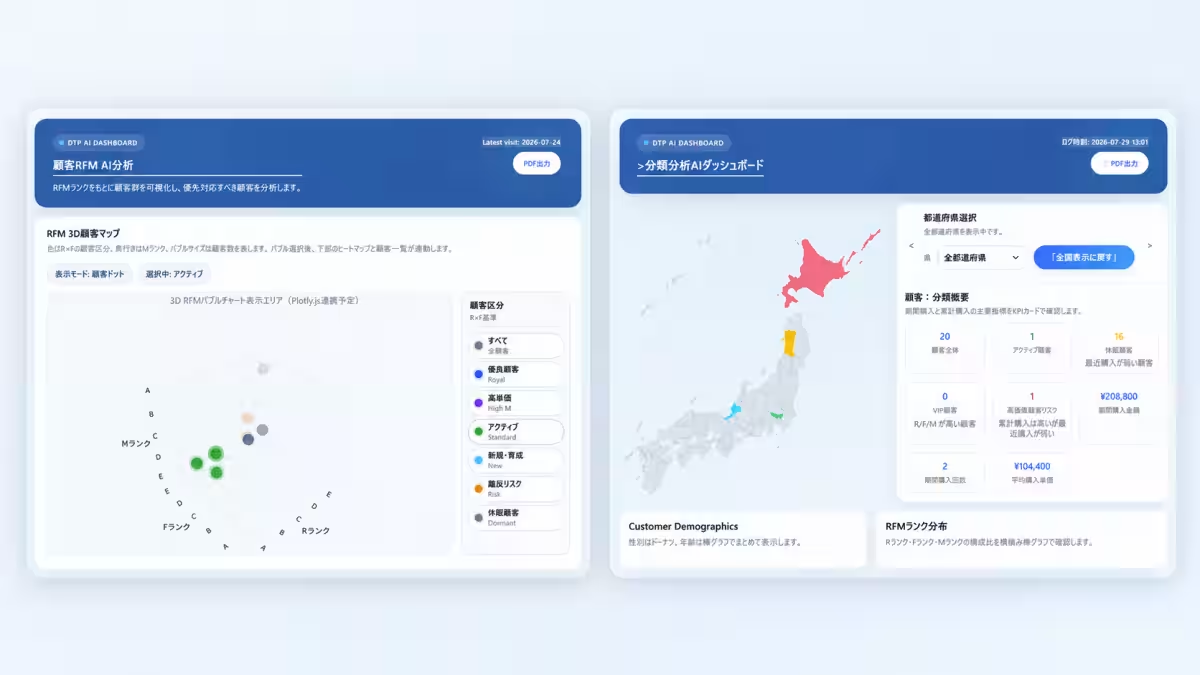
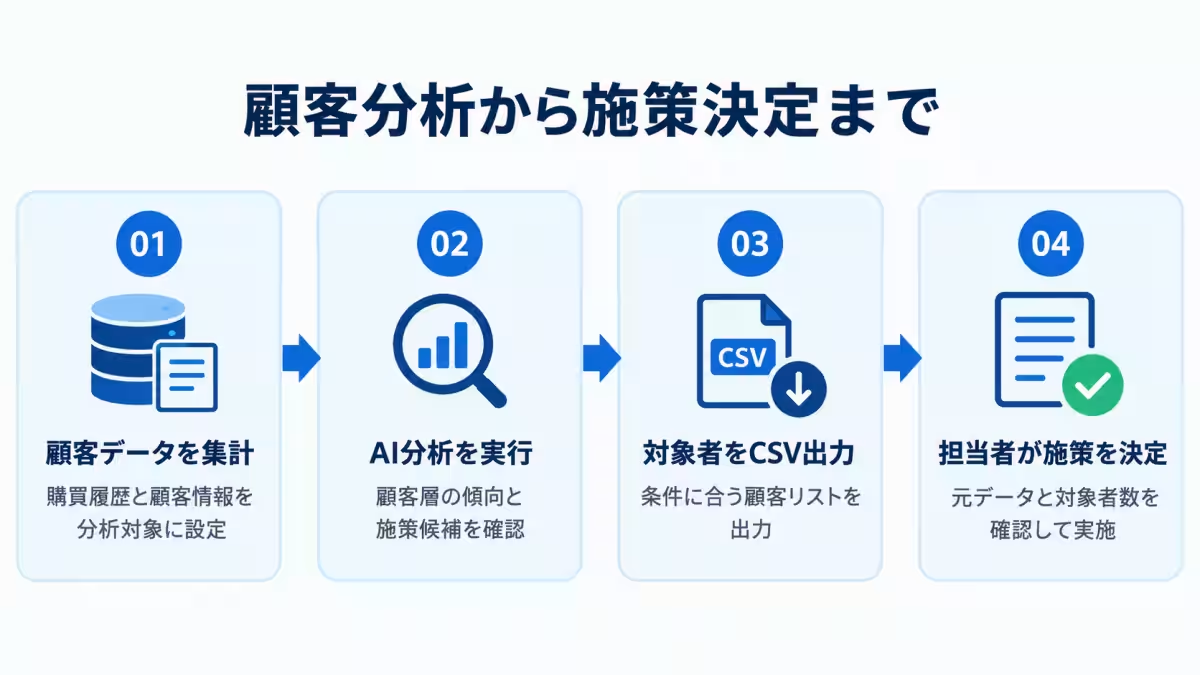
Both AI functionalities are designed to visualize purchase history and customer information stored within LCV on a streamlined dashboard. They assist business stakeholders in identifying suitable customer groups and exploring potential strategies. The Classification Analysis AI provides capabilities to extract target customers in CSV format directly from the dashboard, while the Customer RFM AI Analysis allows for the same from the RFM analysis screen, thus streamlining the workflow.
These features will be included as standard functionality for new clients and will be rolled out to existing customers in phases through updates.
Development Background
Loyal Customer Vision serves as a centralized tool that manages customer data from brick-and-mortar stores and e-commerce sites along with their purchasing history and points information. It accommodates RFM and decile analysis for efficient customer classification and segmentation.
In order for businesses to leverage the analysis results effectively for promotions, team members need to interpret collected data and make informed decisions regarding which customer segments to prioritize for targeted marketing efforts. The introduction of these AI functions aims to facilitate the entire process—from analyzing results to extracting target customers—directly on the user interface.
Customer RFM AI Analysis
The Customer RFM AI Analysis builds on the existing RFM analysis results, making customers' purchasing states more visible. RFM, which stands for Recency, Frequency, and Monetary, employs three key indicators to assess customers:
- - Recency: Days since last purchase
- - Frequency: Total number of purchases
- - Monetary: Total amount spent
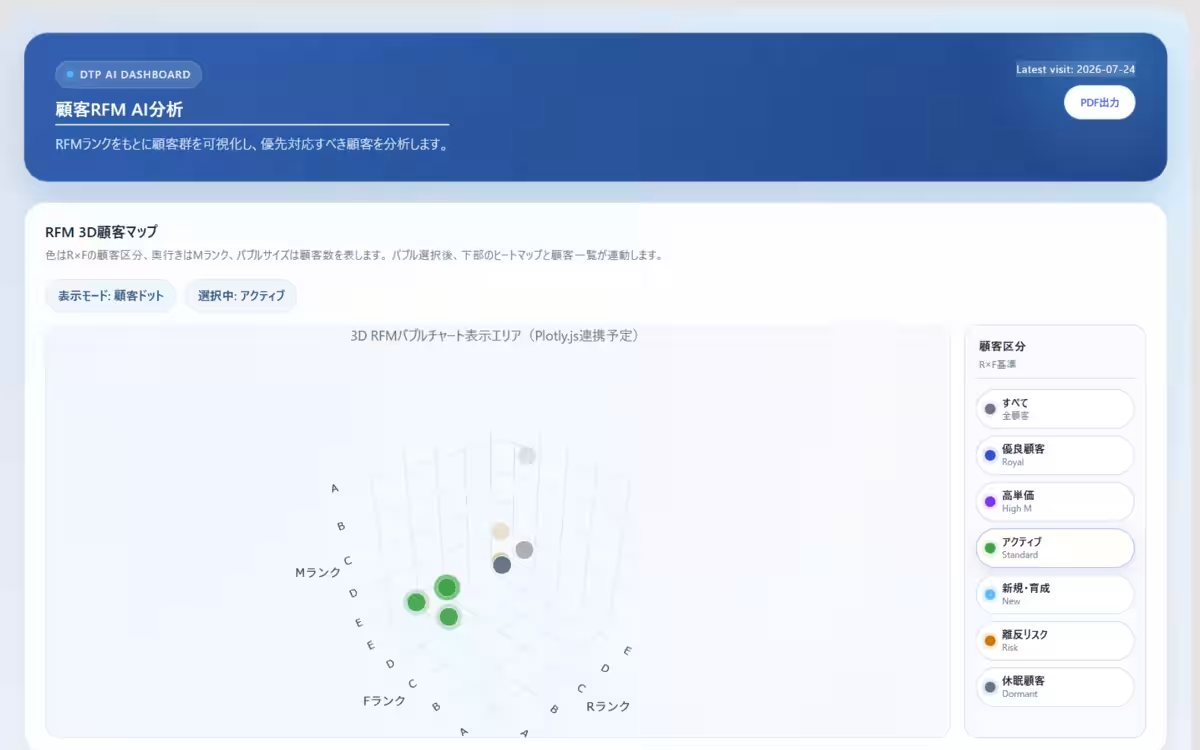
Through a user-friendly dashboard equipped with a 3D customer map and an R/F heat map, businesses can easily view the distribution of customers across various ranking tiers. Users can select customer classifications and R/F ranks to identify relevant segments.
For instance, the tool enables users to identify customers at risk of churning by sorting them based on purchase amounts, facilitating targeted follow-ups.
Classification Analysis AI
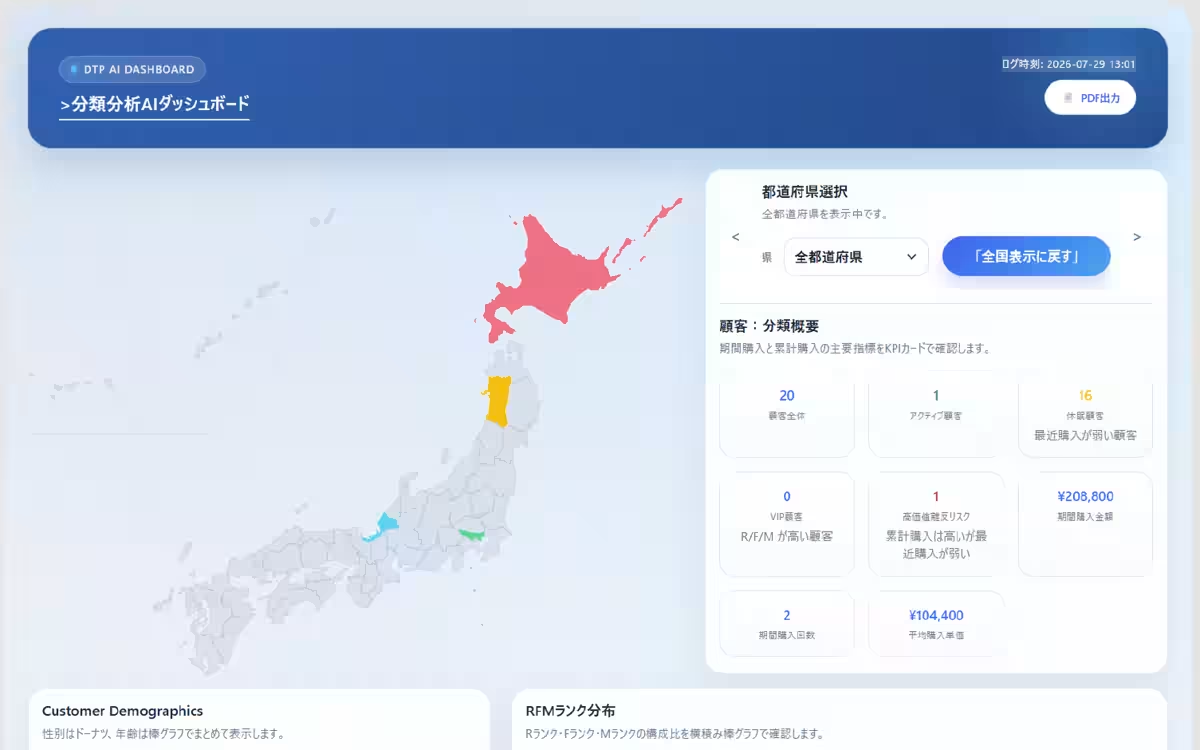
The Classification Analysis AI feature retains the existing classification analysis target and offers the functionality to examine customer distribution based on criteria such as regions, stores, attributes, and customer segments.
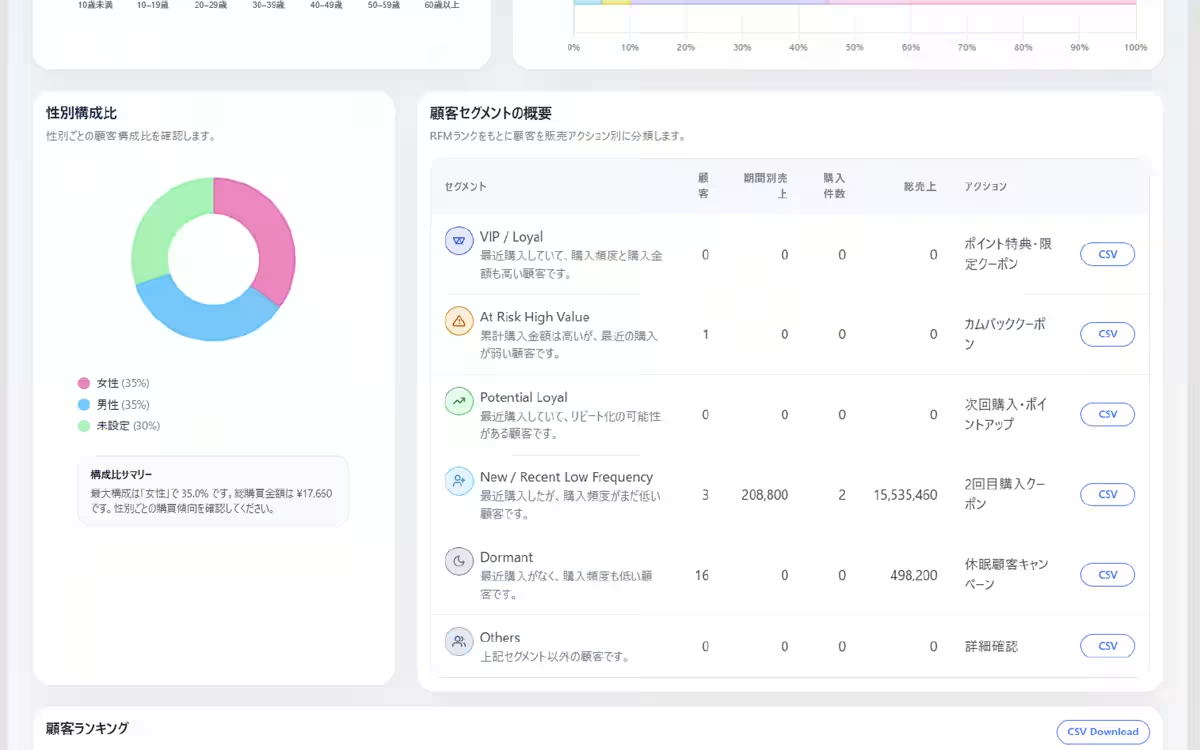
By selecting prefectures or stores from an interactive map or dropdown menu, users can see an array of data points including customer counts, demographics like gender and age structure, RFM ranks, and sales figures on a store-by-store basis.
This function allows businesses to filter their customer data by region or store and generate CSV exports for specified segments, providing invaluable insights. For example, it simplifies the process of identifying stores with high rates of dormant customers, enabling businesses to strategize accordingly.
Practical Applications of AI Analytics
The introduction of these AI capabilities opens up new avenues for targeted marketing initiatives, including:
- - Individual Follow-Ups for At-Risk Customers: Identifying high-value churn-risk customers and prioritizing follow-up actions based on AI insights.
- - Encouragement for Repeat Purchases: Selecting offerings for new customers to encourage a second purchase.
- - Strategizing for Dormant Customer Campaigns: Comparing dormant customer numbers across stores to determine where to implement promotional strategies.
- - Preparing Meeting Materials: Outputting customer composition data and AI insights into PDFs for review in management or marketing strategy meetings.
It's essential to note that while generating these insights, customer data such as names that could identify individuals are never transmitted to the AI functionalities.
Conclusion
Loyal Customer Vision is tailored to serve the unique needs of the apparel and retail sectors, helping businesses manage customer relationships effectively. By integrating advanced AI-driven analysis features, DT-P Company reflects its commitment to innovation and customer success in an ever-evolving marketplace.
For more information about the features and implementation of Loyal Customer Vision, please visit the official DT-P website.

Topics Consumer Technology)


【About Using Articles】
You can freely use the title and article content by linking to the page where the article is posted.
※ Images cannot be used.
【About Links】
Links are free to use.