




F-Pico, Beisia, and Kosok Sign Eco-Store Declaration for Sustainable Recycling in Communities
F-Pico, Beisia, and Kosok Reformulate Recycling with 'Eco-Store Declaration'
In a groundbreaking initiative, F-Pico Co., a leading manufacturer of food containers in Japan, Beisia Co., a popular supermarket chain, and Kosok Co., a packaging material distributor, have announced the 'Eco-Store Declaration'. This ambitious collaboration seeks to reduce environmental footprints and build a sustainable society through enhanced recycling practices in local communities.
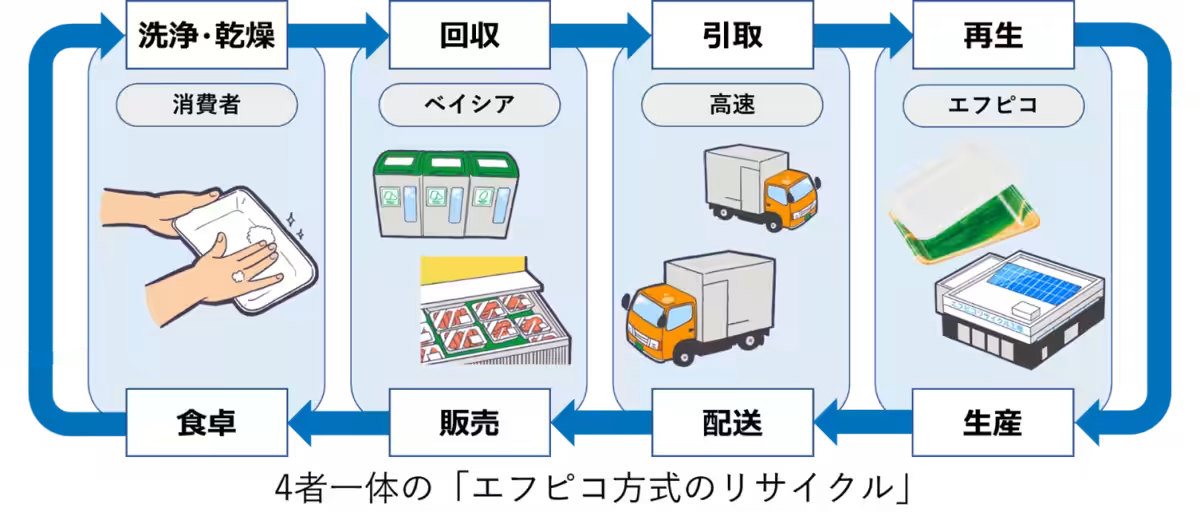
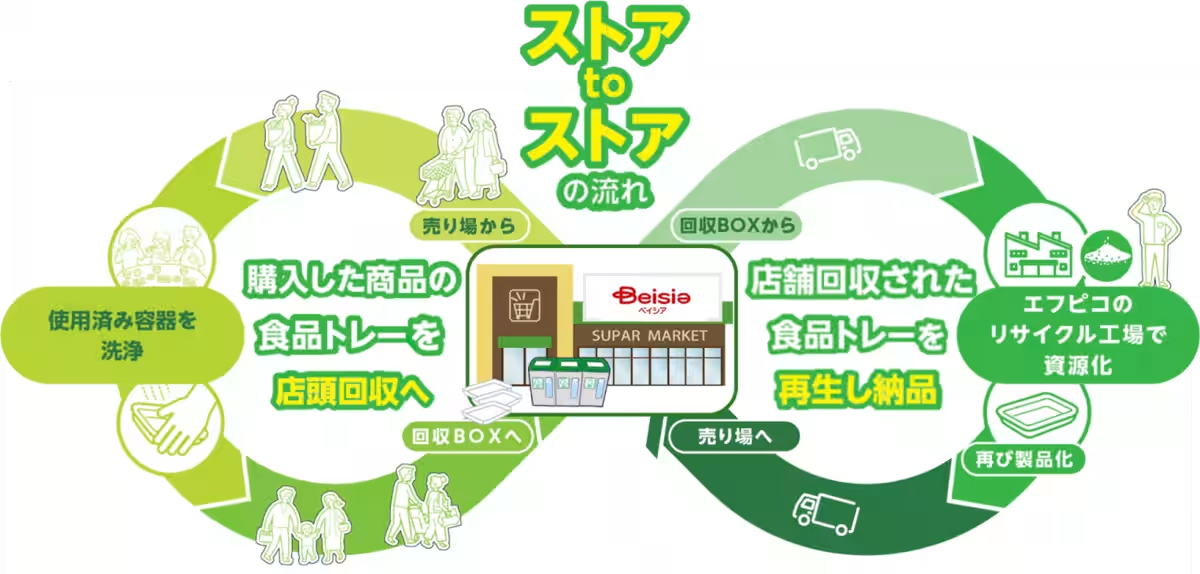
The project focuses on promoting horizontal recycling of food trays under the concept of 'Store-to-Store'. Starting from June 2025, Beisia plans to begin the collection of used food trays in 14 of its stores, expanding this initiative to an additional 57 stores in the Gunma and Chiba areas by March 2026. The collected food trays will be sent to F-Pico, where they will be processed into resource materials that can be reborn as eco-friendly products, such as Eco Trays. In this way, these eco-products will again be utilized in Beisia stores, effectively implementing a 'Store-to-Store' horizontal recycling model.
In this ecosystem, Kosok plays a vital role. It participates in the horizontal recycling effort by collecting used food containers during return trips of deliveries to supermarkets. Together, F-Pico, Beisia, Kosok, and consumers aim to foster a circular economy.
Goals and Objectives of the Collaboration
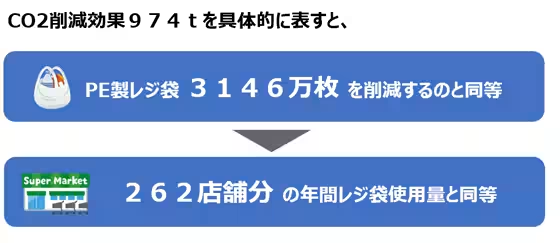
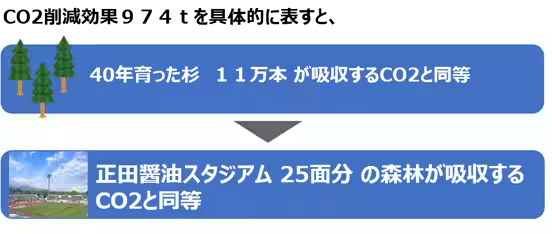
1. Reduction of CO2 Emissions: Beisia has made significant strides towards a more sustainable future, having reduced its CO2 emissions by 974 tons by using eco-products in its operations for the fiscal year ending February 2025. With the new collaborative efforts, Beisia aims to achieve a target reduction of 1,072 tons (a 110% increase from the previous figure) by the fiscal year ending in February 2030.
2. Increasing Collection Volumes of Food Trays: This partnership aims to bolster the collection of food trays, aiming for a total collection of 70 tons by the fiscal year ending in February 2027. As these companies work towards their goals, they intend to position Beisia's stores as eco-leaders within local communities, providing customers with a sustainable shopping experience.
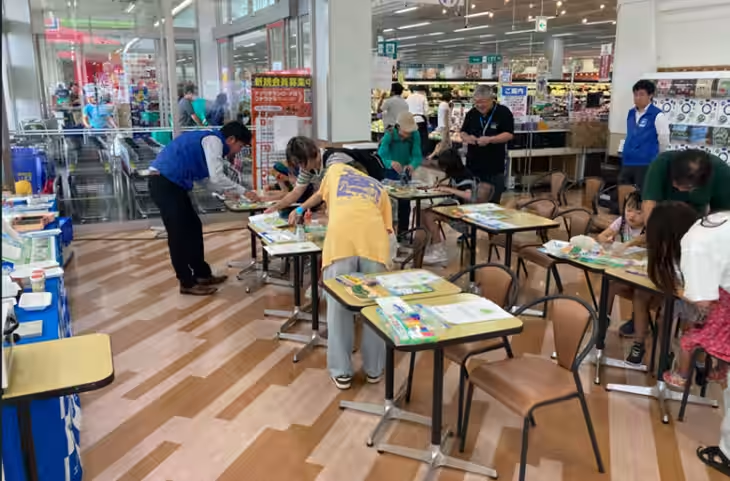
3. Environmental Engagement Events: In September 2024, Beisia will host the 'Marugoto Tsunagaru Festa Saku-daira' event at its Saku-daira store, showcasing recycling through food trays. Participants will have the chance to create key holders from snacks containers, encouraging families to take part in sustainable practices. The event will invite participation from 63 families, emphasizing education and engagement in eco-friendly endeavors.
The Importance of Circular Economy
The 'Eco-Store Declaration' signifies a crucial step forward in promoting circular economies, where products are designed to be reused and recycled, thus minimizing waste. By ensuring that materials have multiple life cycles, this initiative challenges the traditional linear recycling process, where materials are often discarded after their initial use.
Collaboration is vital for success. Stakeholders, including consumers, supermarkets, dealers, and manufacturers like F-Pico, are coming together to build a more sustainable society. The 'Store-to-Store' model fosters an inclusive approach towards recycling, promoting awareness and practical action among community members.
Conclusion
As three influential companies join hands, this collaboration not only aims to reduce environmental impacts but also inspires consumers to participate actively in recycling efforts. It embodies the collective dream of transitioning towards a sustainable, circular economy. Beisia strives to set an example for other retailers, showing that sustainability can be profitable and beneficial for society as a whole.
Through this initiative, F-Pico, Beisia, and Kosok not only take responsibility for their environmental footprint but also contribute significantly to the well-being of local communities for generations to come. Together, they are setting a standard for corporate responsibility in Japan's supermarket and packaging industries.

Topics Consumer Products & Retail)
【About Using Articles】
You can freely use the title and article content by linking to the page where the article is posted.
※ Images cannot be used.
【About Links】
Links are free to use.