



Asset Management One's Discount Japanese Equity Fund Surpasses 100 Billion Yen in Total Assets
Asset Management One Achieves Milestone in Equity Fund
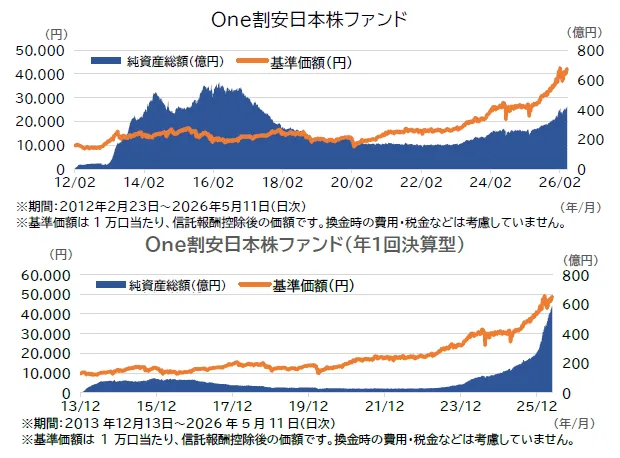
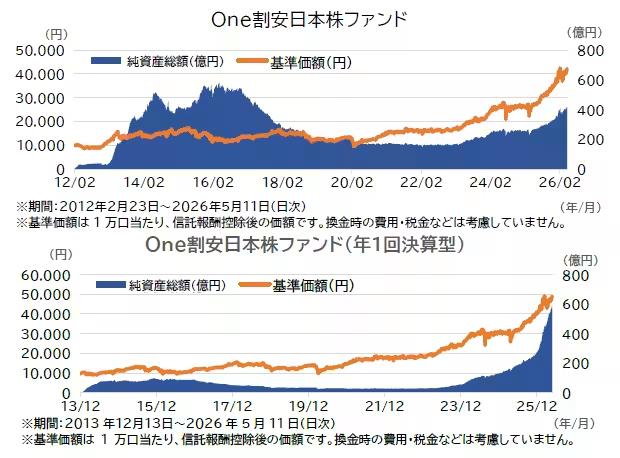
In a significant achievement, Asset Management One Co., Ltd., based in Chiyoda, Tokyo, has announced that its Discount Japanese Equity Fund and its annual settlement variant have surpassed a total asset amount of 100 billion yen as of May 11, 2026. This milestone marks a substantial recognition of the company’s strategy in the Japanese equity market.
Launched on February 23, 2012, the Discount Japanese Equity Fund has navigated through various market fluctuations. Despite the challenges, it has steadily built a track record of performance, demonstrating resilience and adaptability. The fund's enduring success highlights the effectiveness of Asset Management One's approach, which is centered on harnessing the power of investment to foster future financial growth.
Overview of the Fund
The Discount Japanese Equity Fund aims to provide investors with a diversified portfolio that takes advantage of undervalued Japanese stocks. It is particularly designed for investors looking for long-term capital appreciation in Japan’s dynamic market environment. Since inception, the fund enhanced its performance through strategic stock selection, which has contributed to its growing asset base. In addition to the annual settlement type, a monthly settlement version is also available, catering to varied investor preferences.
Performance and Investor Support
Details regarding performance history and operational metrics can be found on the company’s official website in their fund communications. Asset Management One remains committed to supporting investors in their wealth-building journey. With a guiding principle of “Nurturing the future through the power of investment,” the firm continuously strives to provide high-quality investment solutions tailored to individual and institutional investors alike.
Risks and Costs of Investment
Investors should be aware of the inherent risks associated with mutual funds:
- - Market Fluctuations: The value of stocks can significantly change, which could impact the fund's net asset value.
- - Selection Risks: Individual stock choices may not always lead to favorable results.
- - Liquidity Risks: The ability to sell shares might be affected by market conditions.
Each fund's performance, including gains and losses, ultimately belongs to the investors. There is no guarantee on the return of the principal investment, as declines in the fund's value could result in financial losses for investors. Furthermore, it is crucial to note that mutual funds differ from general deposits and savings instruments.
Distributions and Fees
Regarding distributions, it is noted that:
- - Payments may exceed the earnings generated during a particular calculation period, not necessarily reflecting the fund’s actual performance.
- - Depending on individual capital situations, distribution payments may effectively translate into a return of principal.
- - Distributions are funded from the net asset total; hence, after payments are made, the fund’s net asset value may decrease, influencing its price.
Fees associated with the funds include:
- - Purchase Fee: Up to 3.3% of the purchase price (net of consumption tax), determined by the selling company.
- - No redemption fees but a retention fee tied to the net asset value at an annual rate of 1.265% for management costs, plus other incidental expenses.
Be aware that these and other related costs may vary and could be revised periodically.
About Asset Management One
Asset Management One was established in October 2016 and boasts approximately 80 trillion yen in assets under management across both investment advisory and mutual fund sectors. The firm aims to combine deep investment expertise to offer innovative solutions in various investment strategies, guided by a mission to enhance the future through effective investment strategies. For more information, visit their official website: Asset Management One.
Additionally, potential investors should remember that mutual funds are not protected by deposit insurance and do not guarantee either principal or yield, meaning it’s imperative to carefully consider your investment objectives before engaging with these financial products.
Topics Financial Services & Investing)
【About Using Articles】
You can freely use the title and article content by linking to the page where the article is posted.
※ Images cannot be used.
【About Links】
Links are free to use.