



Breakthrough in Allergenic Pollen Control: MS2 Type of Pollen-Free Cedar Identified
Breakthrough in Allergenic Pollen Control
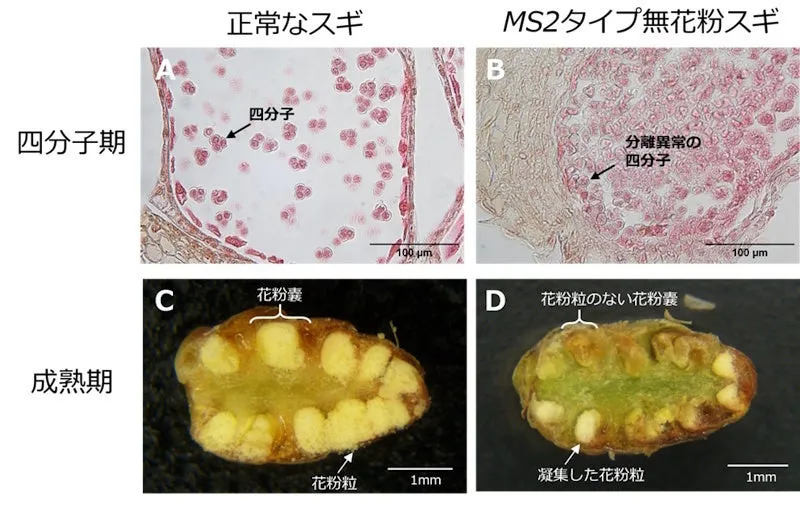
In a significant advancement for pollen allergy management, a collaborative research team comprising the National Institute of Forest Science, Niigata University, Tokyo University, the Institute of Basic Biology, Niigata Forestry Research Institute, and Okayama University has successfully pinpointed a candidate gene for the MS2 type of pollen-free cedar, a variety highly beneficial for those suffering from pollen allergies.
Key Findings
The study revealed crucial insights into how pollen formation is inhibited in this cedar variety. Although the MS2 type is known for producing minimal pollen, its genetic mechanisms were previously unclear. Through genetic analysis of intercrossed families, researchers narrowed down the MS2 gene's localization to a specific region on the fifth chromosome. By utilizing the reference genome sequence of the cedar, they examined genes within this area.
Further analysis of gene expression in male flowers and the investigation of DNA sequence variations led to the identification of the GDSL-type esterase/lipase (GELP) gene as the primary candidate gene associated with the MS2 type. This gene was pivotal due to its role in the inhibition of pollen production.
DNA Marker Development
To improve the identification process, the research team developed a DNA marker capable of detecting mutations in the GELP gene. This allows for the selection of MS2 type cedar seedlings at the DNA level, streamlining the breeding processes for pollen-free varieties.
The findings signify a leap in both the genetic understanding of pollen-free cedars and the potential for practical applications in managing sources of pollen, which continue to pose challenges for allergy sufferers.
Publication and Future Directions
The detailed results of this research were published online on May 19, 2026, in BMC Genomics, providing a robust reference for further studies in the field. This work is expected to serve as a technical foundation for combating pollen production and enhancing public health initiatives around allergies.
Researchers involved in the study hope that these insights can not only pave the way for creating improved pollen-free cedar varieties but also contribute significantly to the broader understanding of plant genetics and allergen production.
Overall, this collaborative research showcases the critical role of genetics in addressing environmental and health issues, with the MS2 type of pollen-free cedar exemplifying how genetic science can lead to practical solutions in allergy management.
For more detailed content on this groundbreaking research, interested parties can refer to the official press release from Okayama University.





Topics Health)




【About Using Articles】
You can freely use the title and article content by linking to the page where the article is posted.
※ Images cannot be used.
【About Links】
Links are free to use.