



How Unlearning and Relearning Becomes Established in the Workplace
The Establishment of Unlearning and Relearning in the Workplace
In an era where AI is becoming increasingly prevalent, the principles of unlearning and relearning have risen to the forefront of workplace discussions. Request Inc., based in Shinjuku, Tokyo, has recently released an insightful report focusing on how these concepts can embed themselves into organizational practices. This report is a continuation of previous discussions highlighting the transformation of judgment processes in the workplace using a comprehensive analysis of operations across 980 companies, comprising around 338,000 workers.
Understanding the Shift in Workplace Dynamics
As companies transition into the age of AI, the roles of individuals are evolving. Tasks that once required critical human judgment are becoming easier for AI to handle, such as searching for information, organizing data, and referencing existing cases. However, the human element remains crucial when it comes to understanding nuances such as differences between customers, constraints in various projects, and varying preferences among stakeholders. In this context, the critical question becomes how much organizations can develop and solidify their workforce's capacity for independent judgment rather than merely increasing knowledge.
The analysis carried out by Request Inc. reveals a worrying trend: as companies optimize processes to rely on precedent-driven actions, the essential experiences that foster judgment are diminishing. Tasks that would typically encourage critical thinking, such as analyzing conditions and articulating the reasons behind decisions, are often overshadowed in favor of automation and conformity. The report emphasizes that simply amassing new knowledge is insufficient for effective judgment to take hold within organizations; instead, companies must ensure that the structures in which judgment can flourish are present in their work environments.
The Peaceful Reading of Change
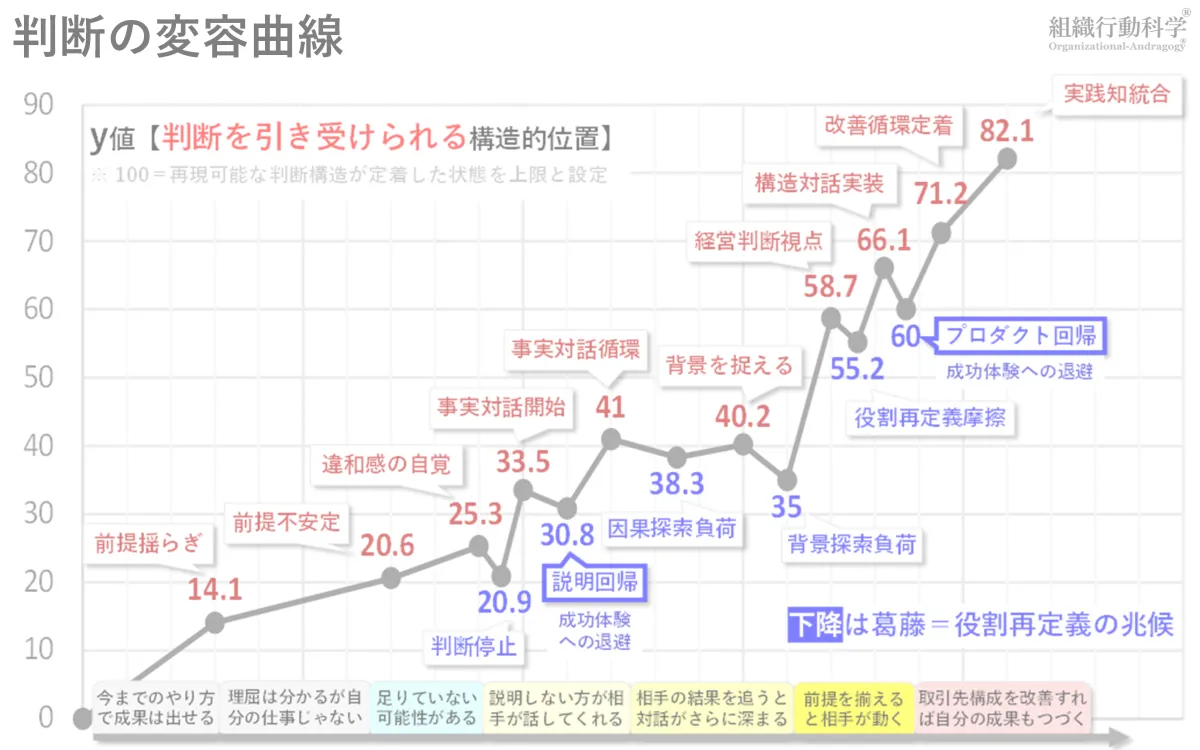
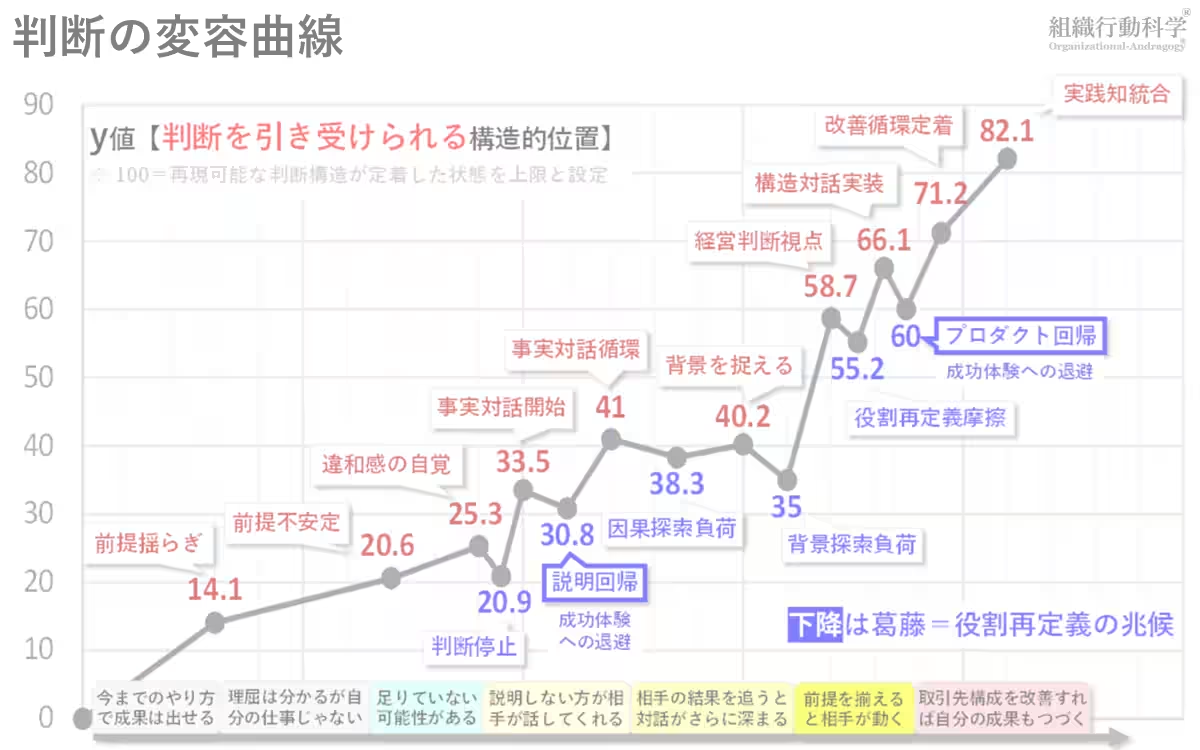
The report presents a clear distinction between the sequence of learning and the sequence of establishing judgment practices. It elucidates that unlearning and relearning are not instant phenomena that occur through singular workshops or briefings. Instead, they are gradual processes requiring deep engagement with changing assumptions and practices in everyday work scenarios.
Key to this transformation is recognizing that change is not linear. There are inevitable downswings and regressions along the way that signify adaptive responses to challenges that cannot be met with previous experiences or established roles. Therefore, what it means to embed unlearning and relearning goes beyond simply executing learned strategies—it involves an intrinsic evolution in the decision-making processes within the workplace.
Structural Positioning, Not Just Skills
One of the notable aspects of the report is its stance on evaluating growth. Rather than focusing solely on knowledge accumulation or proficiency in skills, it assesses growth based on an individual's capacity to engage in judgment within a structured context. This perspective shifts focus from personal abilities to whether an organization's processes allow for judgments to be made consistently and collaboratively.
The report doesn't dwell on whether individuals are simply 'motivated' or 'understanding'; it scrutinizes if the environment enables judgments to arise. Are reasoning and dialogues shared? Can decisions be replicated and validated across teams rather than relying on individual intuition? These factors are essential in determining how effective judgment can be rooted within organizations.
Designing Decision-Making Experiences
To make unlearning and relearning habitual in workplaces, it is crucial to design decision-making experiences that are small, sequential, and embedded in everyday tasks. Excessive training sessions detached from regular work often hinder the adaptation of new responsibilities due to time constraints and focuses on maintaining existing performance metrics. Instead of implementing large-scale changes, organizations are urged to create careful yet impactful learning experiences during normal operations, systematically challenging existing precedents.
Thus, the approach includes designing appropriate challenges, experiencing them practically, reflecting on those experiences through training, and finally integrating this knowledge into operational frameworks. This comprehensive approach ensures that judgment experiences evolve naturally within the existing organizational structure.
Remote Judgments and Evolving Perspectives
Ultimately, change in workplaces is not just about knowledge or skills—it involves a shift in perspectives and role definitions. This report captures an 18-month journey of experiential learning where assumptions are continuously challenged, resulting in an evolving understanding of responsibilities within a business context.
The transformative journey eloquently described in the report calls attention to fundamental aspects where professionals migrate from focusing merely on individual sales to comprehending collective business outcomes and transitioning from being 'sellers' to 'organizers.' Such a growth process instills a more holistic perspective beneficial for both individual and organizational development.
Conclusion
The essence of the findings emphasizes that simply gaining knowledge is not enough. It is critical to intentionally design situations requiring judgment within the workplace, enabling experiences to be reflected upon and leveraged for future decision-making. Thus, Request Inc. is committed to fostering environments that support such growth, guiding organizations into realizing the full potential of their human resources in the age of AI. Through their continued efforts, they aim to transition dependent judgment processes into re-creatable decision-making abilities across organizations, making unlearning and relearning integral facets of workflow in the modern workplace.

Topics Other)
【About Using Articles】
You can freely use the title and article content by linking to the page where the article is posted.
※ Images cannot be used.
【About Links】
Links are free to use.