



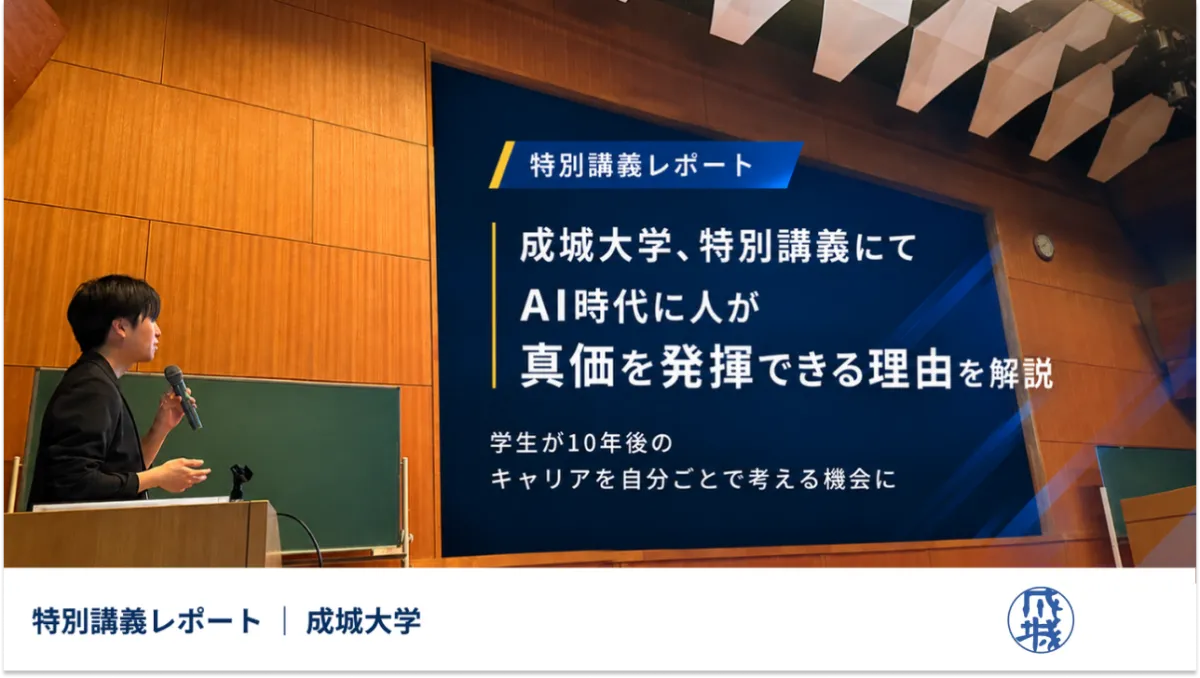
Exploring the Value of Humanity in the AI Era: Special Lecture at Seijo University
Introduction
Recently, Anddot Co., Ltd. hosted a special lecture at Seijo University, led by CEO Yuta Ibaraki. As a part of the Global Innovation Management I course, taught by Professor Reiko Takenouchi, the lecture sought to delve deep into the transformative impact of Artificial Intelligence (AI) on jobs and skills. It not only addressed the types of roles that might fade away or endure but also introduced Anddot’s proprietary framework, the AI Skills Pyramid®.
The AI Skills Pyramid
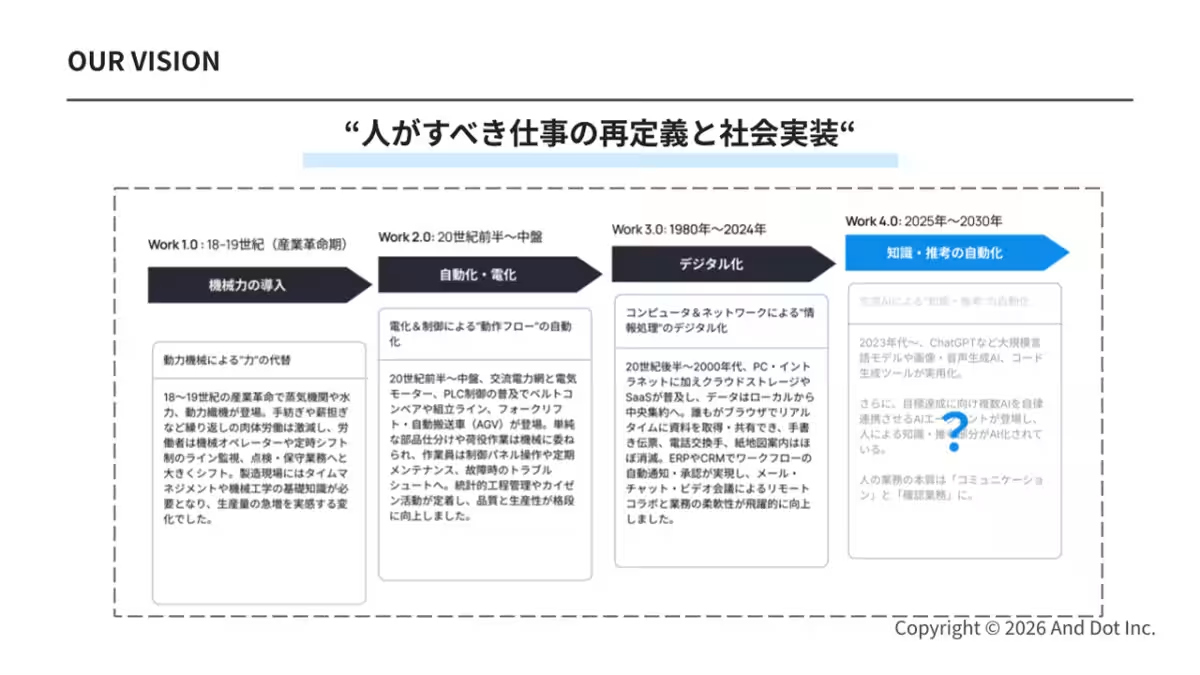
During the lecture, Ibaraki unraveled the evolution of technology, starting from the advent of movable type printing to contemporary generative AI. He emphasized an accelerated pace of change and proposed a structured approach in the form of the AI Skills Pyramid®. This framework outlines the four crucial stages for enhancing AI proficiency:
1. AI Literacy (Foundation Knowledge)
2. AI Creativity (Idea Generation for AI Utilization)
3. AI Prompt Design (Skill in Directing AI)
4. Technical Skills (Application in Practical Settings)
This systematic path offers an avenue for individuals to adapt and excel in a digital and AI-driven work environment.
The Changing Landscape of Professions
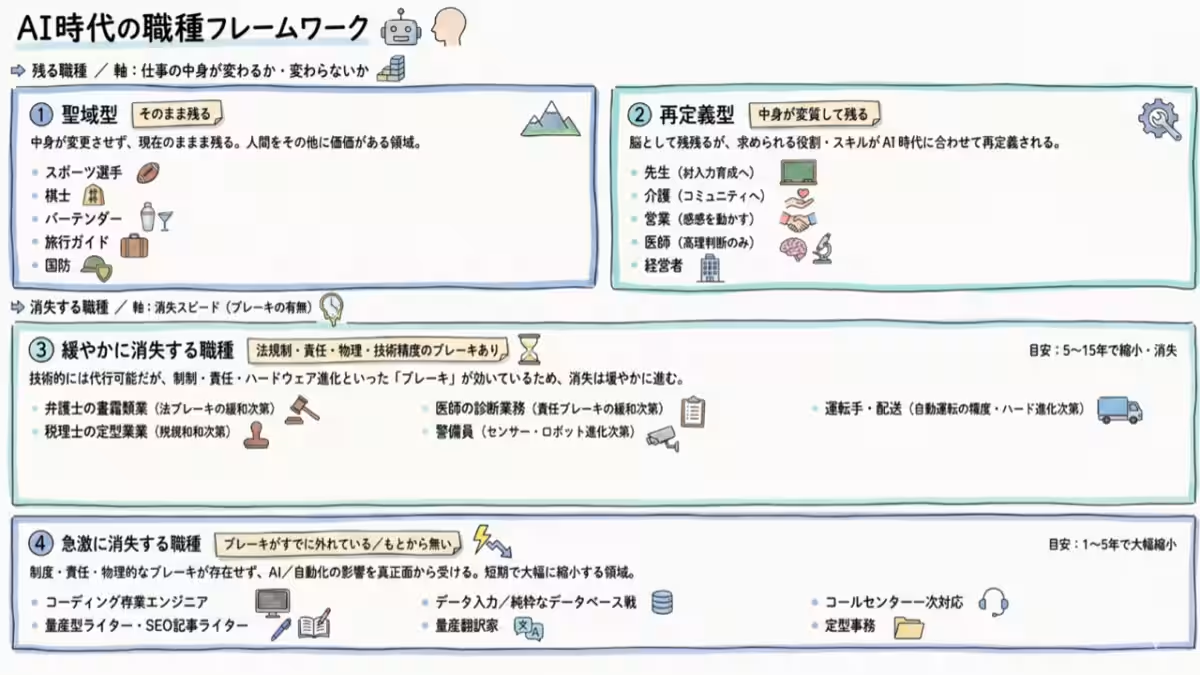
Ibaraki's lecture also explored a framework to categorize various professions under the influence of AI. He classified roles into four segments:
- - Sanctuary Roles (E.g., Athletes, which remain unchanged)
- - Redefined Roles (E.g., Salespersons and Physicians, whose roles are evolving)
- - Gradually Disappearing Roles (E.g., Legal document preparation)
- - Rapidly Disappearing Roles (E.g., Coding and Data Entry)
Recommended Actions for Young Adults
Ibaraki proposed three essential actions that individuals in their early 20s should undertake:
1. Gain a Broad Scope of Practical Experience: This allows one to objectively assess personal capabilities and understand labor market expectations.
2. Define one’s Will, Can, and Must: Framing aspirations without being confined by current circumstances.
3. Achieve Immediate Capability in a Specific Field: This transition enables a shift from being chosen by companies to becoming selective about which companies to join.
Insights from Alumni: Career Changes After Joining the Workforce
The latter half of the session featured an engaging dialogue between Ibaraki and Yukari Iida, a graduate of Seijo University currently leading the Inside Sales segment at Anddot. They discussed Iida’s journey, the decisions made during her university years, and how her diverse experiences—ranging from long-term internships to freelance work—shaped her career path. By addressing students' queries, she illustrated the fluid nature of career growth and change after entering the workforce.
Student Reactions: Concerns and Curiosities About Career
Following the lecture, an anonymous Q&A session revealed a palpable concern among students regarding job displacement due to AI. Many posed questions about what skills to prioritize for future careers. Student responses indicated a majority had not given serious thought to long-term changes within society and workplaces, underscoring the value of discussions like these in shaping their career perspectives.
Conclusion: Future Outlook on Coexisting with AI
Anddot aims to redefine roles that humans should engage in, creating an environment where everyone can focus more on creative roles. Alongside corporate AX support, they are also committed to educational endeavors for future leaders. The company is currently looking for interns who can thrive in sales roles and is devising educational content for job seekers and students.
Company Profiles
Anddot Co., Ltd.
- - CEO: Yuta Ibaraki
- - Headquarters: Shibuya, Tokyo, Japan
- - Business Focus: Utilizing generative AI for transformative solutions
- - Website: Anddot
Seijo University
- - Location: Setagaya, Tokyo, Japan
- - Website: Seijo University


Topics Other)

【About Using Articles】
You can freely use the title and article content by linking to the page where the article is posted.
※ Images cannot be used.
【About Links】
Links are free to use.