



Elucidating the Mechanism of Ribosome Tunnel Blockage Resolution by YheS to Restart Translation
Understanding Ribosome Function: The Role of YheS
In a groundbreaking study, a research team from the University of Tokyo, Tokyo University of Science, Okayama University, and the Japan Science and Technology Agency (JST) has clarified how a vital protein, YheS, plays a crucial role in overcoming ribosome pauses during protein synthesis. This discovery has important implications for bioengineering and the precise control of protein expression, enhancing the future of biotechnology.
Overview of the Research
On June 16, 2026, this collaborative effort published its findings in Nature Communications. The research was led by a group of scholars, including graduate students and professors from various institutions. They utilized a combination of cell-free translation systems in E. coli and cryo-electron microscopy to visualize the complex structure formed between the YheS protein and the ribosome that had paused during the synthesis of the SecM peptide.
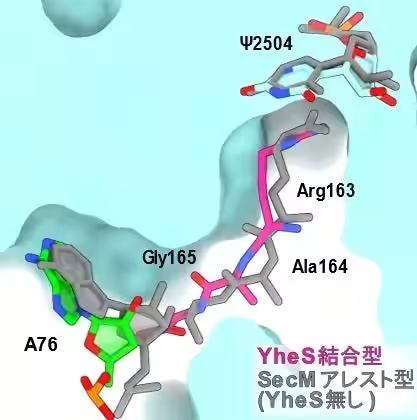
The team successfully determined the three-dimensional structure of this complex, offering insights into the molecular mechanism by which YheS can pull tRNA out of the ribosome, effectively restarting translation. Such a mechanism is critical, as it unveils deep understanding into the fundamental process of translation halt — an essential function in life.
Implications of the Findings
Considering that protein synthesis is a key process in all living organisms, understanding how YheS interacts with ribosomal pauses could pave the way for advancements in multiple fields, including therapeutic protein production and synthetic biology. The research indicates that intricate control of ribosome function can lead to more efficient production of valuable proteins, which is a game changer in biotechnology. This knowledge can assist in optimizing processes for producing functional proteins on a large scale, potentially revolutionizing industries ranging from pharmaceuticals to agriculture.
Methodology
The research team employed advanced techniques, involving cryo-electron microscopy to capture images of the ribosome protein complex. By analyzing the structure, they could then perform mutation analyses and molecular dynamics simulations to precisely understand how YheS facilitates the release of tRNA from the stalled ribosome.
This intricate study does not just illustrate a single protein's role in a biochemical pathway; it enhances the broader understanding of cellular function at a molecular level, vital for elucidating how cells maintain homeostasis during stress situations.
Scholarly Contribution
The findings will help in building a foundation for future studies probing into the mechanisms regulating translation in eukaryotes and prokaryotes. With the publication being a part of the high-impact Nature Communications, it underscores the importance of multidisciplinary collaboration in scientific research.
The authors of the study include prominent figures such as Kaishi Iso, Toma Ikeda, Kohei Yamasaki, alongside several other specialized researchers. They collectively contributed to unraveling the complexities of ribosomal behavior during protein synthesis.
Given the funding from various grants, including those provided by the Japan Society for the Promotion of Science (JSPS) and the Japan Agency for Medical Research and Development (AMED), it highlights the collaborative efforts in enhancing Japan's research capabilities in life sciences. It is a testament to how intensive research can contribute to sustainable development goals by improving production processes that impact the environment and society positively.
Conclusion
The elucidation of the molecular mechanism involving YheS opens up new avenues for biotechnological applications, particularly in controlling and optimizing protein synthesis processes. As more researchers engage with these findings, the potential to innovate and improve bio-manufacturing practices becomes a reality attached to this line of research. Understanding these intricate biochemical processes is essential for addressing global challenges in health and sustainability, as we continue to explore the complex workings of life at the molecular level.



Topics Consumer Technology)
【About Using Articles】
You can freely use the title and article content by linking to the page where the article is posted.
※ Images cannot be used.
【About Links】
Links are free to use.