



Why AI IVR Adoption Faces Delays and Decision-Making Challenges
Introduction
Foonz Co., Ltd., located in Yokohama, Kanagawa, recently conducted a survey targeting executives and department heads from companies with over 100 employees who have been involved in the decision-making process for AI IVR implementation in the last two years. The survey aimed to uncover the barriers and internal structures affecting the decision-making process regarding the adoption of AI IVR systems.
Despite the growing focus on AI IVR systems as part of digital transformation efforts aimed at enhancing customer satisfaction and operational efficiency, many organizations find themselves stuck at the decision-making phase, failing to finalize adoption. What are the underlying causes preventing these companies from moving forward? Are they purely technical issues such as the accuracy of AI systems, or do they stem from organizational challenges, including concerns about cost-effectiveness and decision-makers' anxieties?
Survey Overview
The survey titled "Barriers to Decision-Making and Internal Structures in AI IVR Adoption" was conducted as follows:
- - Survey Period: February 24-25, 2026
- - Methodology: Internet survey conducted by PRIZMA
- - Participants: 1,017 individuals who are involved in the AI IVR decision-making process at their companies, categorized as follows:
2. 558 individuals currently considering AI IVR adoption.
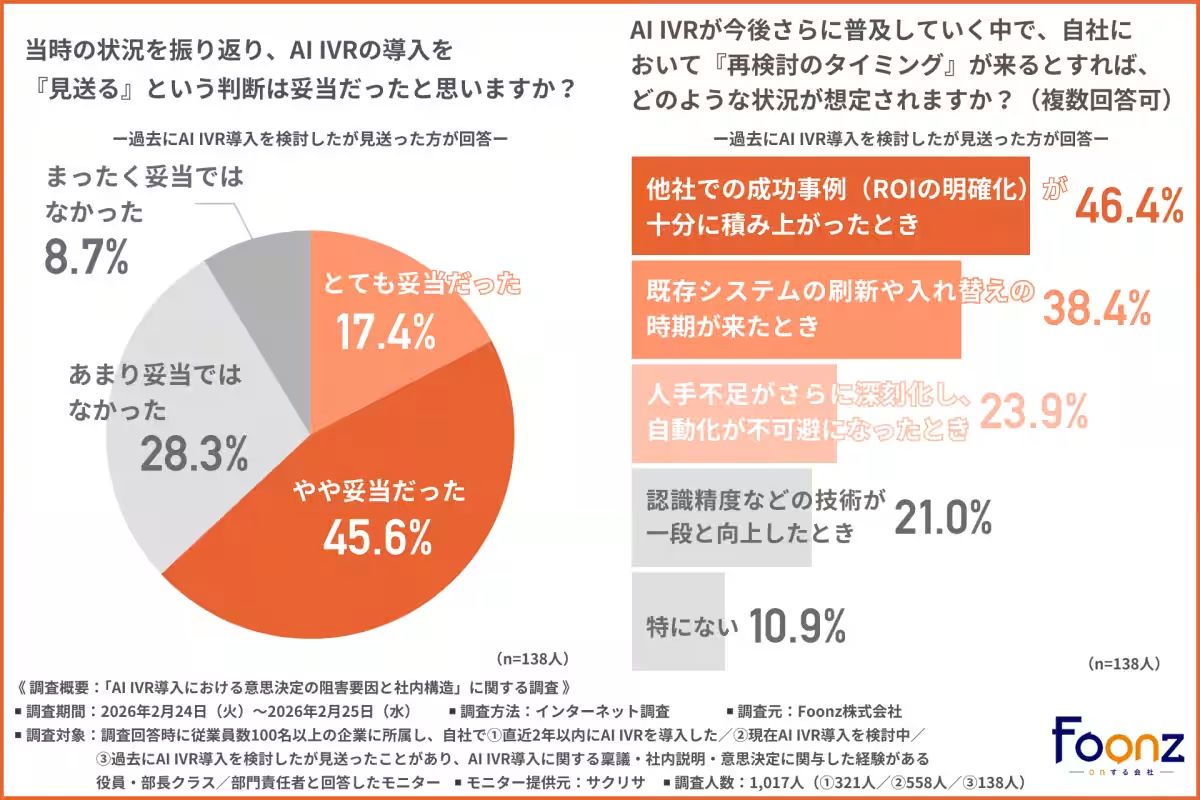
3. 138 individuals who previously considered AI IVR but ultimately decided against implementation.
Key Findings
Understanding the Stagnation Phase
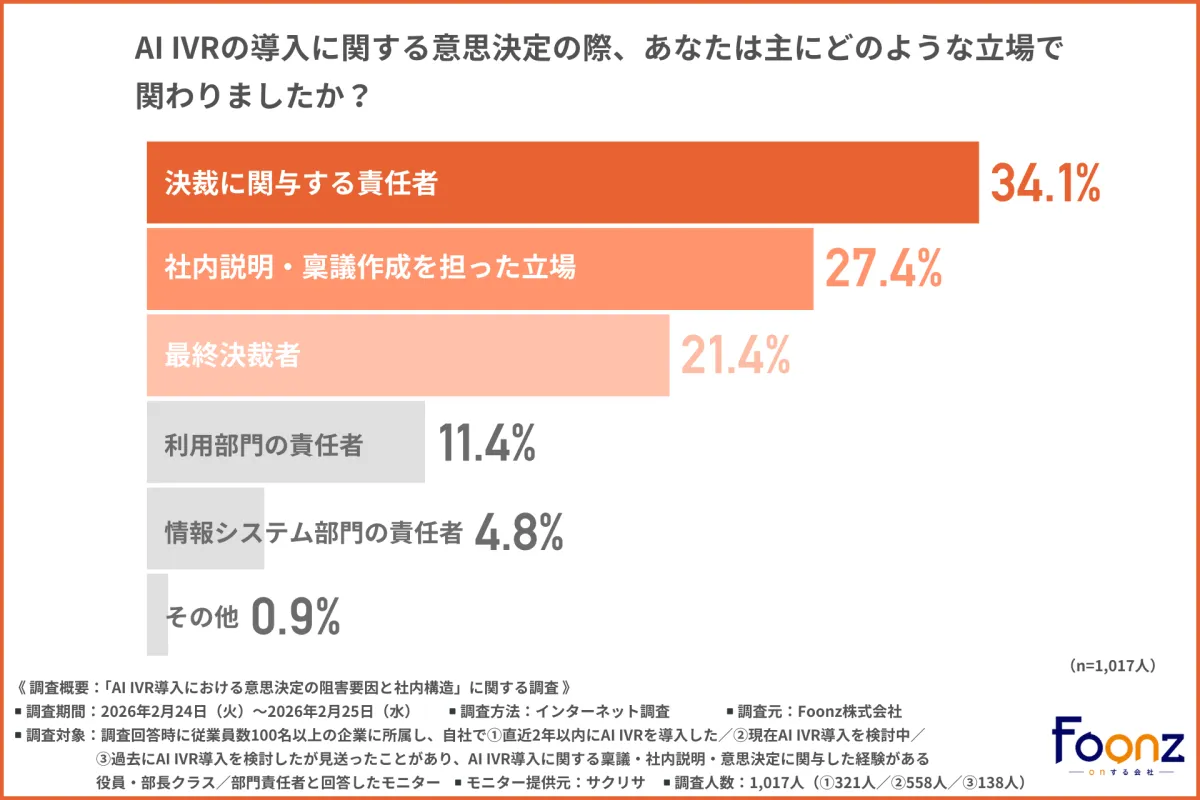
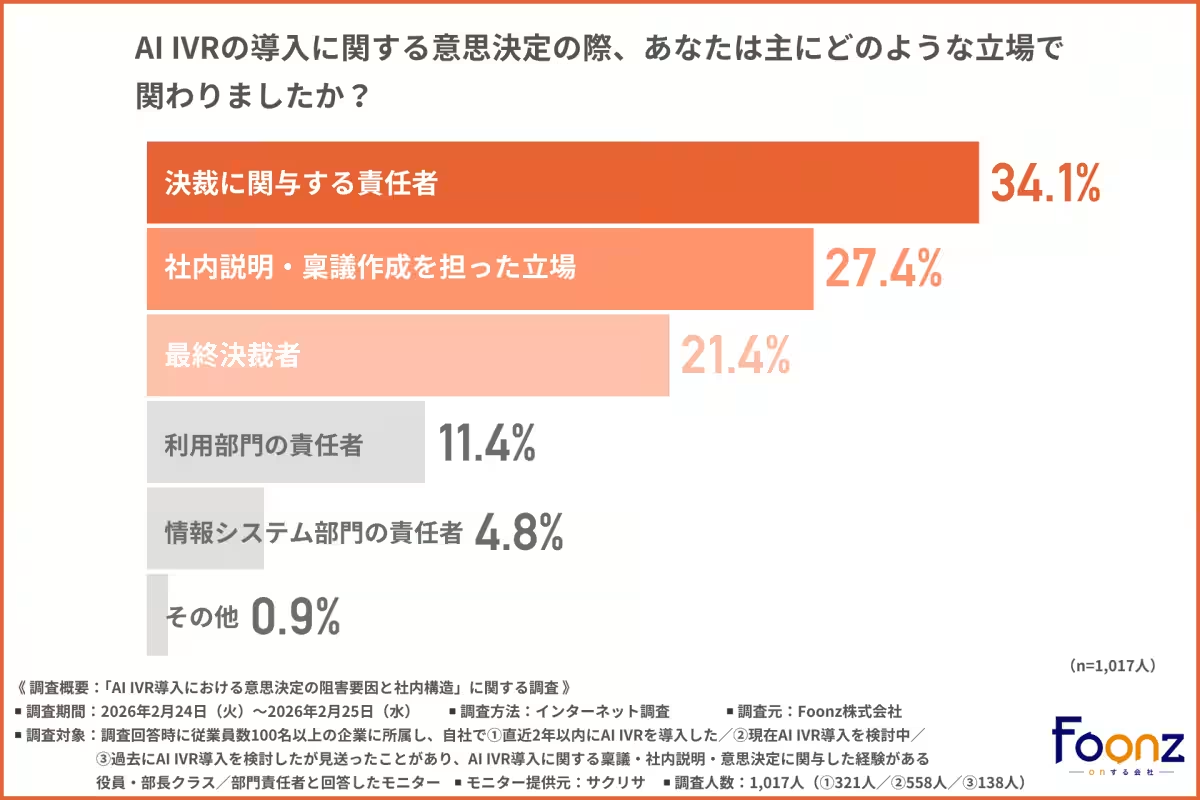
Respondents were asked about their involvement in AI IVR decision-making processes. The largest group (34.1%) reported being decision-makers, followed by those responsible for drafting and presenting proposals (27.4%) and final decision-makers (21.4%). This indicates a significant level of engagement from both decision-makers and operational staff, highlighting the cross-departmental nature of AI IVR adoption.
Time Consumed in Deciding Factors
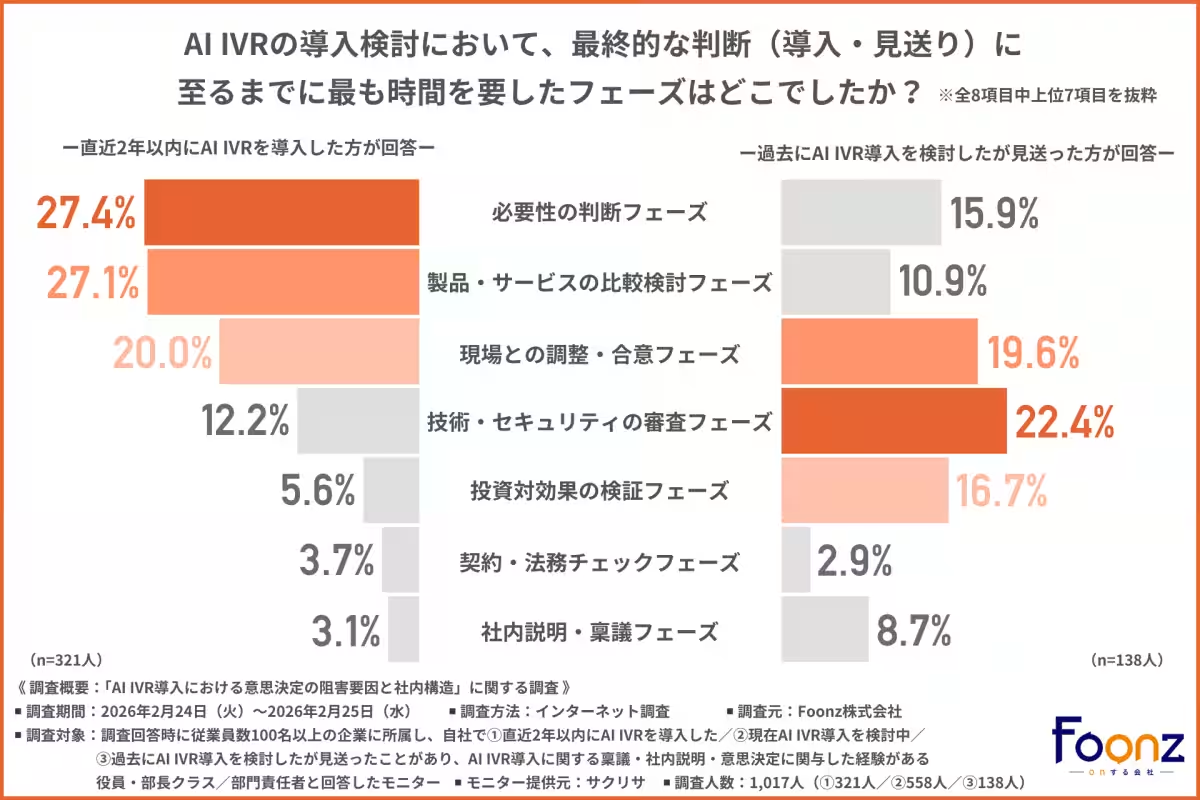
When asked which phase of the AI IVR adoption process took the most time, those who had successfully implemented AI IVR indicated that they spent considerable time on establishing its necessity and product comparisons. In contrast, those who chose not to proceed cited delays related to technical and security reviews and adjustments with the operational teams. This suggests that even with initial enthusiasm, companies can lose momentum due to internal security standards and operational compatibility issues.
Barriers to Progress
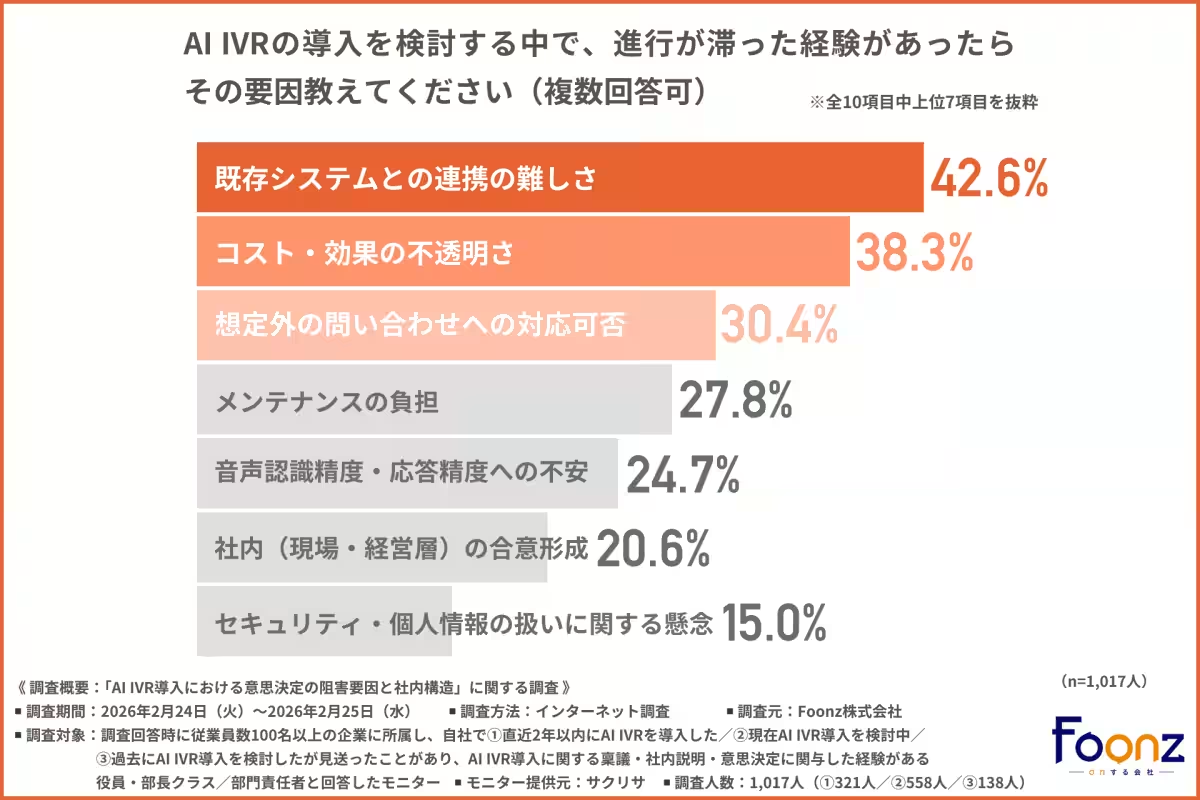
Among those who experienced stagnation in the adoption process, the primary reasons identified were the difficulty of integrating with existing systems (42.6%), unclear cost-effectiveness (38.3%), and unpredictable response to unforeseen inquiries (30.4%). These findings reflect significant barriers in terms of technical and financial feasibility related to AI IVR systems.
Perceptions of the Root Causes
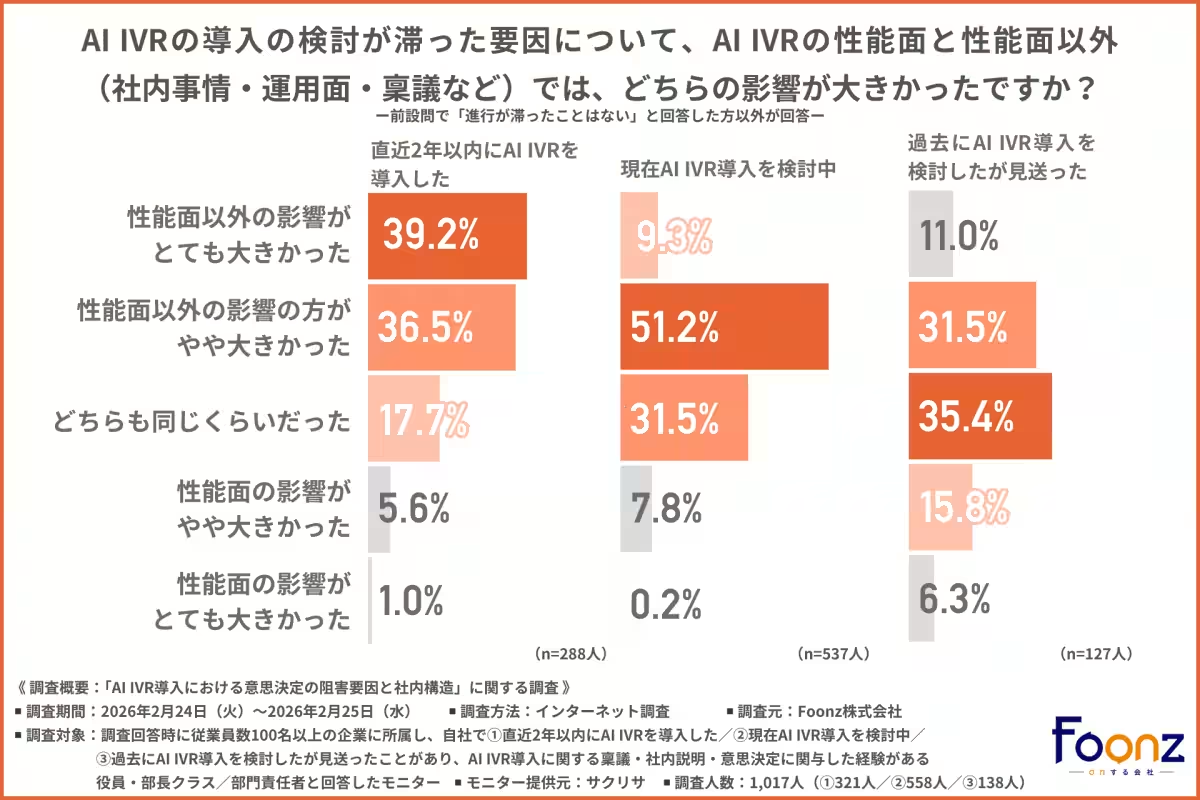
Interestingly, when participants were asked whether technical issues or organizational challenges constituted the greater barrier to AI IVR adoption, the consensus pointed to organizational issues. Notably, those who recently implemented AI IVR acknowledged that operational difficulties and internal processes were significant hurdles, reinforcing the idea that overcoming these barriers requires focusing on internal environments rather than just technological capabilities.
Challenges Communicating ROI
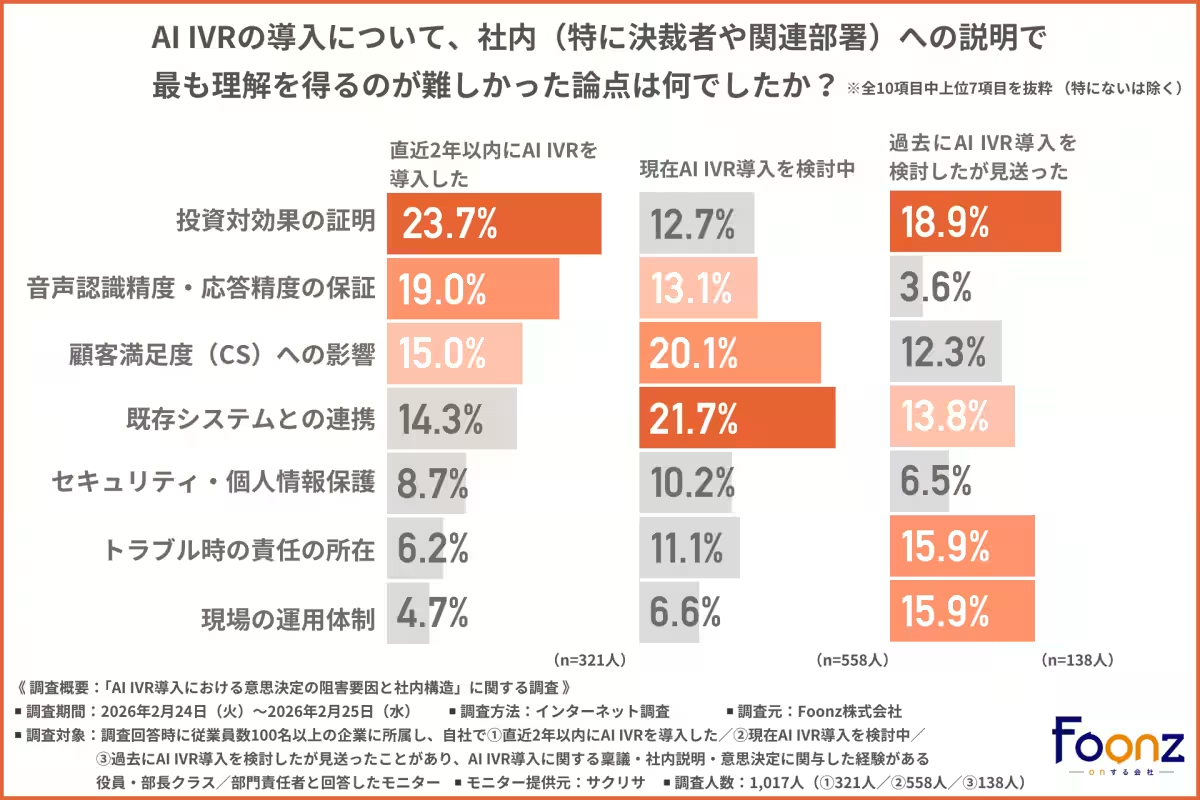
When addressing internal stakeholders, many reported that demonstrating the Return on Investment (ROI) was particularly challenging. Decision-makers expressed difficulty in quantifying the expected cost savings and efficiency improvements resulting from AI IVR, which speaks to the challenge of adequately communicating the value proposition of these systems.
Concerns of Decision-Makers
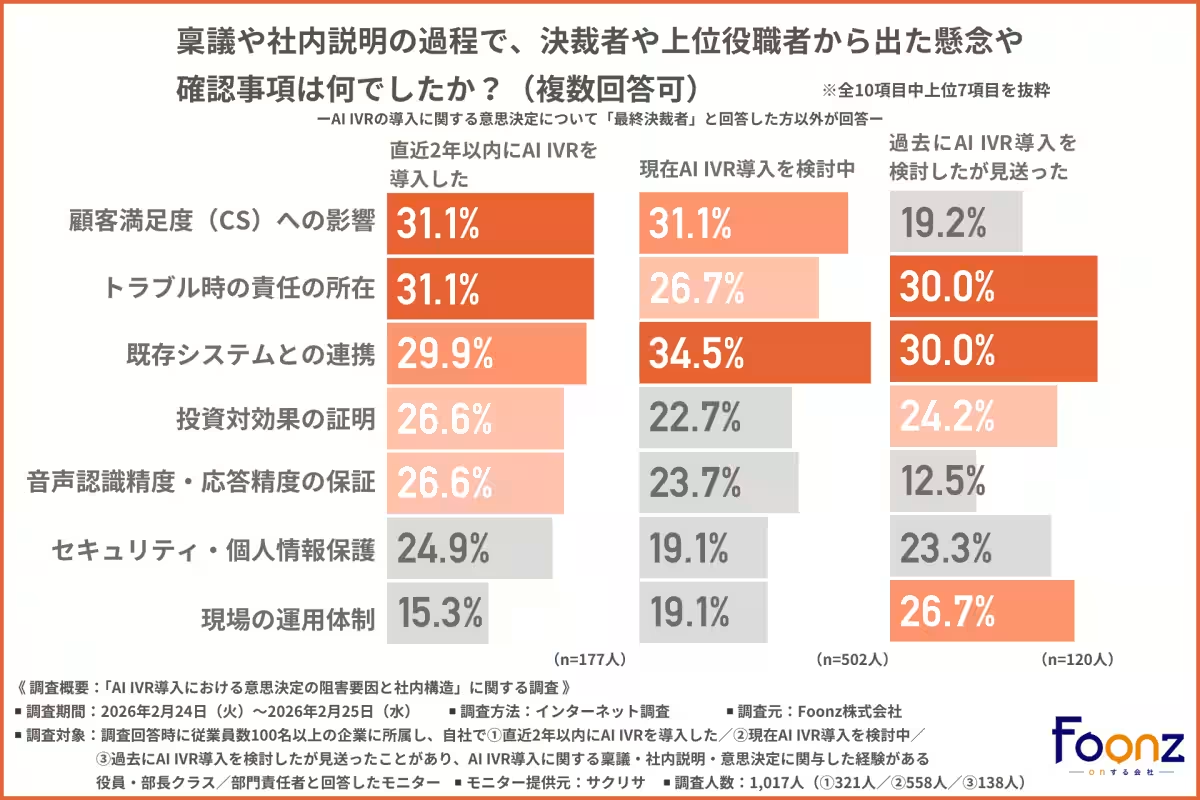
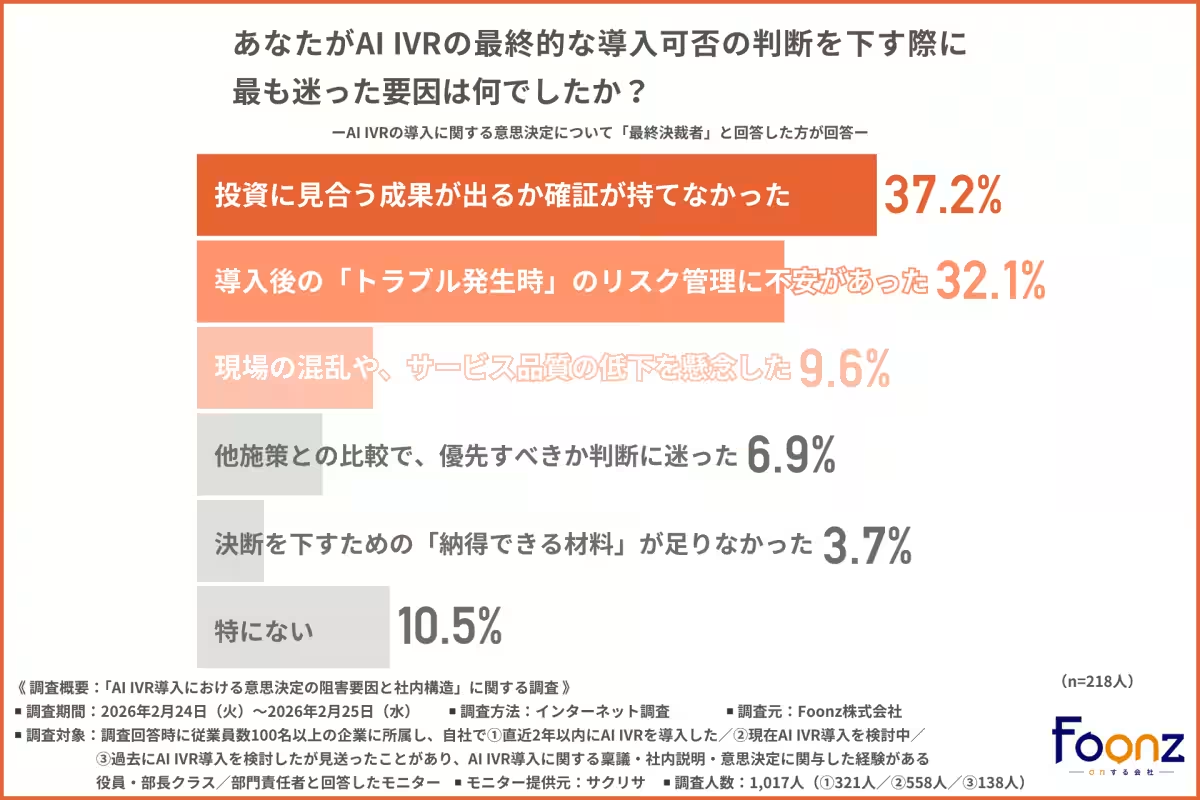
In the process of finalizing decisions, executives often raised concerns about the impact on customer satisfaction and the responsibilities associated with managing any potential issues. These concerns were prevalent among top-level decision-makers, indicating that merely showing the technology's efficacy or ROI is insufficient; a clear operational framework and accountability plan for potential mishaps are crucial.
Future Considerations for Adoption
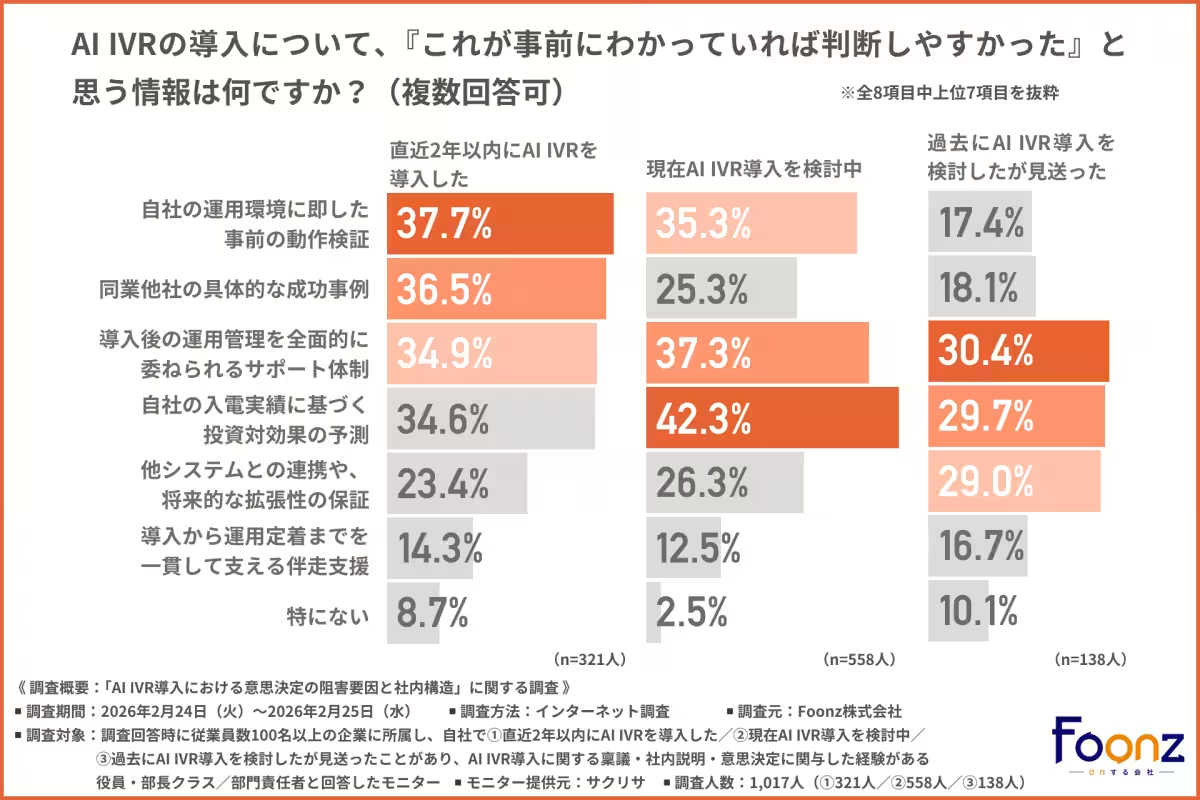
To facilitate smooth decision-making, survey respondents emphasized the need for robust post-implementation support structures. Many seek assurances regarding ongoing support and a detailed analysis of the expected ROI based on their specific operational data. These insights underline the importance of providing tailored simulations and dedicated support to address organizations' unique requirements.
Conclusion
This survey highlights three critical barriers hindering AI IVR adoption: the necessity for broad consensus, risk management concerns, and the need for operational validation. Recognizing these barriers allows organizations to refine their approaches to AI IVR adoption, placing importance on operational support and validation of technology's performance in a real-world context.
As the demand for AI-driven customer support solutions grows amidst persistent labor shortages, understanding the internal dynamics at play can pave the way for successful AI IVR implementation in the future.







Topics Business Technology)
【About Using Articles】
You can freely use the title and article content by linking to the page where the article is posted.
※ Images cannot be used.
【About Links】
Links are free to use.