




Effectiveness of Shock-Absorbing Flooring 'Coroyawa' Proved in International Journal
Introduction
A groundbreaking achievement has been accomplished in Japan’s quest to mitigate the risks of hip fractures among elderly individuals. The shock-absorbing floor material, 'Coroyawa®', developed by Magic Shields, in collaboration with the Ministry of Economy, Trade and Industry and Tokyo Science University, has been proven effective in preventing fragility hip fractures. This research was published in the international academic journal, Biocybernetics and Biomedical Engineering, marking a significant milestone for the collaborative initiative between industry, government, and academia.
Background of the Joint Research
In Japan, approximately 200,000 cases of proximal femoral fractures occur annually, and projections suggest that this figure could rise to 320,000 by 2040. Many elderly patients who sustain these fractures find it difficult to return home post-hospitalization and may be forced to rely on nursing care services, imposing a significant financial burden on society as a whole. Traditional preventive measures such as medication, exercise, and hip protectors face challenges in their effectiveness due to difficulties in adherence and the impossibility of completely preventing falls.
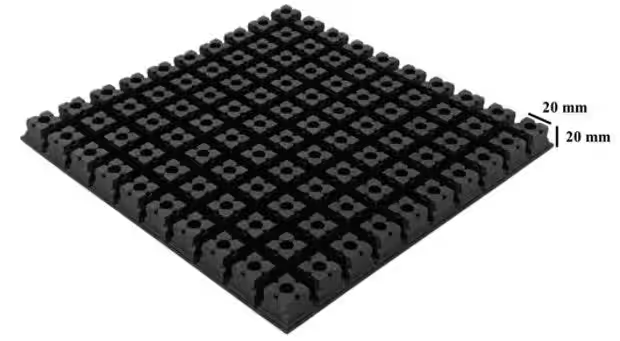
Addressing this pressing issue required a paradigm shift from preventing falls to preventing fractures on impact. Magic Shields embraced this new approach by creating 'Coroyawa®', which features a unique mechanical metamaterial structure designed to absorb shock during falls. This innovation garnered considerable attention after winning the Grand Prix at the Japan Healthcare Business Contest (JHeC) 2021, fostering momentum for research partnerships aimed at developing scientific evidence for this technology.
Overview of Joint Research Results
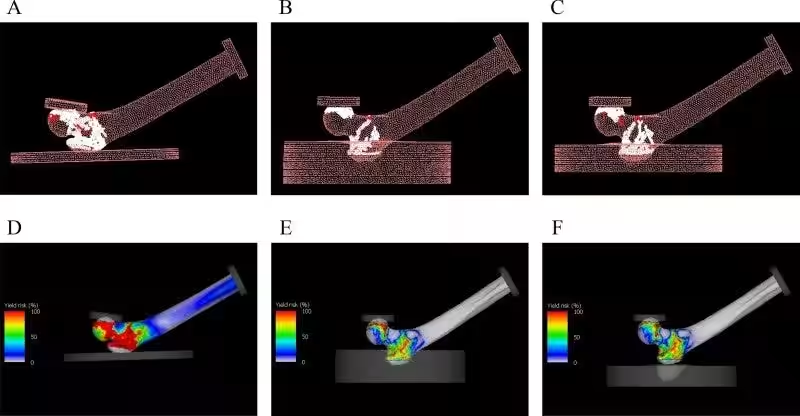
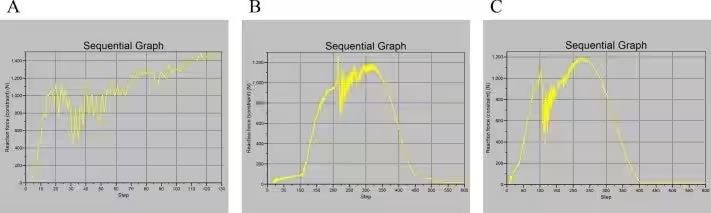
The research utilized finite element analysis, a numerical simulation method, to investigate the efficacy of the shock-absorbing flooring for preventing proximal femoral fractures. The study analyzed CT DICOM data of a fractured femur from elderly female patients to create a three-dimensional model. A dynamic simulation model was developed to replicate the energy of a fall and compare the effectiveness of various flooring materials in preventing fractures.
Results demonstrated that traditional vinyl flooring (2mm thick) caused catastrophic failure of the femur's shape upon impact, while 'Coroyawa®' (22mm thick) showed a significant reduction in maximum reaction force during falls, effectively maintaining the femur’s structural integrity. Moreover, it achieved comparable fracture preventive effects as standard sponge mats (40mm thick) while also providing a stable walking condition for daily activities.
Significance and Future Development
The publication of this study in an international journal serves as a pivotal moment in establishing the medical evidence for 'Coroyawa®', providing a foundation for future advancements. By leveraging the developed biomechanical analysis techniques to evolve product functionalities, this research can contribute not only to enhancing the quality of life for the elderly but also to significantly reducing the estimated ¥2 trillion annual costs associated with fragility fractures.
The partnership between industry, government, and academia embodied in this collaborative project showcases the potential of Japan's innovative approaches to address a globally relevant challenge: rapidly advancing elderly demographics. Given Japan's unique situation as the world’s first super-aged society, the articulation of scientific evidence can serve as a model for solutions that echo globally. The results of this research signify a crucial step toward leading worldwide advancements stemming from Japanese innovations in addressing aging-related issues.
About Magic Shields
- - Company Name: Magic Shields Corp.
- - Location: Hamamatsu City, Shizuoka Prefecture
- - CEO: Akiji Shimomura
- - Established: November 2019
- - Website: Magic Shields
Contact Information
For inquiries regarding 'Coroyawa' products:
- - Phone: 050-1742-4700 (Weekdays 10 AM - 5 PM)
- - Email: [email protected]
- - Contact Form: Contact Us
For inquiries regarding healthcare policies (InnoHub):
- - Ministry of Economy, Trade and Industry
- - Email: [email protected]
This collaborative research is a shining example of how the convergence of efforts between private companies, governmental agencies, and academic institutions can lead to remarkable breakthroughs in health technology, providing hope and solutions for society's most pressing issues regarding aging.

Topics Health)
【About Using Articles】
You can freely use the title and article content by linking to the page where the article is posted.
※ Images cannot be used.
【About Links】
Links are free to use.