



Dentsu Research and Partners Launch New Industrial Symbiosis Coordination Service for Circular Economy
Introduction
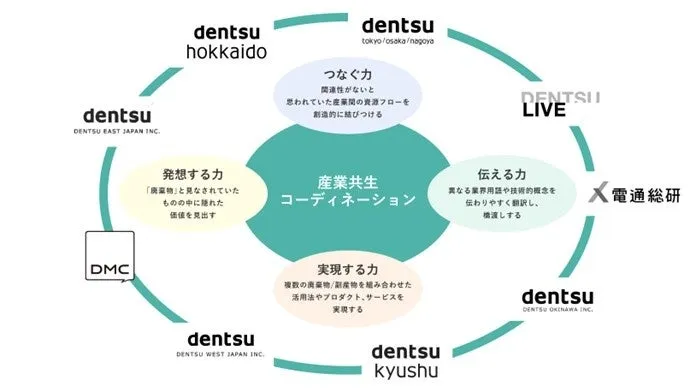
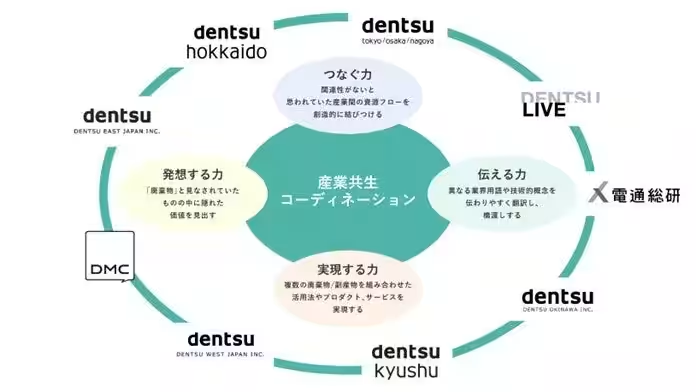
In an innovative move towards a sustainable future, Dentsu Research, based in Minato, Tokyo, in collaboration with eight partner companies from the Dentsu group, has announced the launch of their new service titled "Industrial Symbiosis Coordination." This initiative aims to enhance the circular economy by facilitating cooperation among businesses to reuse waste and by-products effectively, fostering both corporate growth and regional economic revitalization.
The Importance of Circular Economy
As numerous companies strive to transition towards a circular economy in their management strategies, many face the challenge of effectively implementing these strategies into their business operations. This is especially true in the B2B sector, which witnesses large volumes of resources in circulation and established long-term transaction relationships between companies. By leveraging these characteristics, Dentsu’s service focuses on the importance of inter-company collaborations within geographically close industries, facilitating the shared use of waste and by-products, thereby promoting a synergistic environment.
Understanding Industrial Symbiosis
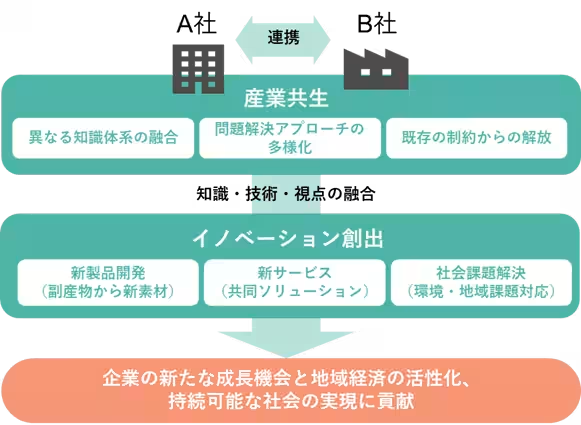
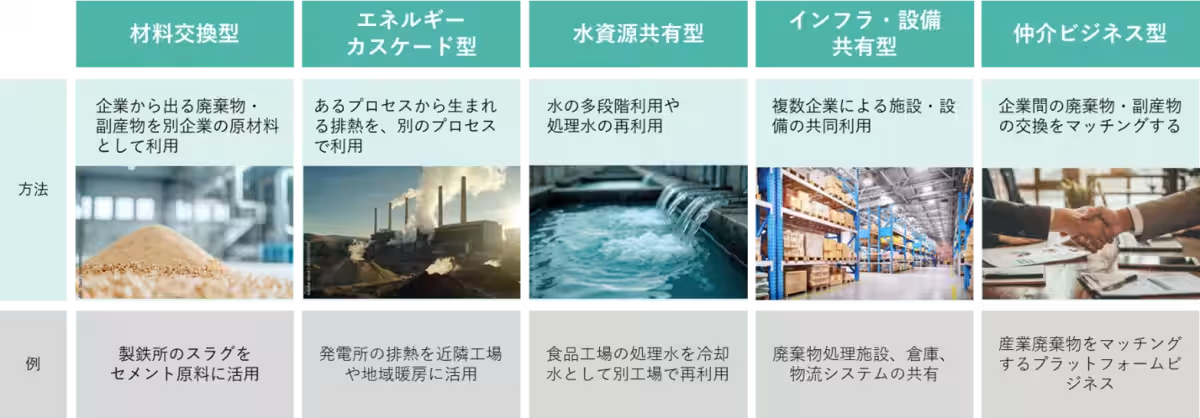
"Industrial Symbiosis" refers to collaborative efforts between differing industries located near one another, aimed at exchanging and utilizing resources such as waste, by-products, and energy. By reducing environmental burdens and minimizing costs, companies can combine their knowledge and expertise, transforming into a basis for open innovation within their communities. This approach serves a dual purpose of accelerating the transition to a circular economy while contributing to corporate growth and regional economic revival.
Objectives of the New Service
The newly launched service concentrates on identifying and matching opportunities for collaboration that are often overlooked. By relying on the specialized expertise of professionals within the Dentsu group, particularly in circular economy practices and business consulting, the service aims to not only support the implementation of industrial symbiosis but also to enhance project and participant company publicity and promote horizontal deployment.
Moreover, establishing a functional ecosystem for a circular economy requires an inclusive approach that transcends individual corporate efforts, emphasizing the significance of community management knowledge and local industry needs. Utilizing Dentsu's extensive network, the aim is to design optimal resource circulation networks that consider the regional industrial structure, establishing collaborations with municipalities and citizens to create a complete community-centered circular economy.
Role of Participating Companies
- - Dentsu: Identifying creative collaboration opportunities and strategic PR initiatives.
- - Dentsu Research: Providing feasibility assessments and development support in business consulting.
- - Dentsu Live: Managing the industrial symbiosis community and designing products/spaces.
- - Regional Dentsu Subsidiaries: Facilitating collaboration with local businesses, municipalities, and citizens in various regions.
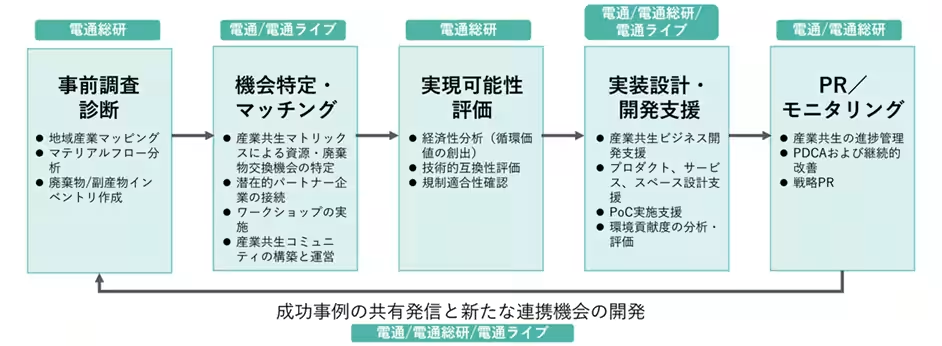
Process Illustration of the Service
The process for the Industrial Symbiosis Coordination service includes identifying collaboration opportunities, assessing the viability of projects, and facilitating networking among participants, ensuring seamless integration of efforts. This coordinated approach optimizes the use of regional resources and aims at sustainable community development.
Future Prospects
Looking ahead, Dentsu Group is committed to addressing various challenges businesses face in their journey towards realizing a circular economy. By participating in effective local resource utilization and sustainable community-building activities, they aim to contribute to the continuous growth of their clients and the advancement of local societies.
For further details about this service, please refer to the following e-book: Do! Solutions
Summary
Dentsu Research's pioneering initiative, the Industrial Symbiosis Coordination service, positions itself as a vital player in the ongoing transition towards a circular economy. By facilitating collaboration and resource sharing among diverse industries, it promotes not only environmental sustainability but also significant economic growth and innovation within local communities.
Topics Other)

【About Using Articles】
You can freely use the title and article content by linking to the page where the article is posted.
※ Images cannot be used.
【About Links】
Links are free to use.