



Understanding Online Defamation: A Survey Reveals Alarming Public Ignorance on How to Respond
Understanding Online Defamation: A Survey Revelations
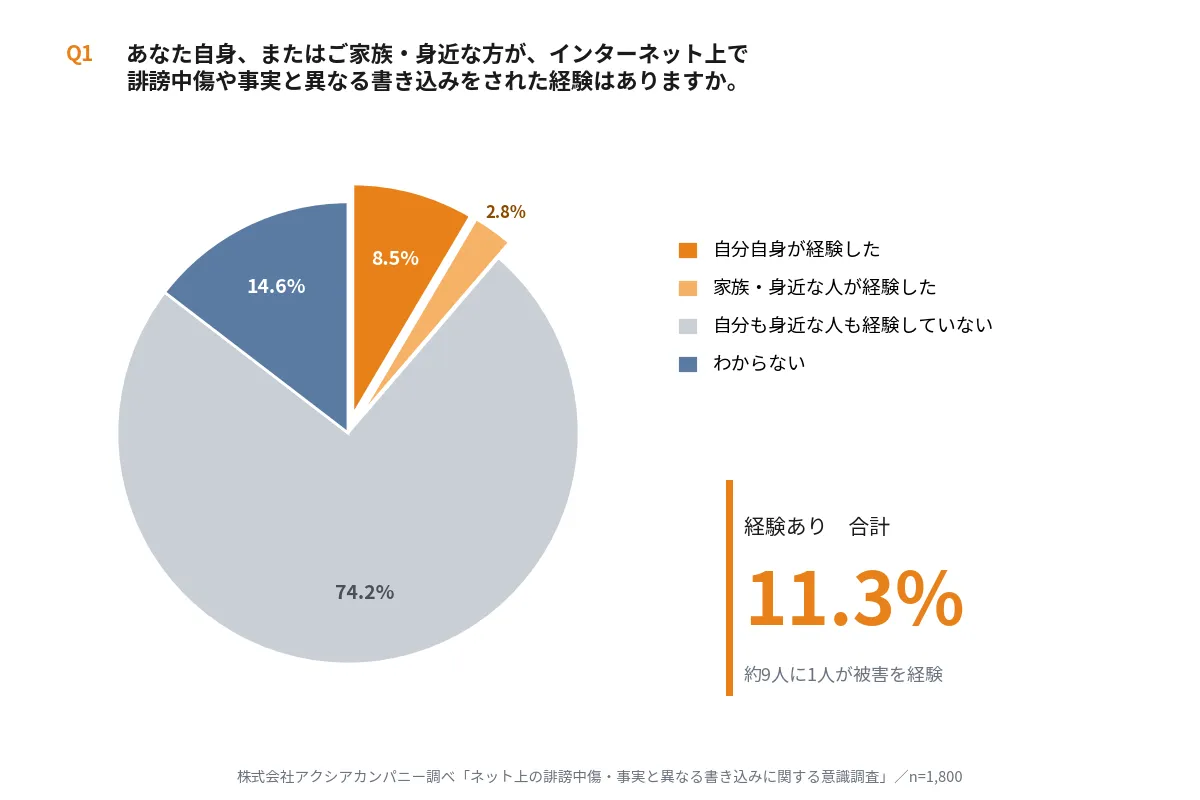
In a comprehensive survey conducted by Axia Company, involving 1,800 individuals across Japan, alarming insights about online defamation have been revealed. The survey aimed to understand the public's awareness and responses to defamation or false information encountered online. According to the results, 11.3% of respondents reported that they or someone close to them had experienced such issues online.
The Scope of Online Defamation Victimization
When asked whether they or their close ones had encountered defamatory remarks or false information on various online platforms, including social media and review sites, the responses were telling:
- - 8.5% of participants had personally faced defamation.
- - 2.8% indicated that family members or acquaintances had experienced it.
- - A staggering 74.2% stated that neither they nor their close ones had faced such issues.
- - Additionally, 14.6% expressed uncertainty regarding their experience.
The data suggests that nearly 1 in 9 individuals has dealt with online defamation directly or through their close network. Moreover, the significant percentage of individuals who were unsure about their circumstances indicates that hidden defamation cases might persist beyond public awareness.
Concerns About Negative Information Searches
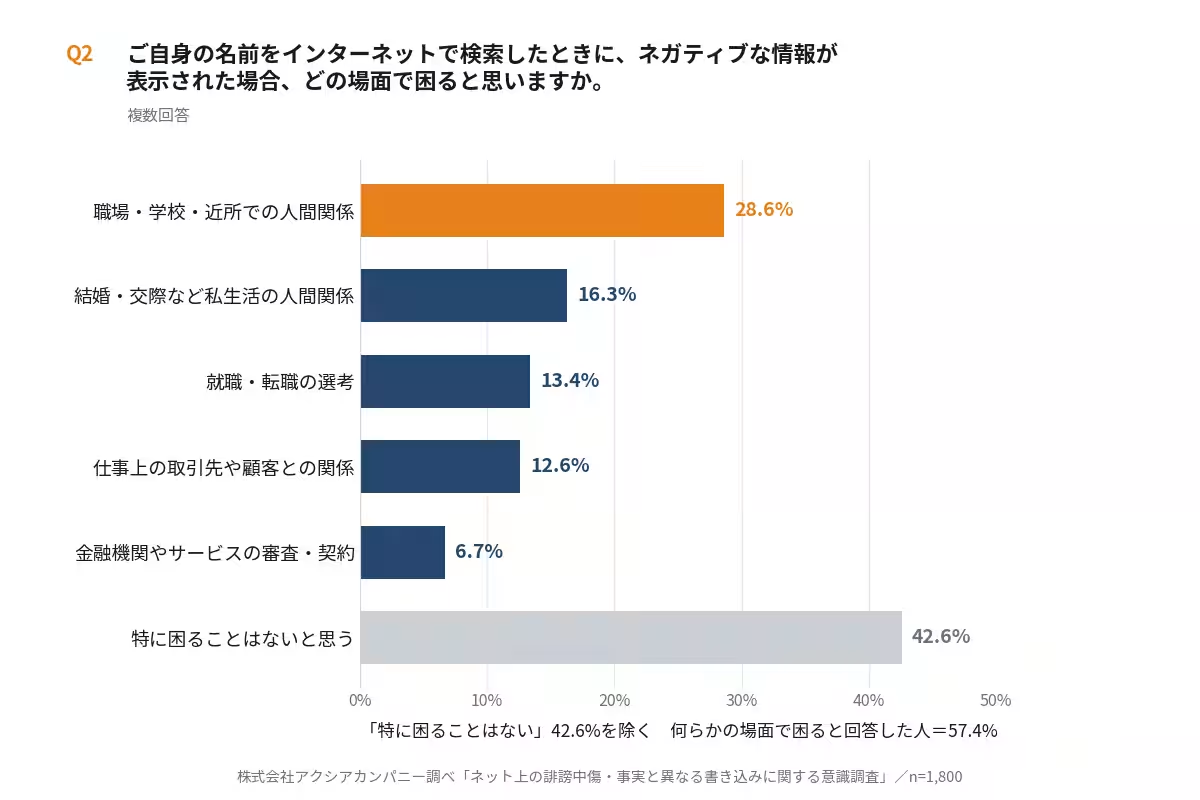
The survey further explored concerns related to negative information appearing when individuals search their names online. Approximately 57.4% of respondents acknowledged encountering situations where negative information could pose problems. The breakdown of concerns is as follows:
- - Workplace, school, or neighborhood relationships: 28.6%
- - Personal life relationships including marriage and dating: 16.3%
- - Job application processes: 13.4%
- - Business relationships with clients or partners: 12.6%
- - Financial evaluations and contracts: 6.7%
- - 42.6% of participants believed that there were no significant concerns.
These findings shed light on the various aspects of life that can be impacted by negative online information, including personal relationships and professional endeavors. The fact that more than half of the respondents foresee potential issues emphasizes the gravity of maintaining a positive online reputation.
A Staggering Lack of Action
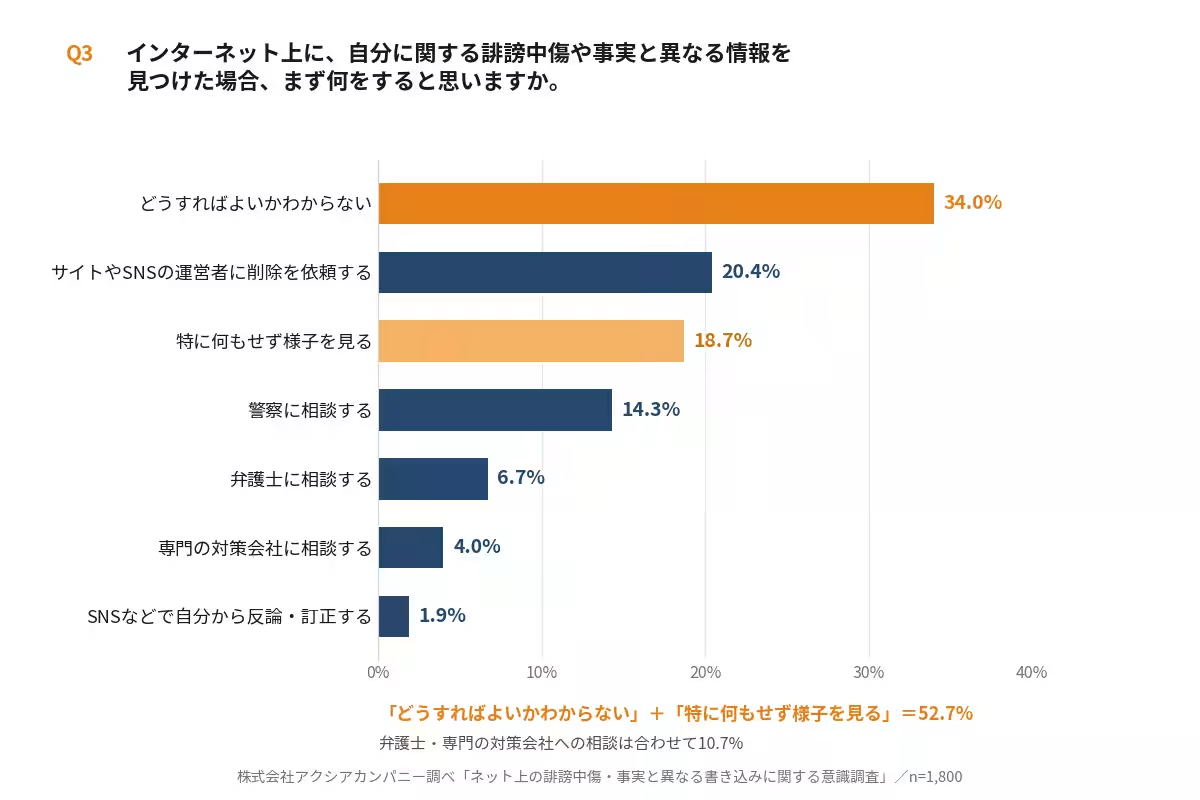
When asked about their prospective actions upon discovering defamatory or incorrect information, the results showcased a troubling trend. A noteworthy 34.0% of individuals admitted, "I don’t know what to do." Coupled with the 18.7% who opted to take no action and instead observe, this brings the total to 52.7% of respondents paralyzed by the situation.
The responses were as follows:
- - Seek deletion from website or social media operator: 20.4%
- - Consult the police: 14.3%
- - Seek legal advice: 6.7%
- - Engage a specialized countermeasure company: 4.0%
- - Self-refute or correct on social media: 1.9%
The highest form of actionable response indicated was to request deletion from the relevant platforms. However, a mere 10.7% sought professional consultation from legal or specialized organizations. The rarity of individuals willing to publicly counter the negative information reveals a concerning reluctance to confront their situations directly.
Bridging the Gap Between Awareness and Action
The key insights from the survey can be summarized as follows:
1. 11.3% have experienced online defamation, with 14.6% unsure about their experiences.
2. 57.4% fear negative consequences in various aspects of life when encountering negative online information,
3. A staggering 34.0% are clueless about how to handle the discovery of such information online, emphasizing the lack of action among the respondents.
Despite the evident seriousness of online defamation and its potential repercussions, many feel ill-equipped to address existing issues effectively. The gap between the understanding of the prevalence of online defamation and the knowledge of how to respond presents a critical area for public education.
In conclusion, the findings underline the need for improved awareness regarding the risks of online defamation and the available strategies to combat its effects. As the permanence of online content means that negative information continues to exist unless actively addressed, it is essential that the public learns what actions can be taken and where support can be found.
Topics Other)
【About Using Articles】
You can freely use the title and article content by linking to the page where the article is posted.
※ Images cannot be used.
【About Links】
Links are free to use.