


New Subspecies of Miyai Rigai Discovered in Iriomote Island, Japan: No Risk of Schistosomiasis
Discovery of a New Subspecies of Miyai Rigai
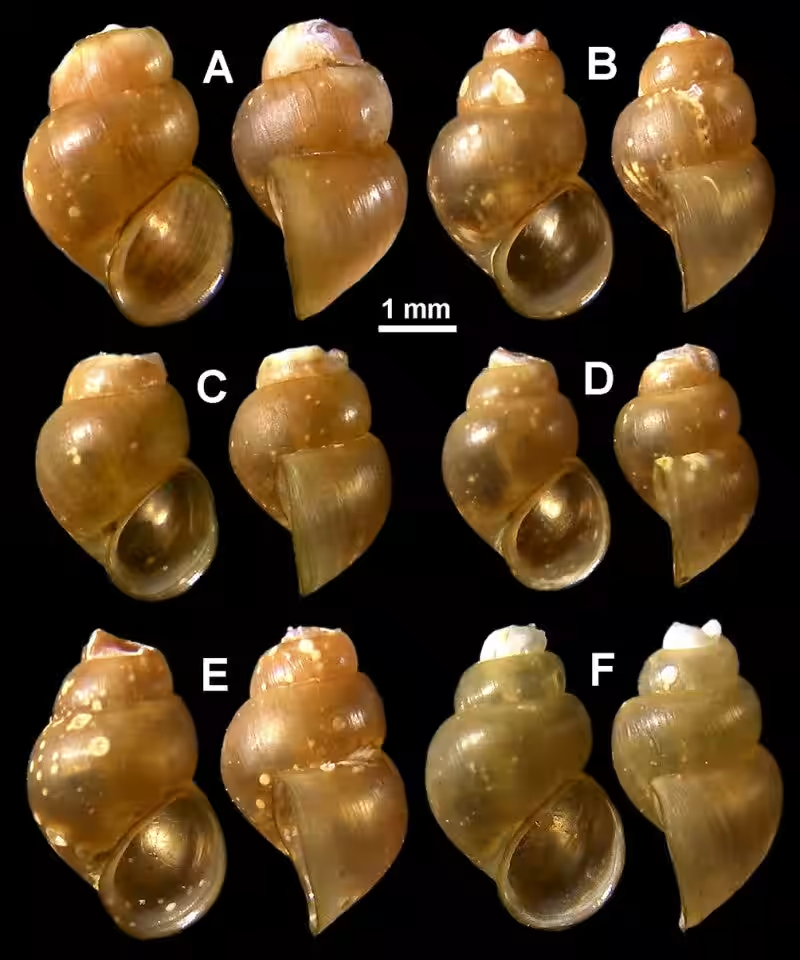
The collaborative research team from Okayama University and Dokkyo Medical University has made a significant discovery in the lush rainforests of Iriomote Island, located in Okinawa, Japan. On March 30, 2026, they announced the identification of a new subspecies of the freshwater snail known as Miyai Rigai, specifically named Oncomelania hupensis iriomotensis, commonly referred to as the Iriomote Miyai Rigai.
Background and Research Context
Miyai Rigai, widely known for being an intermediate host of Schistosoma japonicum, has raised public health concerns due to its association with schistosomiasis, a disease that can cause severe health complications in humans. However, following comprehensive infection experiments and environmental DNA analyses conducted in the region, researchers confirmed that there is no evidence of a potential infection risk from the newly identified subspecies.
The research group, comprising Associate Professor Hiroshi Fukuda from Okayama University, Research Fellow Naoto Sawada from the University of Tokyo, and Lecturer Masashi Kirinoki from Dokkyo Medical University, conducted their investigation near a waterfall in the mountain area of Iriomote Island. They discovered the new subspecies, which is distinctly different from the known populations found in Honshu and Kyushu, due to its specific habitat preference.
Unique Habitat and Conservation Concerns
Unlike the typical Miyai Rigai, which is commonly found in lowland rice fields, this newfound subspecies is limited to cascading waters around the waterfall area, highlighting its unique ecological niche. The distribution of the Iriomote Miyai Rigai is alarmingly narrow, raising concerns about its conservation status. According to the evaluation criteria of Japan's Ministry of the Environment, it is categorized as an endangered species (Class IA), which means urgent conservation measures are required to protect its habitat and population.
The results of this research were published on February 11, 2026, in the prestigious molluscan journal Malacologia, further validating the importance of this finding within scientific circles.
Insights from the Research Team
The initial discovery of this new subspecies came from Research Fellow Naoto Sawada, accompanied by his team. Upon examining the live specimens, Professor Fukuda noted distinct morphological traits akin to those of the Miyai Rigai, which prompted him to recommend immediate DNA analysis to confirm the species' identity. His keen observation led to the successful identification of the subspecies, showcasing the expertise within the team.
This careful investigation also involved expert analysis from Lecturer Masashi Kirinoki, specializing in research on Schistosoma japonicum. Their rigorous methodology ensured that potential risk factors associated with the new subspecies were thoroughly examined.
Research Funding and Future Directions
The study was funded by the Japan Society for the Promotion of Science through several grants (19KK0173, 21J22917, 24KJ0045), enabling a comprehensive exploration of this fascinating new find. Based on the data collected, future research efforts will focus on further assessing the ecological impact and conservation strategies necessary to safeguard the Iriomote Miyai Rigai’s population.
With this significant discovery, the collaboration between Okayama University and Dokkyo Medical University exemplifies the critical role scientific research plays in understanding biodiversity and addressing environmental challenges in Japan. As further exploration continues, these findings will shed light on the rich natural heritage of Iriomote Island and emphasize the importance of preserving unique species in their natural habitats.
For more information, please refer to the detailed press release available here.



Topics Environment)

【About Using Articles】
You can freely use the title and article content by linking to the page where the article is posted.
※ Images cannot be used.
【About Links】
Links are free to use.