



CATL Joins Industry Leaders at Ellen MacArthur Foundation Forum for Circular Economy at IAA 2025
CATL's Role in Promoting Circular Economy at IAA 2025
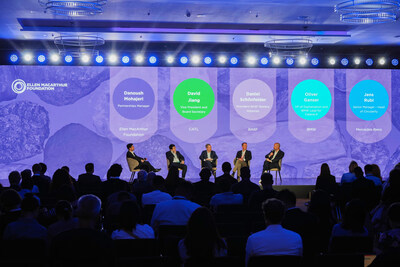
On September 11, 2025, during the prestigious IAA 2025 automotive exhibition, CATL played a pivotal role in organizing a high-level forum in collaboration with the Ellen MacArthur Foundation (EMF). This event gathered notable figures, including executives from industry giants like BASF, BMW, and Mercedes-Benz, alongside over 100 representatives across various sectors. The aim was to explore ways to enhance circularity throughout the entire battery value chain and to foster political and financial cooperation to scale the circular economy.
The forum underscored the importance of circularity as a critical topic for the automotive sector, reflecting a growing awareness that sustainable mobility relies heavily on closing the loop in battery design, production, reuse, and recycling. Representatives from CATL shared insights from the Global Energy Circularity Commitment (GECC), offering practical experiences drawn from international activities and partnerships.
Implementing Circular Principles from Battery Development
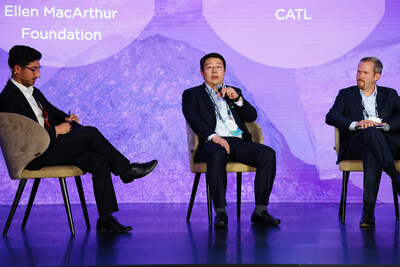
In the forum's first discussion, participants explored how to implement circular principles early in battery development—from design and production to the necessary infrastructure. Panelists emphasized the essential roles of digital traceability, material transparency, and inter-company collaboration as foundational elements in establishing a genuine circular economy within the battery ecosystem. Jiang Li, Vice President and Secretary of CATL, highlighted both the challenges and opportunities the company faces, stating, "For a true large-scale circularity, the industry requires clearly defined standards and consistent political and financial frameworks. With more partners joining us, we are collaboratively working to create an ecosystem that ensures batteries remain resilient, safe, and sustainable for decades to come."
BASF's Battery Materials president, Daniel Schönfelder, discussed the importance of sustainable cathode materials and the need for industrial collaboration; Mercedes-Benz Senior Executive and Director of Circularity, Jens Rubi, stressed the significance of integrating circularity in OEM manufacturers’ strategies, while BMW's Vice President of Digitalization, Oliver Ganser, spoke on utilizing Catena-X, an inter-industry digital platform for sharing automotive data to provide transparency and traceability in the supply chain.
The discussions emphasized that building a circular battery ecosystem requires coordinated actions from manufacturers, suppliers, and tech partners, with collaboration at every stage of the value chain being vital for ensuring scalability and practicality of circular economy practices.
Scaling Circularity through Intelligent Policy and Funding
The second discussion concentrated on the necessary factors for scaling the circular economy within the global battery ecosystem, focusing heavily on policy frameworks, funding mechanisms, and standardization. Participants deliberated on how regulatory harmonization, investor trust, and tools like battery passports could contribute to creating transparent and comparable metrics across jurisdictions, enabling practical large-scale circular practices.
Emma Nerenheim, Managing Director of the European Battery Alliance, stressed the urgent need for consolidated actions, stating, "Currently, there's a lot of talk about cooperation, but the right word is consolidation. This is not just about working together; we must be clear that we need to act decisively. Predicting the implications for recycling entities is extremely challenging. Therefore, it’s critical to consolidate now."
Inga Petersen, Executive Director and Board Member of the Global Battery Alliance, further highlighted the necessity for a harmonized global approach to circularity, noting, "We must place significantly more emphasis on creating fair competition conditions on a global scale and examine the global battery ecosystem. There is a genuine risk of fragmentation, which could lead to substantial compliance burdens and premium products in some markets potentially hindering emerging economies from meeting sustainability and recycling standards. We certainly need to establish common minimum battery standards to ensure they meet sustainability indicators and that their producers have access to capital."
These themes were expanded upon by other discussion participants such as Zoe Zhang from Benchmark Mineral Intelligence, who analyzed supply chain risks and the importance of data transparency for investors, while Amy Marshall from Xynteo touched on multi-stakeholder partnerships and the systemic transformations required to enable a circular economy.
CATL's Ambitious Vision
This forum marked the first official meeting for partners in the Ellen MacArthur Foundation's Critical Minerals Program launched in June. CATL presented its ambitious goal of ensuring that over the next 20 years, as much as 50% of new battery production will not require freshly mined resources. Moving forward, CATL will continue to collaborate with EMF and industry partners on pilot projects and comprehensive solutions throughout the value chain, promoting a sustainable and equitable battery ecosystem grounded in circularity.
Topics Consumer Technology)
【About Using Articles】
You can freely use the title and article content by linking to the page where the article is posted.
※ Images cannot be used.
【About Links】
Links are free to use.