



WOTA and Tokushima Prefecture Form Historic Agreement for Disaster Water Management
WOTA Collaborates with Tokushima Prefecture for Disaster Water Support
In a groundbreaking initiative, WOTA Corporation has entered into a significant agreement with Tokushima Prefecture aimed at establishing a regional platform for mutual assistance in water circulation systems during disasters. This collaboration marks the first of its kind in the Shikoku region and highlights the importance of shared resources during emergency situations.
The Agreement's Significance
The agreement is centered around the provision of life-use water equipment for disaster relief efforts. Following the Noto Peninsula Earthquake in 2024, Tokushima Prefecture successfully mobilized over ten water circulation systems within a week to assist affected areas. This kind of inter-prefectural cooperation not only exemplifies effective disaster management but also sets a precedent for future initiatives. WOTA aims to expand this framework across Japan, ensuring that municipalities can promptly support one another in times of crisis.
The Necessity of the Water Circulation System
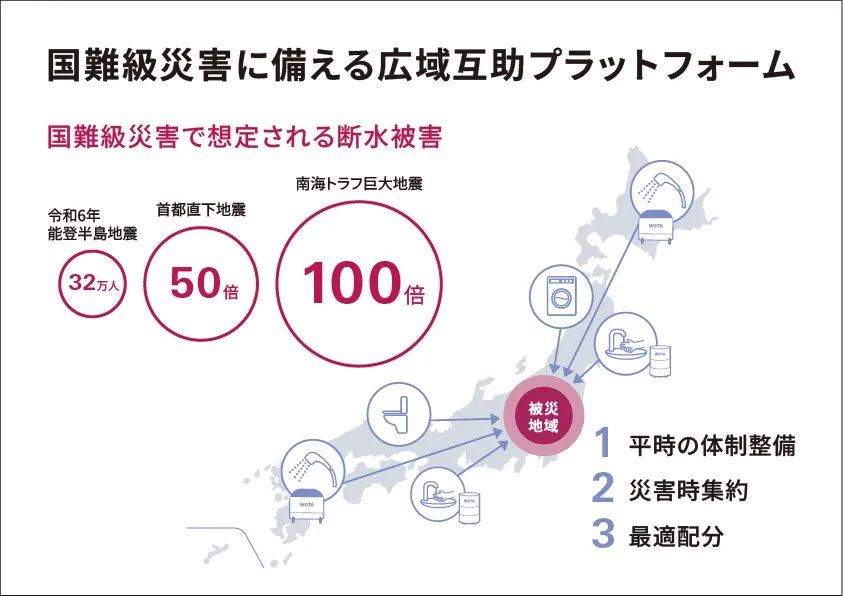
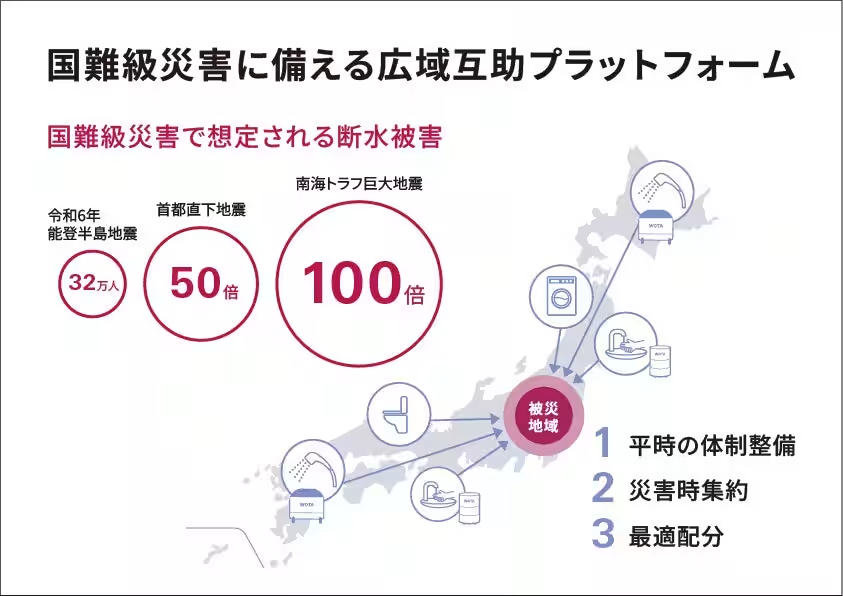
In disasters, the importance of securing life-use water cannot be overstated. The inadequacy of water supply systems often results in significant hardships for affected populations. For instance, during the Noto Peninsula Earthquake, more than 100,000 people faced prolonged water outages due to damage to infrastructure. Life-use water needs vastly exceed those of drinking water, which can be more easily sourced through bottled supplies. Without proper mechanisms in place, maintaining sanitation and basic hygiene becomes incredibly challenging. Therefore, a robust and flexible support system like the one proposed is vital.
Background of the Water Circulation Platform
WOTA's platform is designed with several key functions to facilitate effective disaster response:
1. Pre-Disaster Preparedness: Establishing information dissemination and training to ensure that systems are in place before a crisis occurs. This proactive approach includes the deployment of resources in peace time.
2. Centralized Disaster Response: The platform will streamline requests from affected municipalities, consolidating available systems from unaffected regions for efficient transport and deployment.
3. Optimized Resource Allocation: By coordinating with municipalities, the platform will ensure that the right amount of resources is allocated according to specific demand in affected areas.
This approach not only prepares for worst-case scenarios, such as a major earthquake affecting metropolitan areas, but is also essential for tackling any large-scale disaster with unpredictable timing or location.
Future Developments
WOTA plans to expand this platform nationally, signing agreements with prefectures throughout Japan to solidify a mutual support network. This expansion is crucial for making a rapid and effective response to disasters possible, ensuring that all regions are prepared to assist one another should the need arise.
By putting in place this collaborative infrastructure, WOTA is leading efforts to address water-related crises on an unprecedented scale. The company, which has been at the forefront of developing decentralized water recycling systems since its inception in 2014, is committed to addressing the structural issues surrounding water supply and sanitation.
WOTA's Vision
WOTA's mission is to create sustainable solutions to water issues globally. Its innovative decentralized systems not only streamline water usage but also contribute significantly to public health improvement. Through its ongoing projects and partnerships, WOTA continues to redefine how water infrastructure should operate, ensuring that no community suffers from inadequate water supply in times of crisis.
For more information on WOTA and their initiatives, visit their official website at WOTA Corporation.
Topics Health)
【About Using Articles】
You can freely use the title and article content by linking to the page where the article is posted.
※ Images cannot be used.
【About Links】
Links are free to use.