



Brand Phishing Report Highlights Microsoft and Spotify's Dominance in Q2 2025
Overview of Brand Phishing Trends in Q2 2025
Check Point Research, the threat intelligence division of Check Point Software Technologies, has unveiled its brand phishing report for the second quarter of 2025. This analysis highlights the brands most commonly impersonated by cybercriminals to steal personal and financial information, underlining the evolving tactics of phishing attacks. Microsoft continues to secure its position as the most impersonated brand, accounting for 25% of phishing attempts, with Google and Apple following at 11% and 9%, respectively. Notably, Spotify made a significant comeback, ranking fourth with 6% of the total impersonation cases, marking its return to the top ten since Q4 of 2019.
Details of Brand Impersonation
The report details the top brands exploited for phishing in Q2 2025:
- - Microsoft (25%)
- - Google (11%)
- - Apple (9%)
- - Spotify (6%)
- - Adobe (4%)
- - LinkedIn (3%)
- - Amazon (2%)
- - Booking.com (2%)
- - WhatsApp (2%)
- - Facebook (2%)
Omer Dembinsky, Check Point's Data Research Manager, noted that cybercriminals continue to exploit user trust in well-known brands. The resurgence of Spotify's ranking, particularly amongst a backdrop of increased travel-related fraud during summer breaks, emphasizes how phishing tactics adapt to user behavior and seasonal trends. To mitigate risks, ongoing security awareness, education, and robust security controls remain critical.
Spotify and Booking.com Phishing Campaigns
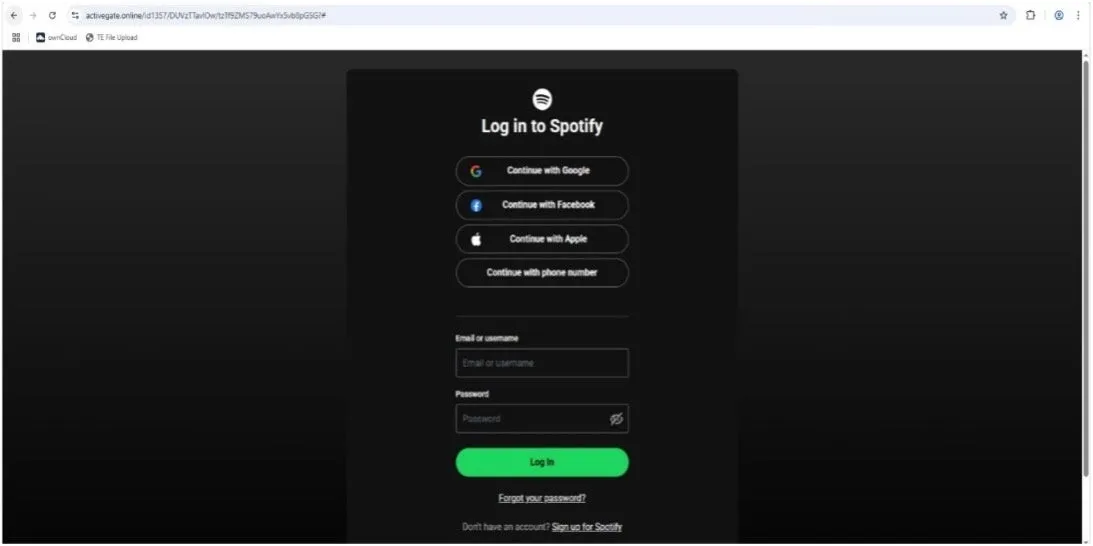
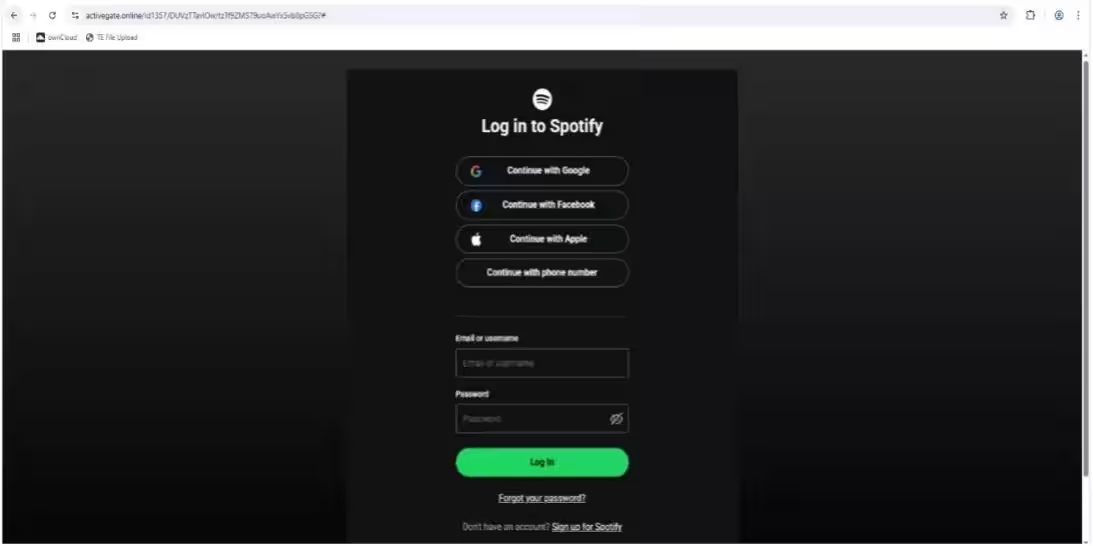
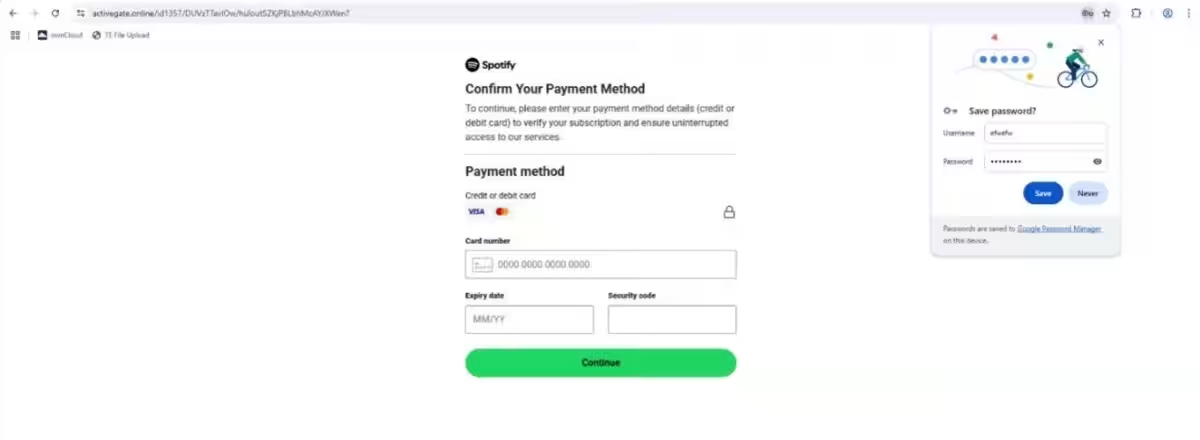
One prominent phishing campaign targeting Spotify users involved creating a malicious fake login page that closely imitated the official Spotify login experience. This fraudulent page, hosted on a deceptive domain, redirected users to enter their email credentials and credit card information on a counterfeit payment site. Such phishing activities have contributed to Spotify's return to the top of phishing attack rankings, highlighting the ongoing vulnerabilities within entertainment and technology services.
Moreover, the second quarter of 2025 witnessed a significant surge in phishing domains impersonating Booking.com. Over 700 new domains formatted as 'confirmation-id****.com' were registered during this period, signifying a staggering 1000% increase compared to earlier this year. Many of these domains included actual user details to create a sense of reliability and urgency, further showcasing the heightened personalization and targeting capabilities of phishing attacks.
Industry Impacts: Technology and Digital Platforms
The technology sector remains the most susceptible to brand impersonation attacks, with giants like Microsoft, Google, and Apple continuing to be prime targets for cybercriminals. This trend highlights the expansive reach of these brands in authentication and operational efficiencies. Social media platforms, including LinkedIn, WhatsApp, and Facebook, are also constantly at risk, as attackers leverage seasonal trends within retail and travel sectors for malicious intent.
The quarterly brand phishing report from Check Point is based on data sourced from its ThreatCloud AI platform, the largest cyber threat intelligence network globally. The findings provide insights into phishing emails, fake websites, and impersonation attempts across multiple vectors.
About Check Point Research
Check Point Research is committed to delivering up-to-date cyber threat intelligence to its clients and the broader threat intelligence community. By analyzing data on cybersecurity threats globally, Check Point Research endeavors to educate and mitigate risks faced by users and organizations alike. The team consists of over 100 analysts and researchers who collaborate with security vendors, law enforcement, and CERT organizations to enhance cybersecurity measures.
For comprehensive updates, you can follow Check Point on their various social media channels.

Topics Consumer Technology)
【About Using Articles】
You can freely use the title and article content by linking to the page where the article is posted.
※ Images cannot be used.
【About Links】
Links are free to use.