



Discovering Children's Unique Movement Skills in Sapporo's Sports Class
Finding Unique Movement Skills in Children: An Initiative in Sapporo
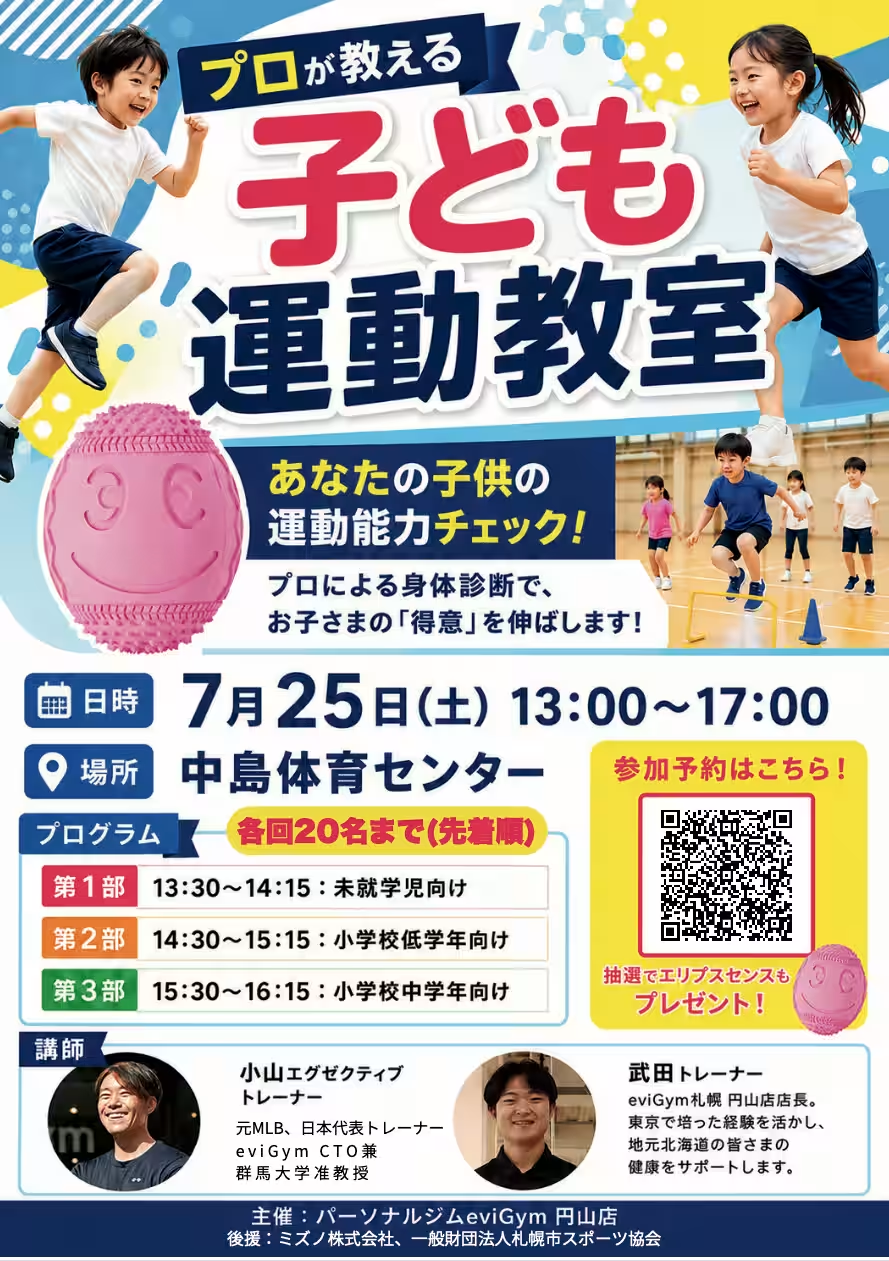
On July 25, 2026, a unique sports class aimed at encouraging children to recognize their individual movement capabilities was held at Nakajima Sports Center in Sapporo, organized by eviGym, a personal training gym operated by Qururu Co., Ltd. This initiative aimed to break away from the traditional comparison of athletic abilities, focusing instead on identifying each child's strengths through specific assessments.
Eleven children from preschoolers to elementary school juniors participated in the event, which attracted a total of 39 attendees, including parents. The event was supported by the Sapporo Sports Association and in cooperation with Mizuno Corporation. The focus was on understanding how children can positively interact with their bodies and enjoy physical activity.
Encouraging Self-Discovery in Movement
The program approached physical abilities not as mere competitions of better or worse but as an opportunity for every child to discover their 'signature moves.' The core idea was to identify individual strengths in activities like running, jumping, or throwing. While some children excelled at jumping farther, others showed superior balance or quick reflexes in reacting to stimuli. Unfortunately, many children and their parents miss opportunities to recognize these unique traits.
This can lead to premature labeling, with children concluding that they are 'bad at sports' based on easily visible results like speed and distance. The Sports Agency in Japan has identified the polarization of children's physical activity habits as a concern, emphasizing the importance of providing enjoyable experiences that showcase personal growth through movement.
At eviGym, disparities in children's physical abilities are viewed as 'physical individuality' rather than as simple metrics of ability. The motto is to find what children can do best instead of judging their skills based on current capabilities. The program's goal is to empower children to attempt new movements by leveraging their strengths, fostering a sense of confidence that ‘I can do this!’
Four Key Measurements of Physical Abilities
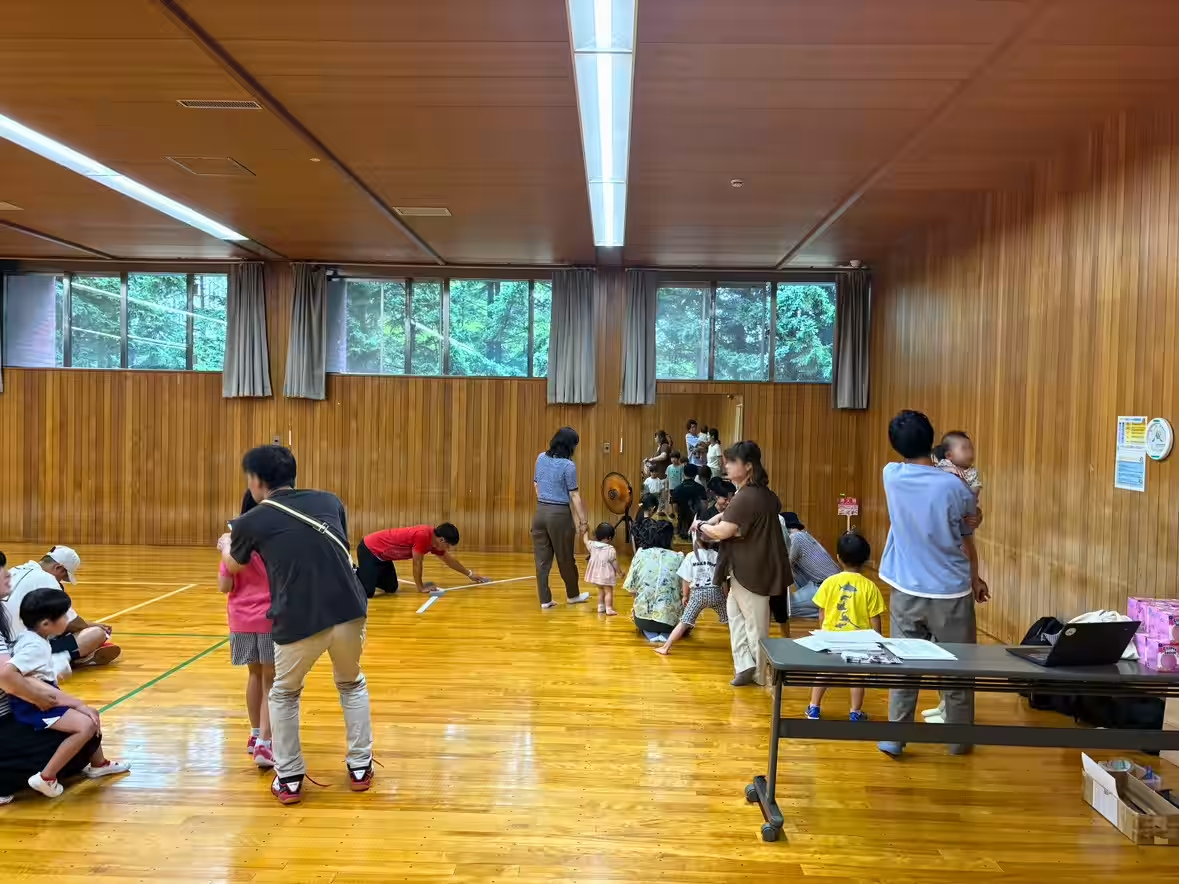
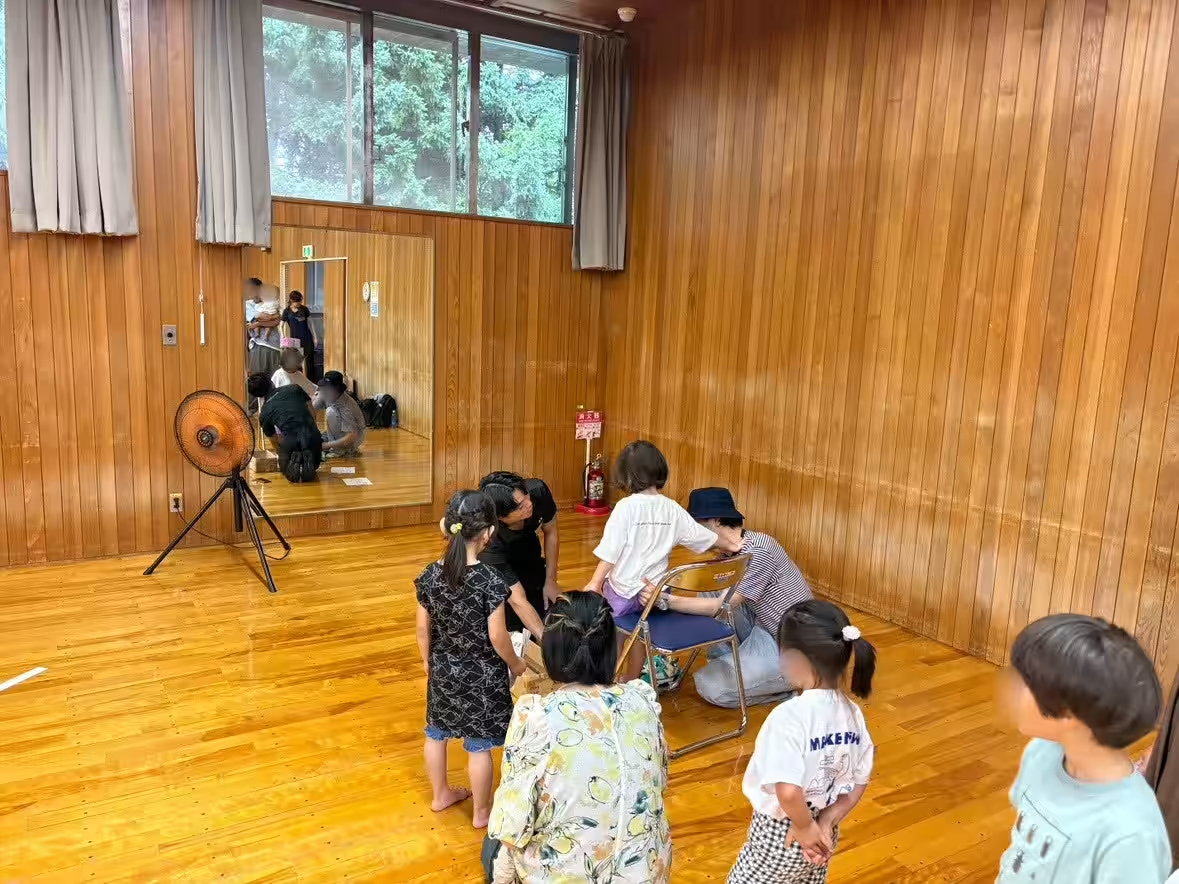
At the beginning of the session, four key measurements were taken to assess each child's physical capabilities:
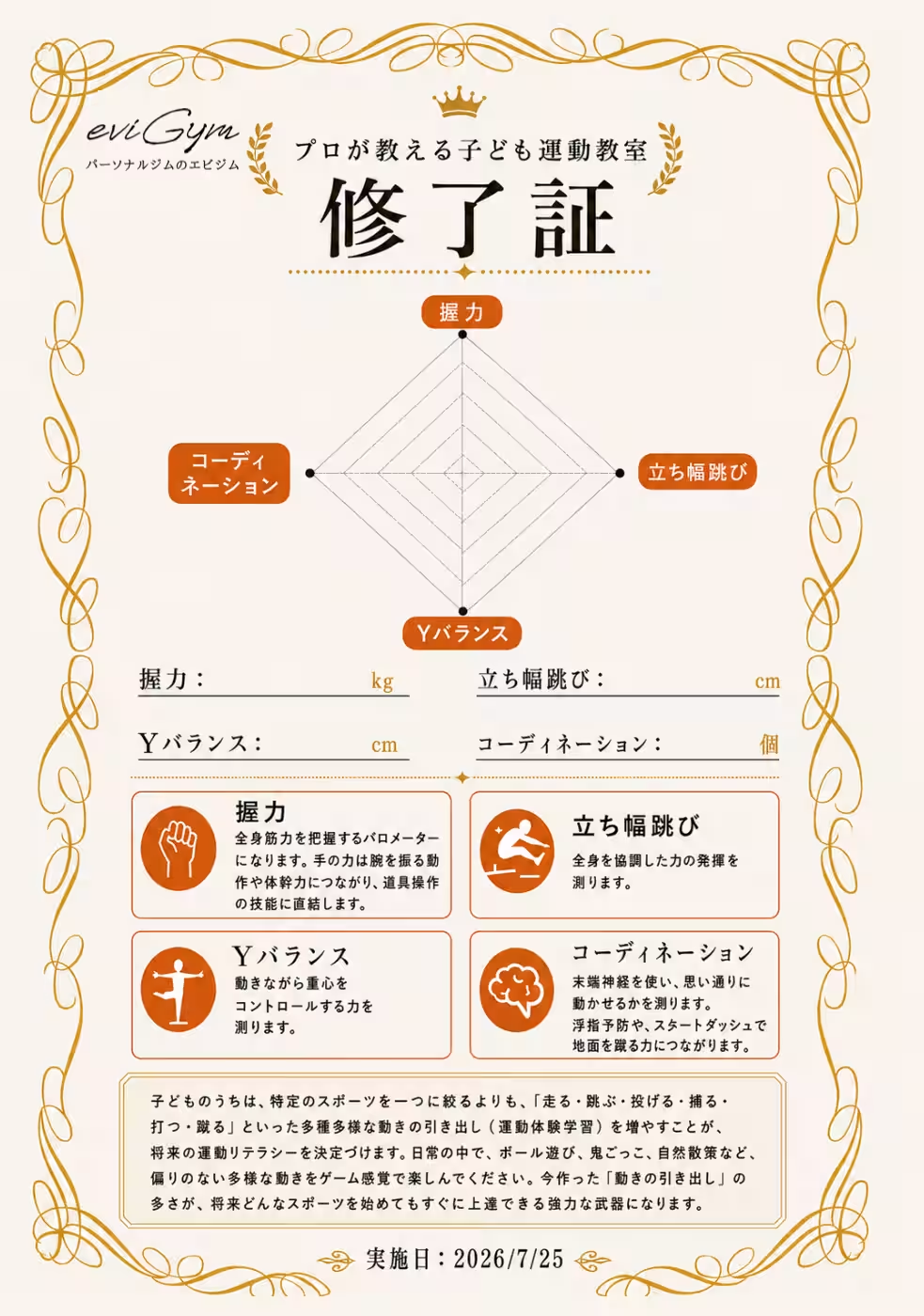
1. Grip Strength: This measures hand and forearm strength, essential for various sports and physical activities involving tools.
2. Standing Long Jump: Evaluates lower body explosiveness and the ability to coordinate arm and leg movements.
3. Y-Balance Test: Tests the ability to balance on one leg while extending the other, assessing dynamic balance and body control.
4. Coordination Ability Test: Assesses how well children can control their movements based on visual and auditory information, and is crucial for basic skills in running, jumping, and throwing.
These measurements serve to highlight each child's unique physical characteristics. Following the assessments, results were shared with parents, including advice on age-appropriate play and ongoing activities at home to continue developing these skills.
Moving Beyond Just Measurements
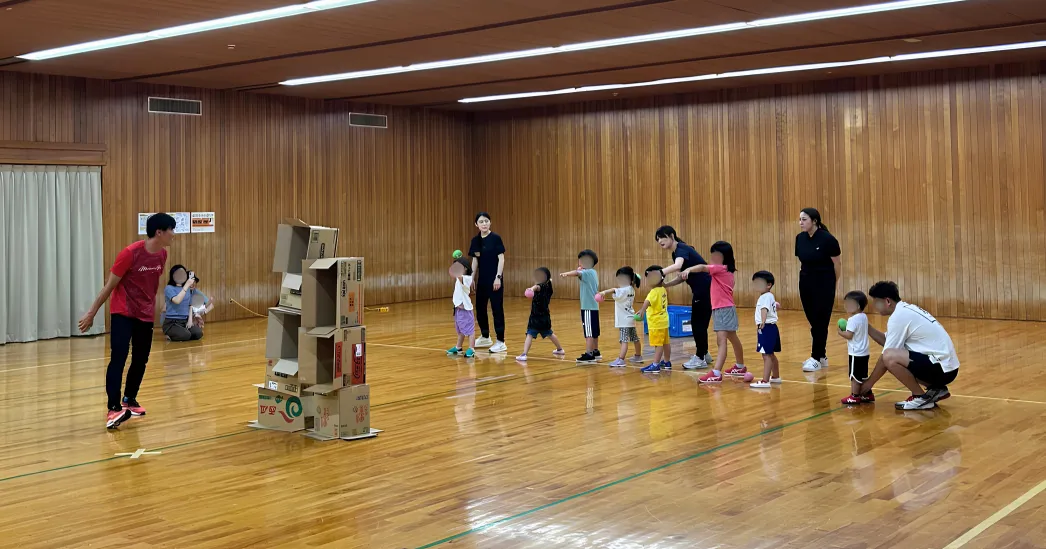
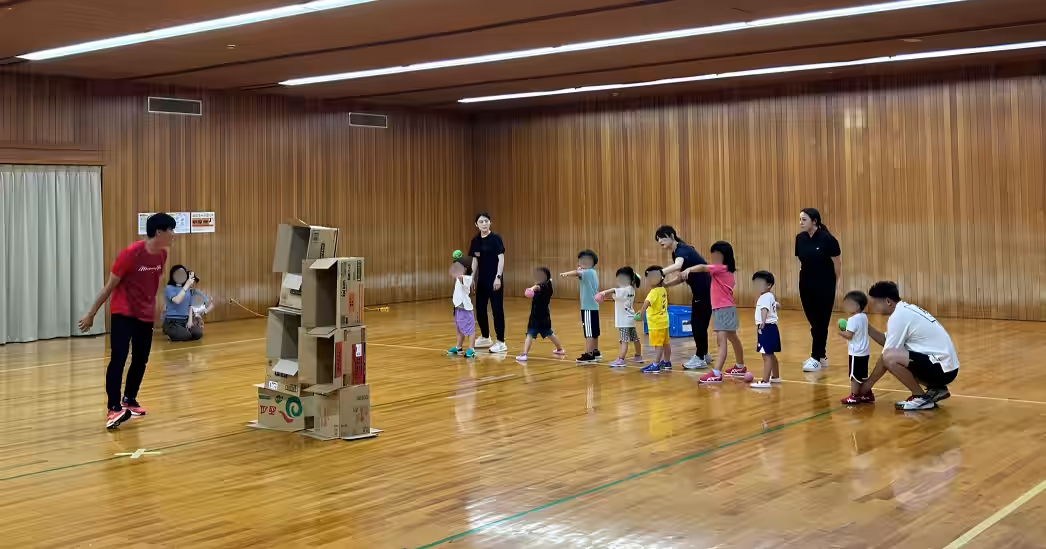
Following the assessments, practical instruction focused on running and ball throwing. The emphasis was not merely on repetition but rather on helping children grasp the mechanics of movements and feel the changes in their bodies.
During the running session, postures, arm swings, and foot placements were fine-tuned, while in the ball throwing segment, participants learned to coordinate their entire body—from legs and core to shoulders and arms—to generate force.
Instructors communicated concepts through simple language and demonstrations, encouraging children to understand the mechanics behind effective movement, fostering a deeper comprehension of their physical capabilities.
Celebrating Small Achievements
The class normalized the idea of celebrating personal progress, instead of solely focusing on numerical records. Recognizing improvements in posture, coordination of limbs, or a newfound willingness to experiment were viewed as tremendous steps forward. Even minor adjustments can yield significant personal victories for a child.
The atmosphere was filled with joy as children exclaimed, ‘I did it!’ and ‘I want to do more!’ The essence of eviGym's initiative was to transform sports activities from sessions focused on what children can't do into experiences where kids discover their potential.
Commemorating Achievements with Certificates
At the end of the class, each participant received a certificate documenting their assessment results. This certificate serves as more than just a record; it acts as a communication tool for parents to better understand their child's physical strengths. The goal was to encourage further discussions at home about exercise and movement, ensuring the class's impact extended beyond just the day itself.
Positive Feedback from Parents
Feedback from participating parents reflected satisfaction with the program's approach:
- - “The assessment results helped me understand my child's physical characteristics better.”
- - “The explanations regarding movement dynamics made it easier for us to practice at home.”
- - “This specialized content is something we couldn't easily access at school or home.”
The program not only provided direct instruction to children but emphasized the importance of equally educating parents. It was vital to foster an environment where the focus is on effort and improvement rather than just outcomes.
Insights from Keita Koyama, Program Supervisor
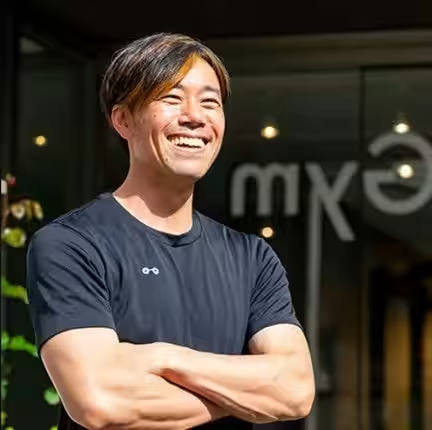
Keita Koyama, CTO of eviGym and an associate professor at Gunma University, commented on the importance of recognizing children's diverse movement strengths. He stressed that physical abilities should not be reduced to mere records, and it is crucial to see the capabilities children already possess before pointing out areas of difficulty. The initiative aimed to inspire children to think, ‘I can do it!’ and to instill a desire to give it another try.
Leveraging Sports Science in Education
The program was meticulously designed with insights from sports science and educational research. Koyama's extensive experience, including his qualifications as a Certified Athletic Trainer, has enabled him to craft a program that considers children's developmental stages and individual differences.
He emphasizes an approach where learning is sequenced, thereby ensuring children understand, experiment, and notice their changes in physical activities.
Collaborating with Local Organizations
This initiative was realized through collaborations with the Sapporo Sports Association and Mizuno Corporation, fostering community engagement. By joining forces with local sports organizations and businesses, eviGym provided children and their parents the opportunity to learn and enjoy physical activity together.
eviGym aims to continue these partnerships, encouraging children to appreciate their physical uniqueness and fostering a lifelong love for movement, especially for those who may have previously struggled with sports.
Event Recap
- - Program Name: Children's Sports Class by Professionals
- - Date of Event: July 25, 2026
- - Venue: Nakajima Sports Center, Sapporo
- - Format: Divided into three sessions
- - Child Participants: 11
- - Total Participants (including parents): 39
- - Activities: Physical Ability Assessments, Running, Ball Throwing
- - Measurement Items: Grip Strength, Standing Long Jump, Y-Balance Test, Coordination Ability Test
- - Organized by: eviGym Sapporo Maruyama Store
- - Support: Sapporo Sports Association, Mizuno Corporation
- - Program Supervision: Keita Koyama, eviGym Instructors
Topics People & Culture)
【About Using Articles】
You can freely use the title and article content by linking to the page where the article is posted.
※ Images cannot be used.
【About Links】
Links are free to use.