



YTGATE Reports Findings on Payment Approval Rates Among 100 Companies
Overview of YTGATE’s Payment Approval Rate Assessment
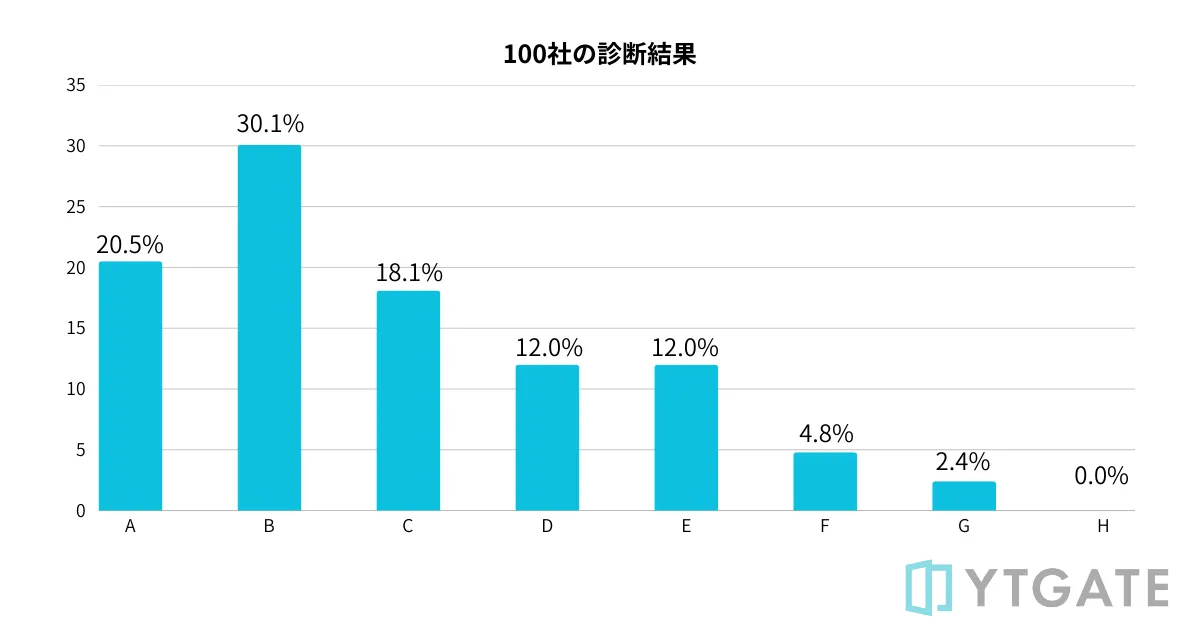
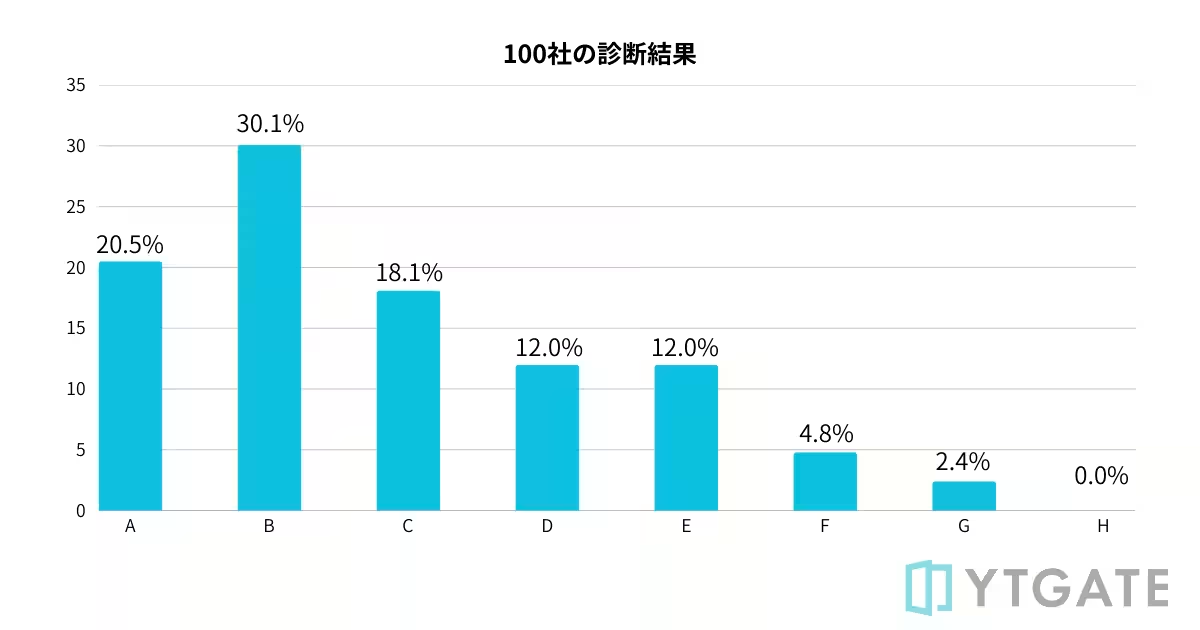
YTGATE, based in Chuo City, Tokyo, has conducted a thorough evaluation of payment approval rates through its free diagnostic service, known as "Payment Approval Rate Health Check." Their recent assessment covered 100 e-commerce businesses, each generating annual revenues between 3 billion to 10 billion yen. This report uncovers critical trends in industry's payment success, where the average approval rate across these companies stands at approximately 83.7%. Notably, about half of these businesses fall below a C rank, indicating an approval rate less than 85%.
What is Payment Approval Rate?
The payment approval rate is defined as the percentage of card payment requests that ultimately receive approval, indicating a successful transaction. For example, if a company processes 100 payment requests and 90 are approved while 10 fail, their approval rate is 90%.
In recent years, card companies have adopted more risk-averse credit decisions, influenced by enhanced identity verification and chargeback management. As a result, legitimate transactions are increasingly denied, creating a challenging environment for e-commerce operators. Furthermore, various factors—including industry type, product pricing, and card company's approval logic—can cause significant variances in approval rates. Simply knowing the overall average is often insufficient for effective improvement strategies.
Assessment Details
Target Companies: E-commerce businesses with annual revenues of 3 billion to 10 billion yen.
Evaluation Method: Payment approval rates were classified into eight ranks:
- - A: 100-90%
- - B: 90-85%
- - C: 85-80%
- - D: 80-75%
- - E: 75-70%
- - F: 70-65%
- - G: 65-60%
- - H: Below 60%
Ranking Distribution and Characteristics
The results from the assessment of 100 companies revealed significant insights:
High Rank (A & B: 50.6% of Total)
Firms that ranked A or B maintained stable approval rates through effective use of 3D Secure, multiple Payment Service Providers (PSP), and advanced fraud detection regulations. While these results are encouraging, they are not guaranteed, and ongoing analysis of monthly, per transaction tier, and card company-specific data remains crucial for maintaining these rates. Furthermore, companies in the B ranking, despite high approval rates, can significantly impact revenue with slight improvements due to their higher sales volume.
Mid Rank (C, D & E: 42.1% of Total)
Companies in this category exhibited approval rates between 70% and 85%. Many have attempted to implement fraud mitigation strategies but tend to experience dips in their approval rates due to varied contributing factors. This segment presents substantial room for improvement, as optimizing rules and re-evaluating PSP settings can lead to immediate enhancements.
Low Rank (F, G & H: 7.2% of Total)
These companies saw approval rates below 65%, adversely affecting both sales and customer experience. Notably, e-commerce platforms dealing in high-risk items, such as luxury goods or limited-edition products, frequently found themselves in this low approval category.
Sector-Specific Insights
- - Apparel: A & B ranks dominate but can drop to E during high-value transactions or sales periods.
- - Health Foods: High subscription prevalence led to initial 3DS errors decreasing approval rates, placing some firms in F or G ranks.
- - Consumer Goods: Generally stable in B to C rankings due to frequent purchases.
- - Travel Agencies: Mostly C to D, as higher transaction values and international operations invite errors.
- - Beauty Products: Typically B ranked but at risk of dropping below E due to resale fraud.
- - SaaS/Security Software: Generally D to E due to strict credit checks affecting their approval rates.
Impact of 3D Secure on Approval Rates
Interestingly, firms that implemented 3D Secure often experienced declines in their overall payment approval rates. Many clustered around the B to C ranks, with certain businesses dropping from C to D or E due to the uptick of errors associated with this security measure. Thus, while implementation helps mitigate fraud, inadequate operational design relating to 3D Secure can negatively affect approval rates.
Conclusion
YTGATE’s assessment reveals that the average payment approval rate in the industry hovers around 83.7%. A notable trend persists where high-value transactions—those exceeding 20,000 yen—experience marked declines in approval rates. Differences based on the card issuer can lead to disparities ranging from 30% to 90% in approval rates.
These findings showcase that structural variations in payment approval rates directly influence e-commerce business revenues and customer experiences. Companies providing high-value or subscription-based models must prioritize understanding and improving their payment approval rates. Through this 'Health Check' approach, YTGATE aims to provide solid support for enhancing approval rates and refining fraud management.
Looking ahead, YTGATE targets an expansion to encompass over 200 companies, intending to provide further industry benchmark data and enhancement examples, fostering sound growth within the e-commerce sector while ensuring secure online transactions.

Topics Consumer Technology)







【About Using Articles】
You can freely use the title and article content by linking to the page where the article is posted.
※ Images cannot be used.
【About Links】
Links are free to use.