



Dr. Trust Reveals 2025 Stress Check Results: Key Findings and Insights
Introduction
Dr. Trust, a leading health management company based in Shibuya, Tokyo, has released its comprehensive analysis of stress check results from 2025. With data collected from over 609,757 individuals across 2,004 enterprises, the findings shed light on workplace stressors and employee engagement levels, presenting a nuanced view of mental health across different age groups in the workforce.
High Stress Amidst Stable Testing Rates
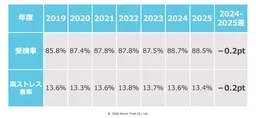
The stress check participation rate has remained stable at 87% to 88% from 2019 to 2025, reflecting a solid commitment to mental health evaluations in companies. However, the rate of high-stress employees has stagnated around 13%, indicating persistent challenges in addressing employee well-being. This analysis emphasizes the need for not just workload management but also enhancing workplace dynamics.
Age-Related Stress Variations
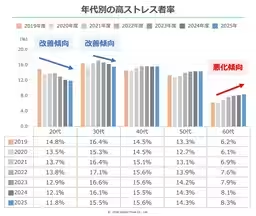
The results reveal significant differences in stress levels across various age demographics. Young employees in their twenties and thirties show an improvement in stress levels, benefiting from increased awareness and responses to harassment policies implemented in 2022. Conversely, individuals in their forties are facing stagnant stress rates, while those aged fifty and sixty exhibit rising stress levels. Factors like role evolution, increased physical demands, and extended working years owing to changes in employment laws are contributing to this trend.
Lack of Engagement Over Workload
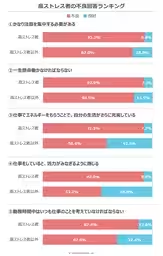
A striking insight from the analysis indicates that high-stress employees feel significantly less energized and engaged by their work compared to their lower-stress counterparts. Those identified as high-stress indicated a disparity of over 30 points when asked if their work provided them with energy and fulfillment. This emphasizes that the root of stress isn’t merely workload; it is rather a profound deficiency in job engagement and the sense of purpose.
Dr. Takahashi's Perspective
Dr. Masahiko Takahashi, CEO of Dr. Trust, articulates the shift in focus regarding stress management. “We are entering an era where the aim is not just to reduce workload but to foster a workplace where employees feel energized and find meaning in their roles. Our commitment remains on supporting companies through data analytics and promoting better human capital management.”
Detailed Findings on Employee Responses
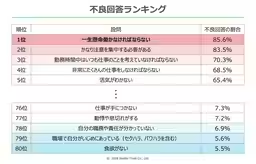
In the detailed breakdown of the survey data, the responses to various statements reveal that the highest levels of unfavorable responses relate to workload and concentration demands. Specifically, indicators such as “feeling a lack of energy” and “not being able to get a sense of achievement” are paramount in the responses of high-stress individuals.
Key Findings:
1. Stable Participation Rates: The participation rate remained between 87% and 88%, showing a strong commitment to addressing stress in the workforce.
2. Stagnating Levels of High Stress: The percentage of individuals defining themselves as high-stress remains constant at about 13% over several years.
3. Improvement in Younger Generations: The 20s and 30s see an uptrend in reduced stress levels, thanks to better workplace policies.
4. A Call for Greater Engagement: The analysis suggests that companies need to foster environments that enhance employee engagement.
Conclusion
The 2025 stress check results provided by Dr. Trust underscore an essential pivot in workplace mental health strategies. While participation in stress evaluations remains high, the varied stress levels across age groups highlight a need for tailored interventions. Company initiatives must not only focus on the physical workload but must also encompass employees’ emotional and psychological fulfillment for holistic well-being. As stated by Dr. Takahashi, creating a vibrant, engaging workplace is key to preventing mental health issues in the long run. This detailed analysis serves as a vital resource for understanding the complexities of workforce stress in a changing corporate landscape.
Topics Health)


【About Using Articles】
You can freely use the title and article content by linking to the page where the article is posted.
※ Images cannot be used.
【About Links】
Links are free to use.