



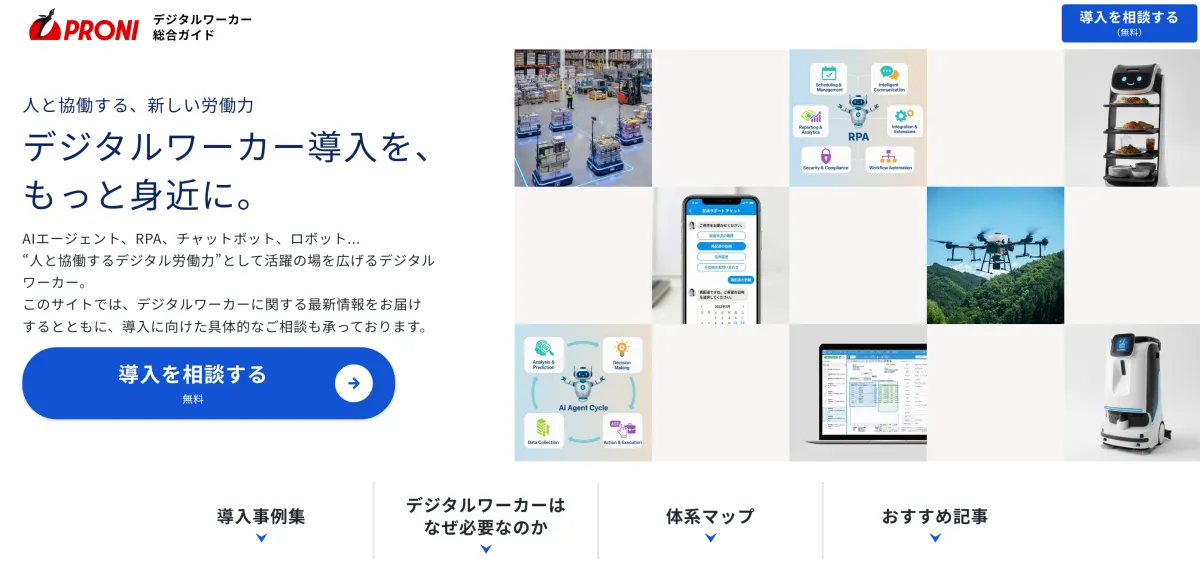
PRONI's Digital Workers: A New Solution for Labor Shortages in Japan
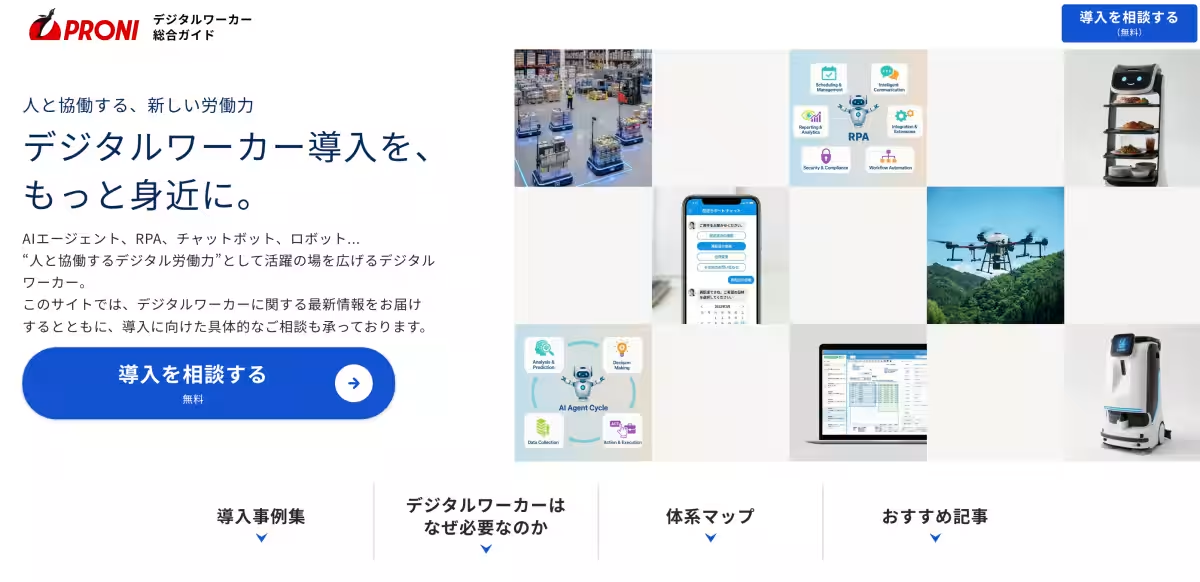
PRONI Launches Comprehensive Guide to Digital Workers
In response to Japan's increasing labor shortages, PRONI Inc., led by CEO Daisuke Shibata and Founder Norio Kuriyama, has unveiled a new media platform titled "The Comprehensive Guide to Digital Workers." This specialized resource aims to promote the adoption of digital labor forces, helping small and medium-sized enterprises (SMEs) navigate the complexities of digitalization while addressing workforce challenges.
Tackling the 'Last-Mile' Problem in Digitalization
Over the past years, many SMEs have successfully adopted various SaaS (Software as a Service) tools to enhance operational efficiency. However, significant challenges remain, particularly in managing processes involving multiple systems and providing personalized support.
Companies are now grappling with a new obstacle: even after implementing these digital tools, they struggle to hire human labor to cover remaining tasks due to the ongoing hiring crisis. As a result, many have been forced to delay or abandon the digital tools that could lead to greater efficiency.
Enter the digital worker—a game-changing solution that bridges the gap. This concept allows businesses to automate routine tasks and processes, thus freeing human employees to focus on high-value activities that only they can perform, such as creative problem-solving and customer engagement.
Understanding Digital Workers
Digital workers are not merely automated tools but rather autonomous units capable of understanding context, gathering information, and executing tasks continuously until completion. Utilizing technologies such as AI and Robotic Process Automation (RPA), digital workers can take on labor that would typically require human presence, thus redefining what constitutes labor in the modern business environment.
Five Key Labor Challenges Addressed by Digital Workers
The Comprehensive Guide to Digital Workers focuses on how these digital entities can help companies overcome persistent challenges:
1. Severe Labor Shortages: With job recruitment becoming increasingly difficult due to rising costs and a dwindling applicant pool, digital workers can operate around the clock without the costs associated with hiring.
2. Reduction of Repetitive Tasks: Digital workers handle monotonous tasks such as data entry and invoice processing, dramatically improving the work environment and relieving human employees from fatigue-inducing responsibilities.
3. Minimizing Human Errors: By adhering strictly to predetermined rules, digital workers minimize the potential for human error, thus elevating the quality of work and significantly reducing the need for double-checking tasks.
4. Shifting Human Focus to Value-added Work: By offloading routine operations to digital workers, human employees can devote their time to more complex issues that require creativity, such as strategizing new business initiatives or improving customer interactions.
5. Rapid Data Processing and Decision Support: Digital workers excel at swiftly processing large volumes of data across multiple systems. They can retrieve and present critical analytics to executives in real-time, thereby facilitating data-driven decision-making.
The Importance of Embracing Digital Workers
According to CEO Daisuke Shibata, PRONI has facilitated over 680,000 order matches and supports companies in improving productivity. As Japan's working-age population declines by approximately 600,000 individuals each year, the need to adopt digital workers is more pressing than ever. While many businesses have embraced digital tools, they often find themselves unable to secure the necessary human resources for full implementation. PRONI aims to increase awareness and understanding of the digital worker concept across Japan, ultimately catalyzing a cultural shift in the workplace.
Service Overview
- - Service Name: Digital Worker Specialized Guide
- - Content: Focused on real-life examples and case studies of digital worker implementations.
- - URL: Digital Worker Guide
- - Price: Free
- - Target Audience: Business executives and decision-makers looking to solve labor shortages, digital tools advocates, and those in charge of selecting and implementing SaaS solutions within their organizations.
About PRONI
PRONI is dedicated to supporting SMEs and revitalizing the Japanese economy. Established in 2012, the company focuses on improving business transactions between companies to increase productivity and overall economic performance. PRONI operates Japan’s largest B2B order matching platform, PRONI AiMitsu, and has received numerous accolades, including the prestigious Japan Services Award. With plans to go public on the Tokyo Stock Exchange by late 2025, PRONI continues to be a pioneer in digital transformation and effective business practices.
Topics Business Technology)
【About Using Articles】
You can freely use the title and article content by linking to the page where the article is posted.
※ Images cannot be used.
【About Links】
Links are free to use.