


Exploring the Growth Prospects of Japan's Digital Signage Advertising Market
The Future of Japan's Digital Signage Advertising Market
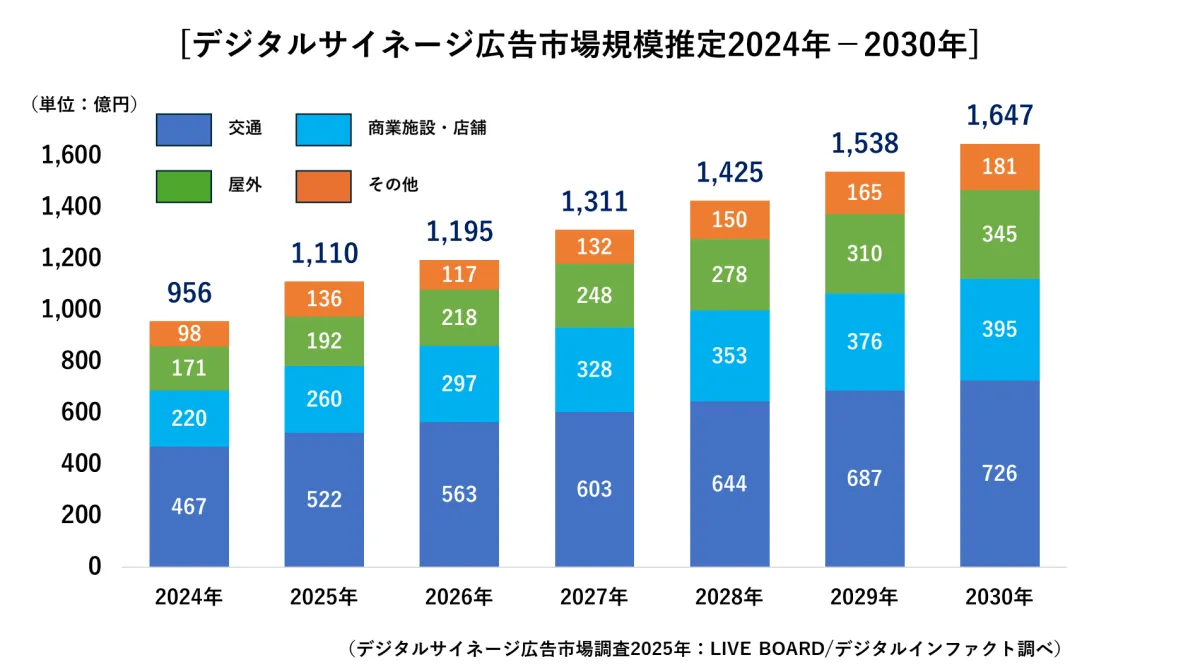
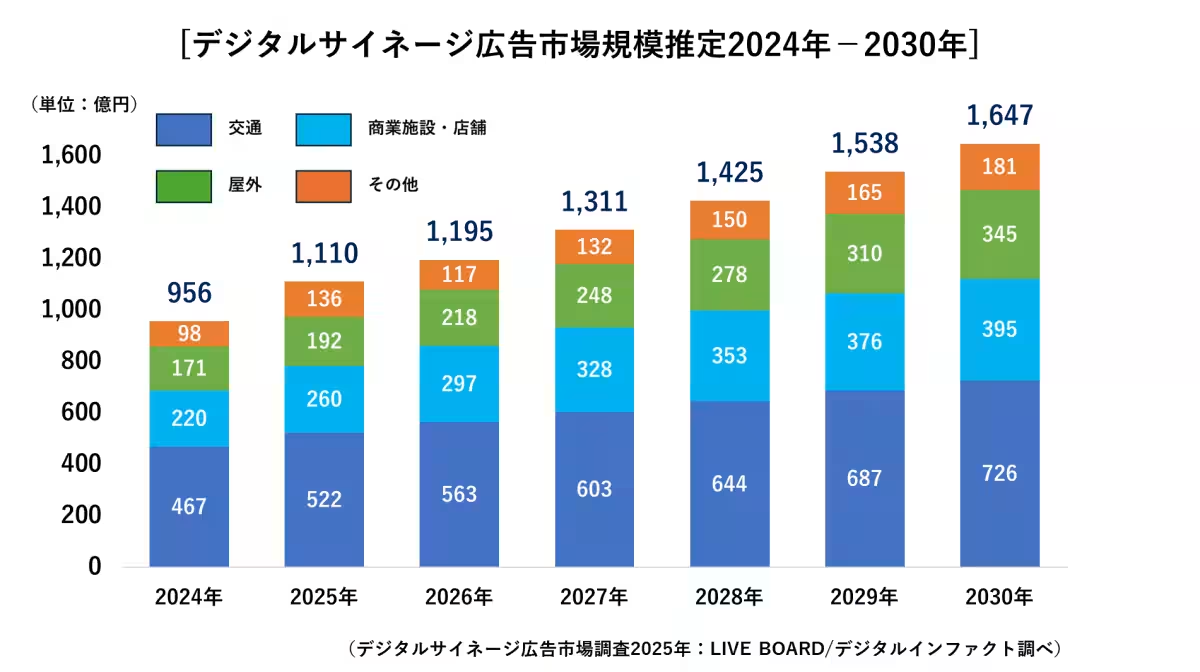
Japan's landscape of digital signage advertising is experiencing a promising upward trajectory, according to a comprehensive study conducted by LIVE BOARD in collaboration with Digital Infact, overseen by CARTA HOLDINGS. This research projects that the digital signage advertising market will reach approximately ¥1,110 billion by 2025, marking a 116% increase from the previous year, with further growth anticipated to bring the total to ¥1,647 billion by 2030—a substantial 148% growth from 2025.
The resilience of the digital signage sector in the face of the COVID-19 pandemic, which restricted movement and public gatherings, highlights its crucial role in contemporary marketing strategies. As consumers adapt to new public interactions, businesses are increasingly leveraging digital signage to provide immersive and impactful advertising in real-time environments. The demand for life-like and engaging content delivered through digital platforms continues to surge.
Areas known for high foot traffic, such as Shibuya, Harajuku, and Shinjuku, remain hotbeds for digital signage installations. As the Japan International Exposition (World Expo) approaches in 2025, particularly in the Osaka-Kansai region, there's an acceleration in the development of digital signage infrastructure, responding to heightened demands from advertisers seeking stronger promotional capabilities in the lead-up to the event.
Retail Media: A Key Player in Growth
One of the focal points of this evolution is retail media, where major players including supermarkets and convenience stores have already begun advanced deployments of digital signage. Notable advancements are evidenced by large convenience store chains implementing signage across over 10,000 locations nationwide. This rapid expansion reflects the significant opportunities for advertising inventory as the industry embraces data sharing and collaborative initiatives among competitors.
Additionally, major railway companies are recognizing the value of introducing data-driven out-of-home (OOH) advertising platforms that promote programmatic ad buying. As connections with Demand-Side Platforms (DSP) and Supply-Side Platforms (SSP) increase, new sales channels are being established involving international advertising agencies, which promises to enhance the operational effectiveness of digital signage.
Collaborative Efforts to Enhance Measurement Standards
In a measure to unify advertising effectiveness metrics across the out-of-home (OOH) sector, the Japan OOH Measurement Association (JOAA) was established in September 2025. This unprecedented effort aims to develop and provide industry-wide standard benchmarks, enabling advertisers to engage with OOH media more confidently, ensuring value visibility in advertising. The implementation of measurement standards has notably bolstered market growth in international contexts, and stakeholders hope similar outcomes will be observed in Japan.
As insights evolve, a shared perspective among market participants suggests consistent growth for digital signage advertising. With the forecast showing a potential for the market to hit ¥1,647 billion by 2030, there’s shared optimism about sustained stability.
Market Segmentation Insights
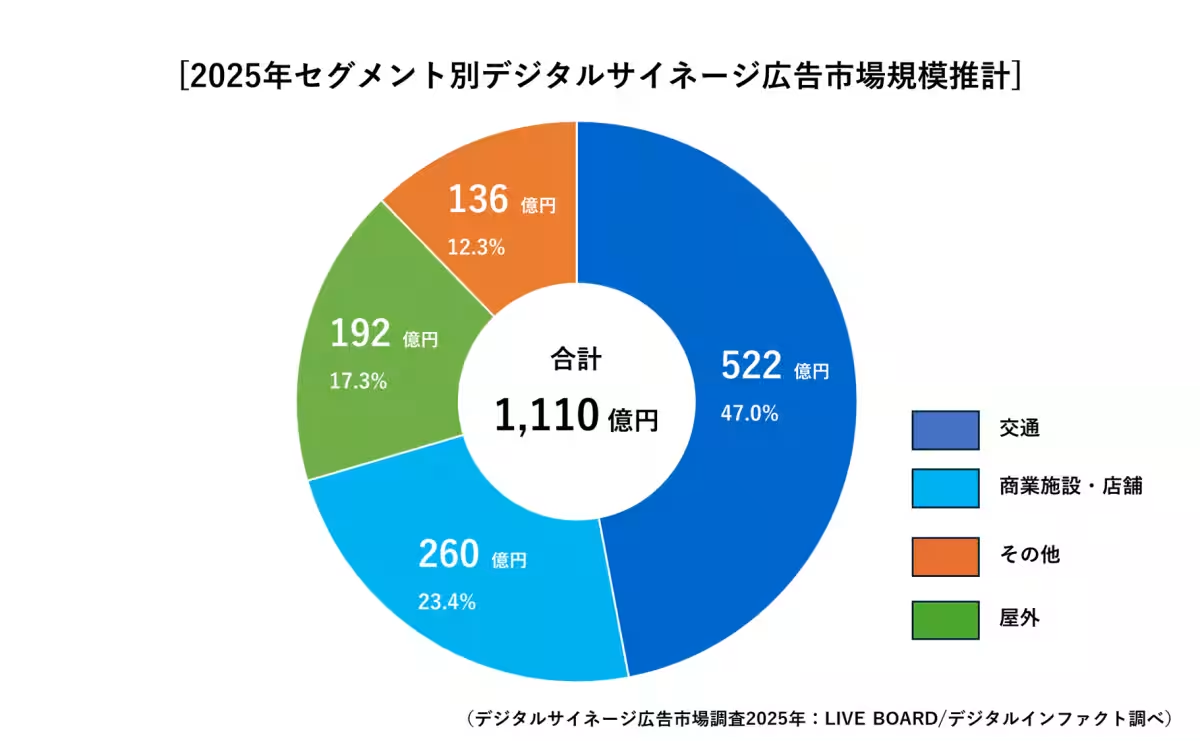
The 2025 digital signage advertising market forecast is segmented as follows:
- - Transportation: Expected market size of ¥522 billion (47% of total), including trains, taxis, airports, and buses. This area is witnessing demand for immersive presentations and impactful marketing within transit facilities.
- - Commercial Facilities and Stores: Anticipated to generate ¥260 billion (23.4%), covering supermarkets, drugstores, and various retail outlets. Such venues are increasingly using digital signage to promote both in-store and external products.
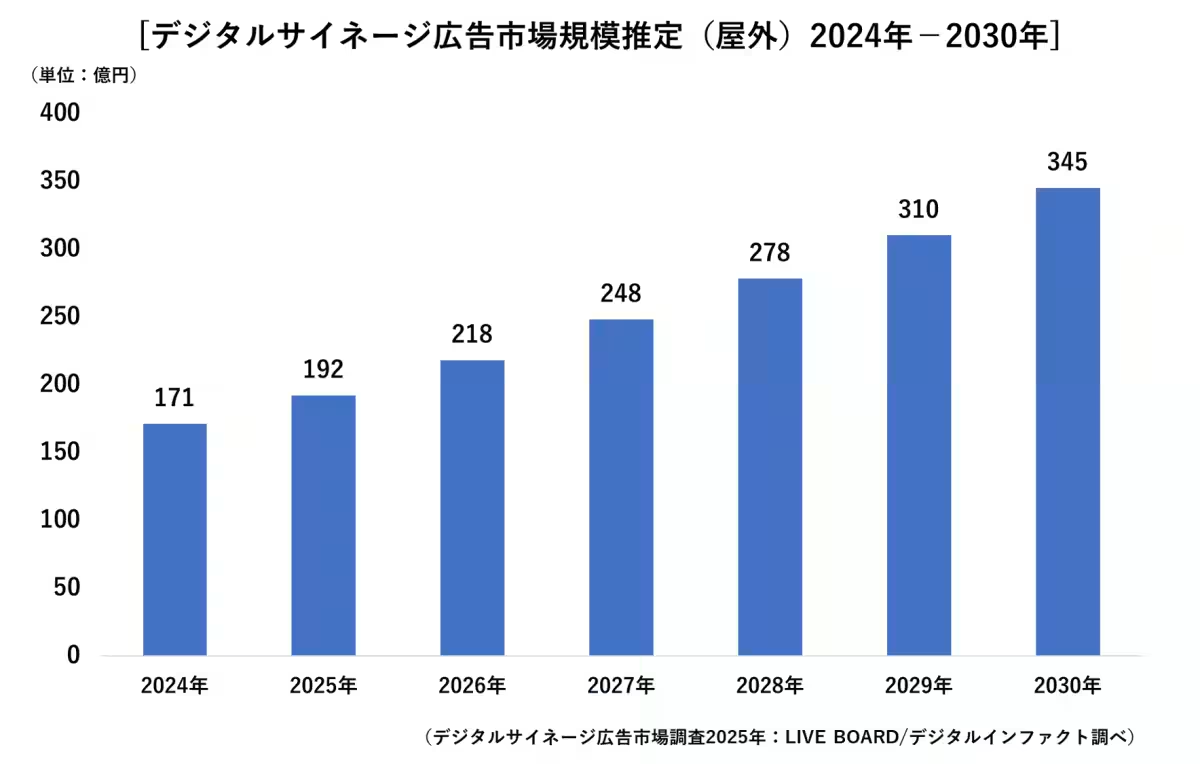
- - Outdoor (Large-scale Displays): The outdoor segment, accounting for ¥192 billion (17.3%), thrives primarily in urban hubs like Shibuya and Osaka, where the digital signage experience continues to captivate audiences.
- - Others: Including public buildings, residential complex elevators, and cinema advertising, expected to yield ¥136 billion (12.3%). The cinema sector, buoyed by new blockbuster releases and popular animations, plays a crucial role in market dynamism.
As this vibrant industry continues to evolve, the prospect of new advertising metrics and collaboration promises to open doors for previously untapped advertisers, igniting further growth in the digital signage market. The integration of digital signage with established metrics from television and web advertising will likely foster increased usage across promotional initiatives.
In conclusion, the digital signage advertising sector in Japan stands at a pivotal point, bolstered by innovative approaches, heightened consumer interaction, and the steadfast pursuit of data-driven effectiveness. Future growth appears not only possible but probable, paving the way for an exciting evolution in how brands connect with their audiences.

Topics Consumer Technology)

【About Using Articles】
You can freely use the title and article content by linking to the page where the article is posted.
※ Images cannot be used.
【About Links】
Links are free to use.