



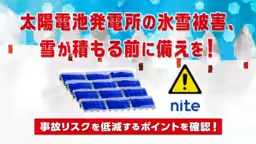
Snow and Ice-Related Accidents at Solar Power Plants Rise in Heavy Snowfall Regions
Understanding the Rise in Snow and Ice Accidents in Solar Power Plants
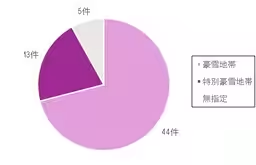
Recent analyses conducted by the National Institute of Technology and Evaluation (NITE) indicate a troubling trend in the rise of accidents caused by snow and ice in solar power facilities across Japan. From fiscal years 2020 to 2024, there have been 62 reported electricity-related incidents attributed to snow and ice, predominantly in regions known for heavy snowfall. Specifically, NITE's research highlights that over 90% of these incidents occurred in heavy snowfall zones, underscoring the urgent need for preventive measures.
The Severity of the Situation
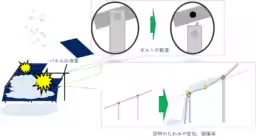
In detail, the analysis shows that in these five years, 57 out of the 62 reported accidents took place under severe snow conditions, reflecting the susceptibility of solar installations to adverse winter weather. Notably, damages to solar panels and mounting structures are prevalent, and these incidents can lead to significant operational disruptions and safety hazards. Moreover, accidents are not limited to heavy snowfall regions, as issues arise even in areas with light snowfall, including failures of the inverters due to infiltrating fine snow.
Statistical Overview
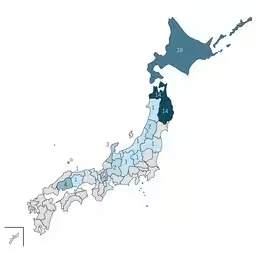
To further illustrate the impact, accident data reveals that Aomori and Iwate Prefectures lead with the highest number of incidents, each reporting 14 accidents, followed by Hokkaido with 10. Regions outside the snow-heavy areas also report occasional damages, indicating a broader risk that needs to be addressed.
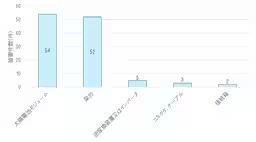
A breakdown of the electrical facilities impacted reveals that damage to solar modules and mounting systems constitutes over 90% of the incidents. Other components like inverters and connectors also face risks, albeit to a lesser extent.
Recent Case Studies
NITE's report also presents case studies of several incidents:
1. Damage Due to Heavy Snowfall
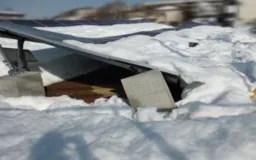
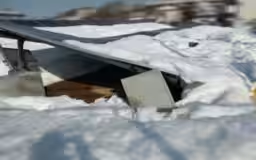
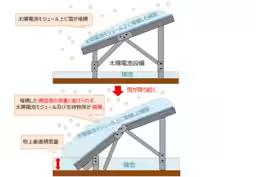
In February 2021, significant snowfall buried solar panels in a special heavy snow zone, leading to warping and detachment from their mounting hardware due to excessive weight.
2. Collapsed Mounting Structure
Another event in February 2021 saw both solar modules and the mounting structure collapse under an unanticipated accumulation of snow, causing around 80% damage.
3. Rapid Snow Accumulation
A March 2022 incident showcased how a sudden increase in snow and a lack of timely removal led to structural failures at a facility in a heavy snow zone.
4. Accident in Non-Snow Regions
2023 also recorded a collapse of a mounting system in an area not classified under heavy snowfall zones, triggered by extreme conditions with 50cm of snow combined with strong winds.
These examples illustrate how varying weather and snow conditions necessitate comprehensive planning and preparation.
Importance of Preemptive Measures
To mitigate the risks posed by snow accumulation, operators of solar power plants must engage in proactive planning. Establishing snow removal strategies and consulting with safety personnel prior to snowfall can greatly enhance response times and reduce damage.
Considerations for effective risk management include:
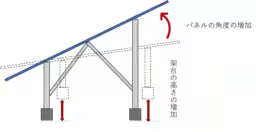
- - Designing for Snow Load: Ensuring that solar installations are built to withstand the predicted heavy snow loads for their respective locations is crucial. Engineering calculations must reflect local conditions, and operational protocols need to be clearly defined and communicated.
- - Regular Inspections: Frequent checks on panel mounts and structural integrity during the winter season can catch potential issues before they escalate.
- - Emergency Protocols: Clear response guidelines detailing how to safely address accidents and outages when they occur should be a staple for any operation.
Conclusion
With the increasing severity of winter weather patterns, the need for robust safety and operational strategies at solar power plants becomes more critical. Stakeholders must remain vigilant, ensuring full compliance with evolving safety standards and proactively managing risks to safeguard their installations. Through comprehensive planning and a commitment to continuous improvement, we can protect our renewable energy sources and mitigate the impacts of harsh winter weather.
For further information and resources on snow-related risks in solar energy production, please refer to NITE's guidelines and ensure adherence to national safety protocols.
Topics Energy)
【About Using Articles】
You can freely use the title and article content by linking to the page where the article is posted.
※ Images cannot be used.
【About Links】
Links are free to use.