



Collaborative Research Program Accelerates Fluid Device Development in Japan
Collaborative Research to Advance Fluid Device Efficiency
In a groundbreaking development, Kyoto University, Saitama University, Toyama University, and BIPROGY have been collectively recognized by the Japan Science and Technology Agency (JST) for their participation in the A-STEP program's second stage, aimed at enhancing collaboration between academia and industry. The research focuses on leveraging advanced topological data analysis in fluid dynamics to improve efficiency in the manufacturing sector, particularly in the development of fluid devices.
Fluid devices, essential across various fields such as manufacturing, healthcare, and environmental control, convert fluid energy (liquid or gas) into mechanical energy. Traditionally, designs have relied on computational fluid dynamics (CFD) to simulate fluid flows, but despite generating vast amounts of detailed data regarding flow direction and strength, extracting meaningful insights from such data has proved cumbersome. This often leads to iterative redesigns and lengthy simulation cycles, ultimately increasing development duration and associated costs.
Objective and Methodology
The collaborative endeavor aims to refine algorithms that rapidly and effectively extract the intrinsic flow structures of complex internal flows within Daikin's air conditioning compressors. These compressors, critical components that regulate the temperature of refrigerants, are at the center of Daikin's technological prowess. Key challenges in compressor design include managing the circulation of refrigerants and mitigating the 'oil carryover’ phenomenon, where lubricant oil is ejected along with refrigerant gas, impacting both efficiency and environmental compliance.
By implementing topological flow data analysis (TFDA), the team seeks to visualize and identify the flow patterns of refrigerants and oils within the compressors. This innovative approach enables precise modifications to compressor design, shifting from trial-and-error to a more targeted, data-driven design process, aiming for shorter development timelines and reduced operational costs.
Through this initiative, the collaborative researchers will establish a comprehensive module for performing TFDA across multiple fluid device applications. The 'TFDA-i solution,' which includes tailored software for industrial device development, will broaden the impact of this research beyond HVAC systems to other fluid device sectors.
Program Details
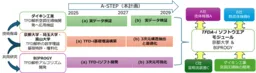
The partnership is structured under the A-STEP program's second stage for the fiscal year 2025, spanning from October 1, 2025, to March 31, 2030. The roles are delineated as follows:
- - Kyoto University, Saitama University, and Toyama University will focus on developing the theoretical framework of TFDA.
- - Daikin Industries will provide necessary simulation data for the compressors and conduct validation of the findings.
- - BIPROGY will lead the research and development of the implementation algorithms and software for TFDA.
Future Endeavors
This joint research is set to tackle the oil carryover issue observed in air conditioning compressors with the ultimate goal of reducing its frequency. As TFDA supplements conventional CFD methods, its widespread adoption in industries such as automotive and aerospace is anticipated to revolutionize efficiency in fluid device development.
The overarching aim is to provide comprehensive topological data analysis solutions to an array of fluid device applications, enhancing operational efficiency and driving innovation in industrial machinery.
References
For more details on the A-STEP program, visit the official A-STEP site.
Please note that all company names and product names are trademarks or registered trademarks of their respective companies. This information is valid as of the publication date and may change without prior notice.
Topics Consumer Technology)
【About Using Articles】
You can freely use the title and article content by linking to the page where the article is posted.
※ Images cannot be used.
【About Links】
Links are free to use.