



Huawei Launches Next-Gen Optical Network Solutions to Accelerate Growth in the AI Era
Huawei Introduces Innovative Optical Network Solutions for the AI Era
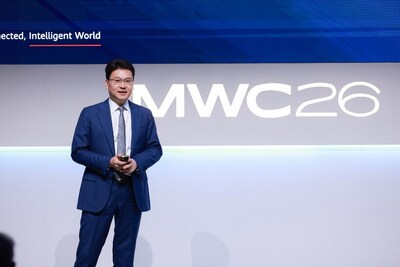
In a significant event at MWC Barcelona 2026, Bob Chen, the head of Huawei's Optical Business Product Line, announced a groundbreaking series of Next Generation Optical Network products and solutions. These innovations are designed to promote the synergy between artificial intelligence (AI) and networks, facilitating a pivotal shift towards fully optical networks.
The launch emphasizes Huawei's commitment to enhancing optical networks, which is seen as a critical move within the context of ITU-T's released vision for ION-2030. This vision highlights fundamental capabilities and standardization roadmaps for next-generation optical networks, urging global operators to expedite their deployment.
Bob Chen articulated, "Huawei is innovating in two key areas: AI for Networks and Networks for AI. In the AI for Networks domain, AI technologies enable smart fiber sensing, significantly improving network performance and user experience while also enhancing operational efficiency and reducing energy consumption. Conversely, Networks for AI includes advanced network features that assist operators in building AI-centric, fully optical target networks, which will accelerate the adoption of AI technologies in both residential and business environments."
Enhancements Through AI Integration
1. AI for Networks: By utilizing intelligent fiber sensing, the risk detection and fault identification processes are optimized. This advancement allows for preemptive detection of issues, pinpointing faults accurately within a 10-meter radius, thereby minimizing potential downtimes.
2. Improving Network Performance: Utilizing an optical performance simulation model built on thousands of parameters, network performance evaluation becomes notably more precise. This innovation extends transmission distances by an impressive 20%.
3. Enhancing Network Experience: Real-time detection of Wi-Fi interference coupled with AI algorithms enables intelligent adjustments to Wi-Fi strength, yielding speed increases of up to 20% in adverse conditions.
4. Energy Savings: Traffic patterns are dynamically analyzed, allowing for intelligent adjustments of connections and panels. In periods of low traffic, these components can be switched to standby mode, leading to an average energy consumption reduction of 40%.
5. Smart Operation and Maintenance: AI technologies are utilized to enhance processes in network planning, construction, maintenance, and optimization. For instance, Huawei’s broadband service agents can autonomously identify over 60 types of faults and their locations, assisting engineers through natural language interactions, thus dramatically reducing the need for home visits.
Accelerating AI Adoption through Networks
To cater to the growing demand for AI-driven services, Huawei has established a target network featuring gigabit-level downstream connectivity and 100M upstream connections, significantly improving the overall home network experience.
For optical transmission purposes, specific latency objectives have been set to ensure rapid data processing and optimal AI application performance: 5ms for national networks, 3ms for regional networks, and 1ms for metro networks.
In this process, Huawei launched a comprehensive series of products and solutions for the Next Generation Optical Network. This includes innovations like FTTR, OLT, ONT, and ODN in the optical access domain, alongside new Next Generation OTN products that support operator deployment of ultra-broadband networks.
As the digital landscape evolves, Huawei's innovative offerings position the company as a leader in transforming how optical networks can integrate with emerging AI technologies, setting a blueprint for the future of network infrastructure.
Through such strides, Huawei continues to not only lead the market but also redefine the possibilities within the telecom industry, heralding a new era where AI and networking converge to create unprecedented opportunities for growth in various sectors.
Topics Telecommunications)
【About Using Articles】
You can freely use the title and article content by linking to the page where the article is posted.
※ Images cannot be used.
【About Links】
Links are free to use.