



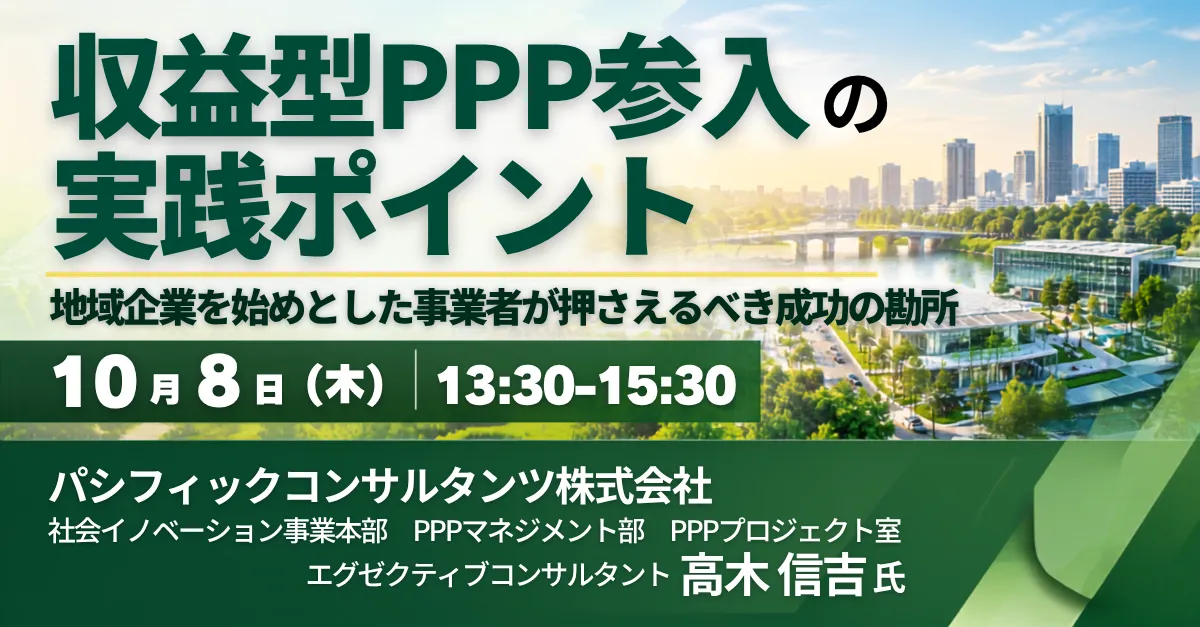
Key Points for Successful Participation in Revenue-Based PPPs in Japan
Insights on Revenue-Based PPPs
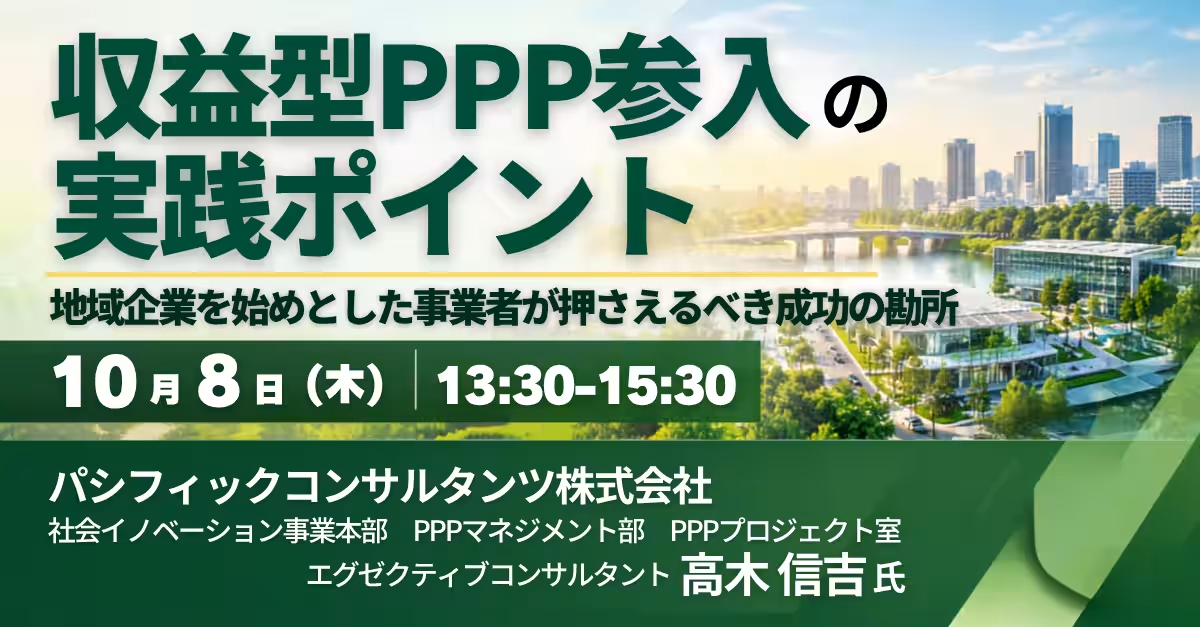
The Japan Planning Institute (JPI) hosted a seminar on October 8, 2026, focusing on the practical points for entering revenue-based Public-Private Partnerships (PPPs). The seminar was led by Takagi Nobuyoshi, an expert from Pacific Consultants Co., who shared valuable insights into successful strategies for regional businesses and other interested stakeholders in engaging with PPPs.
What is a Revenue-based PPP?
Revenue-based PPPs are collaborative agreements between public and private sectors aimed at creating profitable projects. These partnerships often leverage innovative ideas from local businesses, breaking new ground in community-oriented projects.
Key Insights from the Seminar
1. Project Selection Criteria: Businesses interested in revenue-based PPPs need to develop robust criteria for project selection. This involves assessing potential projects based on small concessions and LABV (Land and Building Value) to determine viability.
2. Risk Allocation: Understanding how to incorporate obligations, penalties, unforeseen circumstances, and inflation into risk-sharing agreements is crucial. Insight into these components helps mitigates risks that could impact return on investment.
3. Business Plan Design: A well-structured business plan is vital. Key strategies include accurately assessing funding levels and formulating proposals that enhance the reputation of regional businesses.
Target Audience for the Seminar
The seminar is directed at:
- - Planning and development departments managing PPP and PFI projects.
- - New business development units within real estate, construction, and infrastructure sectors.
- - Financial institutions and investment firms focused on project evaluation and funding.
- - Local businesses and community financial institutions responsible for public-private collaborations.
- - Consulting firms providing business planning and proposal assistance.
Emerging Trends in PPPs
The seminar also explored the shift towards businesses themselves creating their own PPP projects. This trend is characterized by innovative thinking, particularly in small concessions and LABVs that provide avenues for revenue generation. As local companies engage with PPPS actively, a profound opportunity arises to shape their businesses by leveraging local insights and expertise.
Essential Topics Covered
The participants gained foundational knowledge on:
- - The new generation of revenue-generating businesses crafted by local enterprises.
- - How to ascertain engagement in next-generation revenue-based PPPs, including checking obligation conditions and evaluating contingency measures.
- - The indispensable elements of proposal writing that secure funding and recognition for regional contributions.
The seminar concluded with a discussion on the future of revenue-based PPP projects, supported by case studies illustrating successful implementations.
Networking Opportunities
Participants were given a chance to engage with the speaker and fellow attendees through direct dialogue and business card exchanges, enhancing networking prospects for future collaborations.
Attendance Options
- - On-site (no archive access)
- - Live online (no archive access)
- - Archived playback available with the option of adding it for a fee post-registration.
Registration Fees
The registration fee is 37,240 yen (including tax) for one person, with discounts available for additional attendees from the same organization.
For further inquiries, participants may contact JPI, located at 5-2-32 Minamiazabu, Minato-ku, Tokyo. They can also access the seminar details through the JPI website.

Topics Business Technology)
【About Using Articles】
You can freely use the title and article content by linking to the page where the article is posted.
※ Images cannot be used.
【About Links】
Links are free to use.