



Huawei Partners with Yunnan Power Grid for High-Capacity Transmission Network Upgrade
A New Era for Yunnan Power Grid's Transmission Network
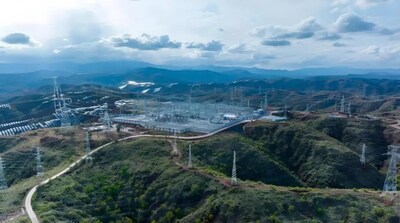
In the rugged landscapes of southwestern China, Yunnan Power Grid Co., Ltd. (Yunnan Power Grid) takes the lead in advancing renewable energy transmission and developing smart power grids. However, the region's complex terrain and extensive transmission lines have posed significant challenges for modernization efforts. To tackle these issues, Yunnan Power Grid has turned to advanced Smart Photonic Networks (SPN) technology, marking a critical step in transforming their transmission network.
The Need for Transformation
As Yunnan Power Grid continues to expand its operations, the demand for efficient data processing and reliable power transmission has intensified. This increase in operational data and complex service scenarios has placed new pressures on the existing network infrastructure, necessitating an urgent digital and smart transformation. Consequently, SPN technology has been recognized as the foundation for their next-generation transmission network, featured prominently in both the 14th and 15th Five-Year Plans.
Huawei as a Strategic Partner
With the ambitious goal of modernizing the energy services infrastructure, Huawei has emerged as a pivotal partner in this extensive project. Since initiating pilot projects in 2022, SPN technology has transitioned from initial technical testing to becoming a standardized architecture throughout Yunnan Province. Pilot projects in Zhaotong and Pu'er have showcased the advantages of this new system.
Overcoming Bandwidth Limitations
One of the significant achievements of the SPN implementation is overcoming previous bandwidth limitations. The new transmission network effectively removes bottlenecks that existed at lower speeds, previously capped between 155 Mbit/s and 10 Gbit/s, and introduces capacities reaching 50 Gbit/s and 100 Gbit/s depending on location and service needs. This development allows for increased access layer bandwidth at energy stations, power plants, and customer service centers to an impressive 1 Gbit/s, meeting the standards set by China Southern Power Grid.
Furthermore, the SPN network supports the creation of end-to-end isolated hard-pipe connections at low granularities of 10 Mbit/s, paving the way for high-bandwidth services such as energy transmission video monitoring while ensuring seamless network evolution.
Enhancing Maintenance and Inspection Efficiency
The new system also significantly streamlines inspection and maintenance processes within the power grid. Huawei's SPN solution enables real-time Service Level Agreement (SLA) monitoring, which tracks delays and packet losses, drastically reducing equipment failure-related maintenance costs. For instance, the time required for a single inspection at the Qujing Energy Office has diminished from 30 minutes to just 3 minutes, while the complete maintenance cycle has slashed from over 7 hours to just 21 minutes.
Moreover, by identifying critical failures 15 days in advance through strategically defined monitoring points, the number of onsite visits has dropped from 112 to 61, marking a remarkable reduction of approximately 45.54%.
Intelligent Service Transmission
Huawei's SPN infrastructure is also designed to support a diverse range of energy services, from delay-sensitive teleprotection systems to high-traffic video transmission, ensuring reliable communication across various applications. Through FlexE technology, which facilitates rigid and flexible resource partitioning, the system ensures thorough isolation among services while maximizing bandwidth utilization.
Additionally, the capability to support a dual-stack of IPv4/IPv6 enhances local transmission efficiency and enables seamless integration with IoT solutions, such as power line monitoring and energy warehouse integration.
Long-term Investment Protection
The evolution of SPN technology is engineered for sustainability, allowing for cost-effective upgrades to speeds ranging from 25 Gbit/s to 400 Gbit/s without necessitating a complete rebuild of existing infrastructure. This flexibility ensures a long-term return on investment for Yunnan Power Grid as they prepare for the future.
To learn more about this innovative partnership and the transformative technologies being implemented, visit Huawei's official website.
Topics Energy)
【About Using Articles】
You can freely use the title and article content by linking to the page where the article is posted.
※ Images cannot be used.
【About Links】
Links are free to use.