




New Insights on Foreign Tourist Hotel Preferences in Japan's Shinjuku Area
Transforming Hotel Stays into Travel Experiences
A recent survey conducted by TST Entertainment, in collaboration with HOTEL GROOVE SHINJUKU, offers profound insights into the preferences of foreign tourists staying in Japan. Conducted in various spaces within the Tokyu Kabukicho Tower, the study reveals that the perception of hotels has shifted significantly.
Key Findings:
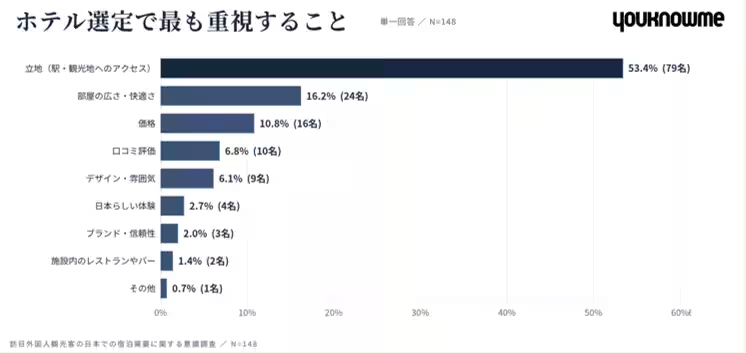
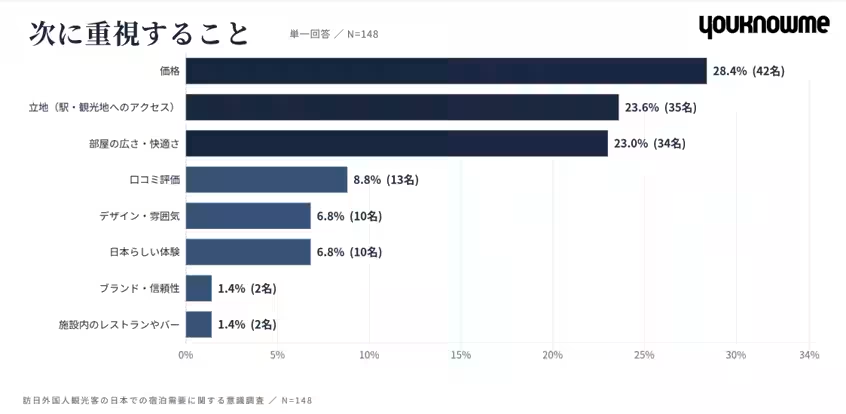
1. Location, Price, and Comfort: The primary keywords for choosing a hotel among foreign tourists are location, price, and comfort. Over half of the respondents indicated that location was their top priority when selecting accommodation.
2. Hotels as Experience Centers: The study also highlights that hotels are not merely places to sleep; they are considered integral parts of the travel experience.
3. Travel Patterns: Many travelers, particularly those staying in Shinjuku, frequently explore Japan's popular routes, demonstrating a diverse range of travel itineraries.
Overview of the Survey
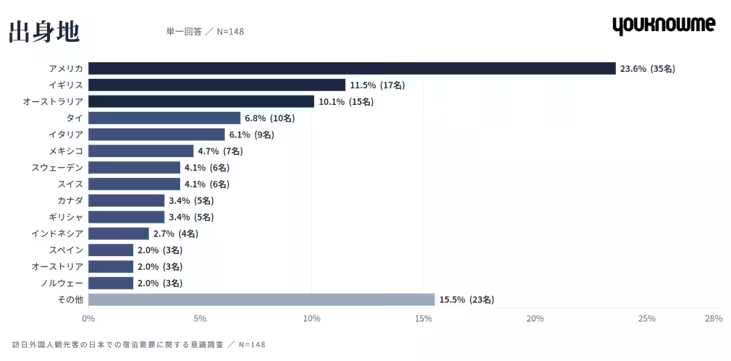
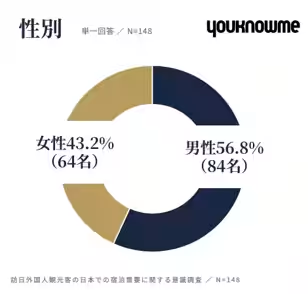
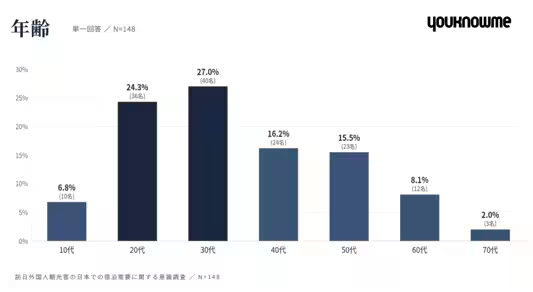
The study ran from March 27 to April 12, 2026, with 148 foreign tourists participating. The qualitative approach incorporated interviews that allowed researchers to dig deeper into tourist sentiments.
The first major finding of the survey shows that a majority of participants (53.4%) highly prioritize location when selecting their hotel. Following location, 28.4% mentioned price, with comfort and room size being important to 23% of respondents. The data indicates that families from Western countries, comprising a significant portion of respondents, often require larger accommodation for multiple guests, thus influencing their preferences.
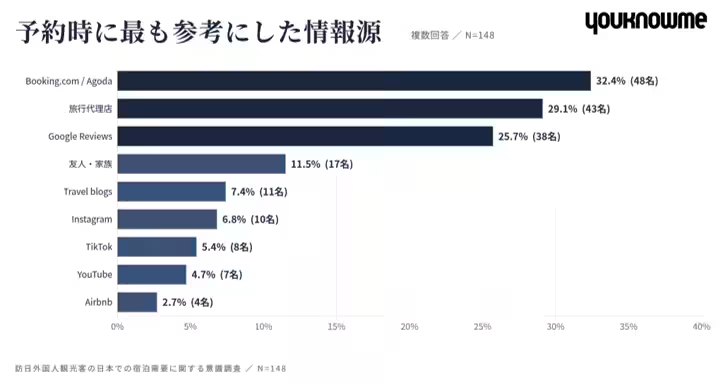
When investigating the sources tourists rely on for booking, key platforms included Booking.com/Agoda, travel agents, and Google Reviews, reflecting a pattern of comparing location and price while using reviews for assessing comfort and quality.
Hotels as Integral Part of the Experience
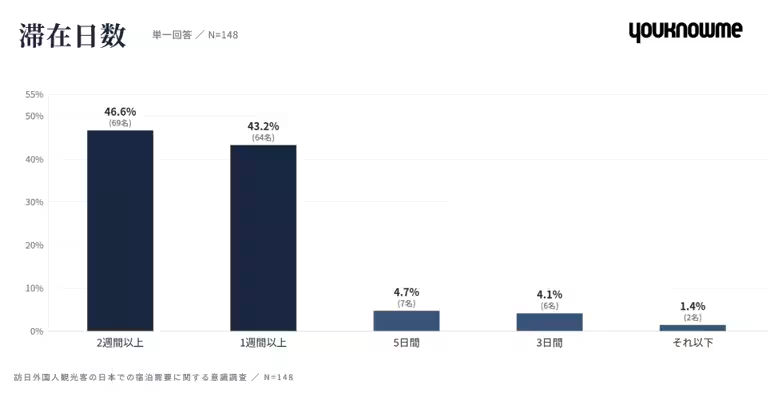
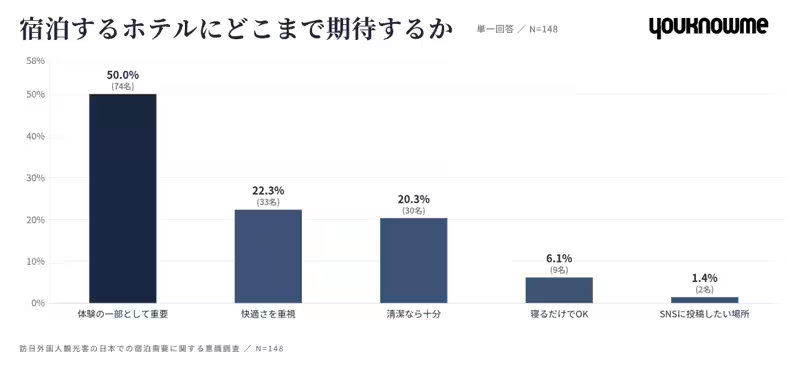
The survey also found that around 90% of foreign tourists are long-term visitors, with many staying over a week. When asked about their expectations from hotels, half of the respondents indicated that hotels should provide significant experiences beyond just a place to sleep. More specifically, 50% view the hotel as an integral part of their trip, while roughly 20% prioritize comfort or cleanliness. Only a small fraction (6.1%) said they were simply looking for a place to rest.
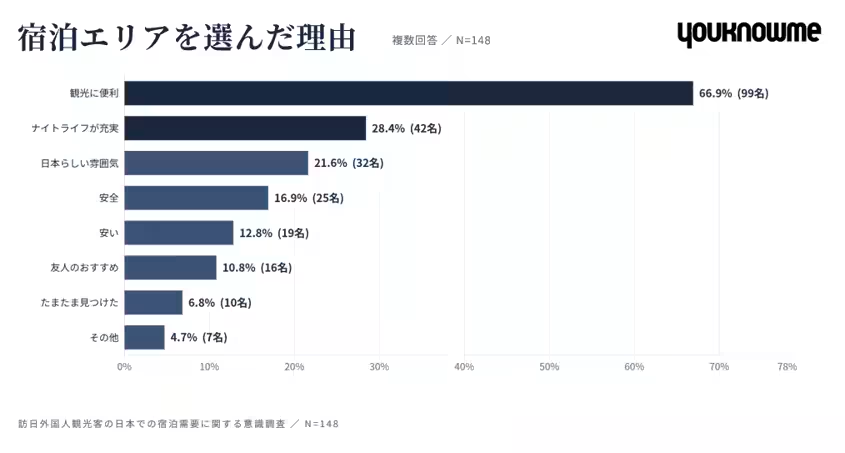
Many tourists cited convenience for sightseeing as the primary reason for choosing Shinjuku, demonstrating that hotels are seen as gateways to local attractions. More than two-thirds (66.9%) underscored the importance of ease of access to tourist sites, while attractions like vibrant nightlife (28.4%) and a uniquely Japanese atmosphere (21.6%) were also significant draws.
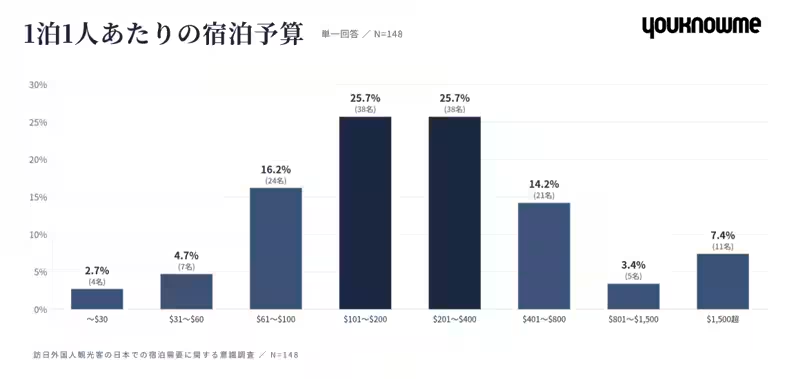
Budget considerations averaged around $100 to $400 per night, indicating that travelers are willing to invest in quality experiences. Notably, a remarkable 7.4% of respondents indicated they plan to spend over $1500, suggesting that some guests certainly allocate significant budgets for accommodation.
Travel Itineraries: Golden Routes and Beyond
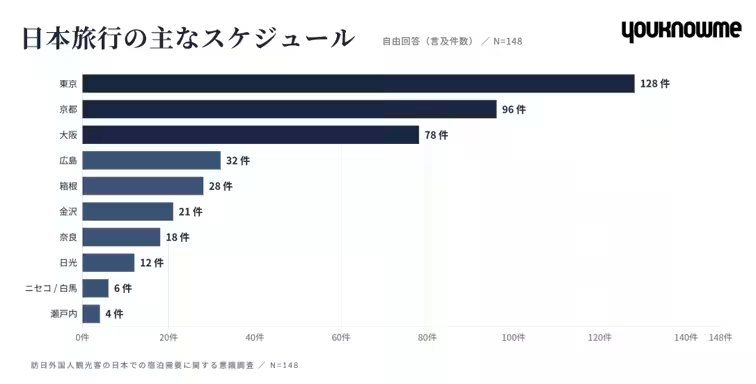
Additionally, participants shared insights into their travel itineraries, revealing that international tourists often follow Japan’s Golden Route—Tokyo, Kyoto, Osaka—with visits to other notable locations such as Hiroshima and Hakone. Their travel plans often intersperse simple city tours with unique experiences, like climbing Mount Fuji or attending concerts in the region.
Here are a few examples of travel itineraries based on participant feedback:
- - Teen from the UK
- 2-4: Hiroshima
- 5: Osaka
- 6: Nara
- 7: Kyoto
- 8: Osaka
- 9: Back to Tokyo
- 10-14: Tokyo Sightseeing
- - Family from Australia
- 2: Tokyo Sightseeing
- 3: Tokyo Disneyland
- 4: Shizuoka (Mount Fuji)
- 5: Kyoto
- 6: Osaka
- - Group of Friends from Indonesia
- 2: Chiba (for concert)
- 3-4: Tokyo Sightseeing
- 5-6: Kyoto
- 7: Back to Disneyland
The survey clearly illustrates how hotels play a critical role in defining the satisfaction and overall experience of foreign tourists visiting Japan. With a heavy emphasis on experiencing local charm and the unique aspects of the culture, it is evident that hotels are expected to deliver much more than basic accommodation. To cater to these emerging demands, hospitality providers need to focus on enticing packages and concierge services that tie seamlessly with local experiences, ensuring they play an integral part in enriching guests' journeys. This approach could definitely help in bolstering continuous inbound demand as Japan's tourism landscape evolves.
In conclusion, TST Entertainment's 'youknowme' research platform highlights the importance of understanding the needs and expectations of foreign tourists. As the market continues to develop, factors like location, pricing, and experiential value will shape how hotels position themselves to attract diverse international guests.
For additional insights, visit youknowme’s official site.





Topics Travel)

【About Using Articles】
You can freely use the title and article content by linking to the page where the article is posted.
※ Images cannot be used.
【About Links】
Links are free to use.