



Hitachi Verifies Practical Application for Anti-Money Laundering in Digital Asset Transactions
Hitachi's Groundbreaking Approach to AML in Digital Asset Transactions
In a significant move towards combating financial crime in the ever-evolving digital asset space, Hitachi, in partnership with 17 financial institutions and crypto-asset businesses, has confirmed the practical applicability of anti-money laundering (AML) measures through rigorous testing. This initiative, aimed at improving the detection of suspicious activities related to digital assets like cryptocurrencies, stablecoins, and non-fungible tokens (NFTs), seeks to enhance both the speed and accuracy of identifying potential money laundering.
Overview of the Initiative
Hitachi's initiative, which is gaining momentum in light of an expanding digital asset market, is a response to the urgent need for industry-wide solutions against financial crimes such as fraud and money laundering. Given the diverse players involved—from financial institutions to crypto exchanges and stablecoin issuers—monitoring transactions exclusively within each entity proves inadequate for timely risk detection and responses. Hence, Hitachi is spearheading the development of a cross-industry AML model for digital asset transactions, to be concretely implemented by 2026.
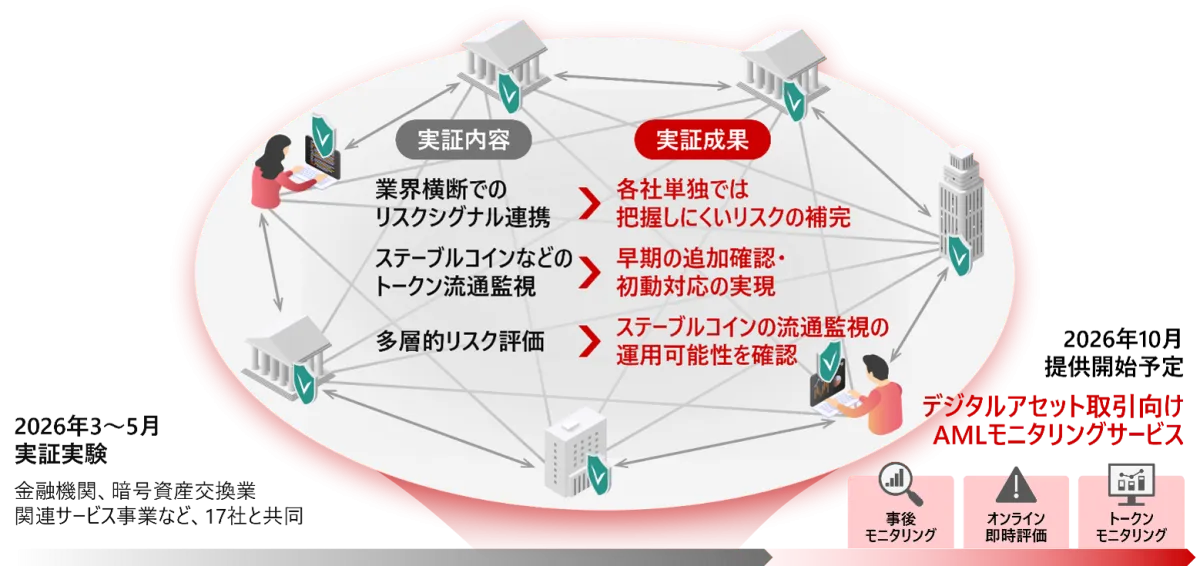
Fundamentally, the initiative involves sharing risk signals between businesses, such as alerts about suspicious transactions and high-risk wallets, which can then be used to trigger immediate actions. Furthermore, it includes monitoring the circulation of tokens like stablecoins to better understand the flow of funds and related transactions to assess risks effectively.
Historical Context and Progress
The pilot program, which follows Hitachi’s ongoing work since 2025, received critical backing from the Financial Services Agency’s “FinTech Proof of Concept Hub,” leading to another round of trials scheduled from March to May 2026. From earlier experiments, Hitachi has learned the importance of collaborative data sharing among businesses to identify risks that might remain invisible when observed in isolation.
During the second round of trials, the focus was not on sharing sensitive customer information but rather on utilizing wallet addresses and transaction data—key risk signals—to gain insights into potential threats that individual companies may struggle to detect alone.
Key Components of the Testing
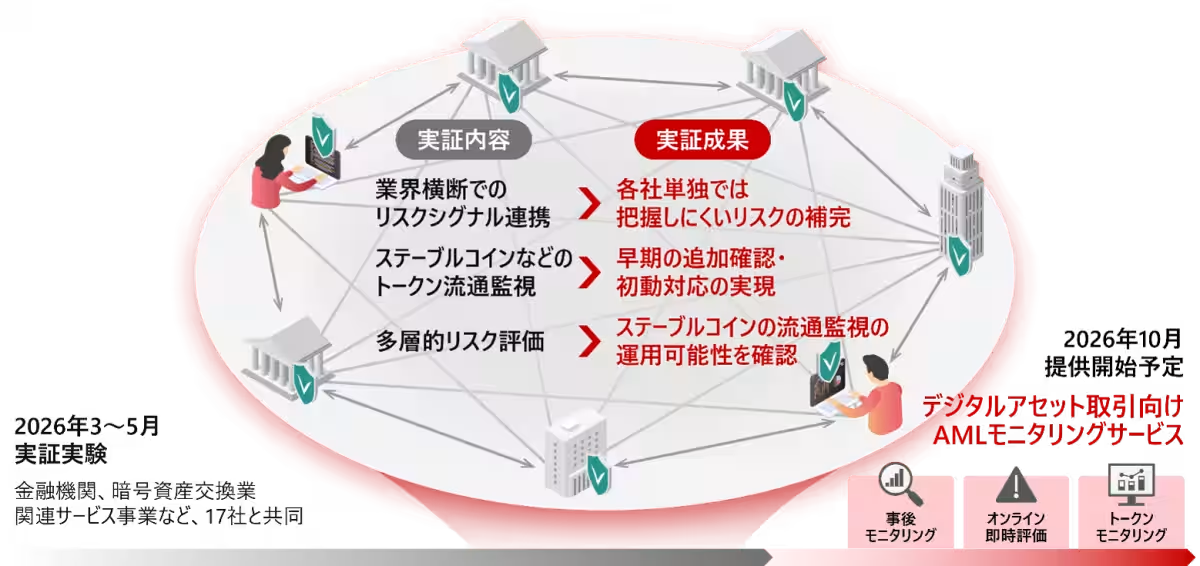
1. Cross-Industry Risk Signal Collaboration: Information on suspicious transaction patterns and risky wallets was shared among participants, enabling companies to cross-check with their own customer and transaction data, potentially expediting verification processes and initial responses.
2. Monitoring Stablecoin Circulation: The continuous surveillance of the circulation status of stablecoins provided insights into their relationship with high-risk addresses and the pathways of fund transfers, proving critical for identifying suspicious transactions.
3. Enhanced Detection Through Multi-Layered Risk Assessment: By integrating known sanction and crime-related lists with blockchain analysis tools and machine learning techniques, Hitachi explored multi-faceted risk evaluations that improve detection capabilities for both recognized and more insidious risks.
Upcoming AML Monitoring Service
Based on the findings from the pilot program, Hitachi plans to roll out an AML monitoring service tailored for digital asset transactions by October 2026. This service aims to assist companies in making informed decisions regarding risk management, ultimately leaving the final judgment call to them. This includes post-transaction monitoring, real-time risk assessments of counterpart wallets, and ongoing monitoring of token circulation, all designed to strengthen the risk-based responses of participating entities.
As the digital asset market expands alongside regulatory shifts, Hitachi commits to continuously enhancing the functions and analytical models of this service to adapt to evolving financial crime risks.
Future Directions
Looking ahead, there is a vision for an “AML Collective Center” to facilitate an industry-wide collaboration on risk information related to digital asset transactions, where Hitachi will play a significant role. This collaborative effort will leverage data on blockchain and risks gathered from various businesses to foster quick identification and evaluation of financial crime risks that might otherwise go unnoticed.
By integrating knowledge gained from the operation of the AML Collective Center back into service offerings, Hitachi aims to not only enhance resilience against financial crime but also reduce the investigative burdens on businesses while addressing the need for specialized expertise in tackling financial crime. Ultimately, this initiative seeks to bolster the overall defense mechanisms against digital asset-related financial crimes, contributing positively to the safe and sound development of digital asset trading and ensuring robust financial infrastructure.
Conclusion
The work undertaken by Hitachi underlines a proactive stance in addressing the complexities associated with digital asset transactions, emphasizing collaboration, technological advancement, and above all, a commitment to ensuring the integrity of the financial ecosystem.
For more information, visit Hitachi's Financial Solutions.
Topics Financial Services & Investing)
【About Using Articles】
You can freely use the title and article content by linking to the page where the article is posted.
※ Images cannot be used.
【About Links】
Links are free to use.