



Tokyo's Special Schools Join Forces for Quality Evaluation Initiative
Tokyo's New Quality Evaluation Initiative
In a significant move aimed at improving the educational standards of vocational schools in Tokyo, the Tokyo Special Vocational School Association (TOSENKAKU) has partnered with the Tokyo metropolitan government to implement the "Tokyo Vocational School Third-Party Evaluation Promotion Project." This initiative is in response to amendments in the School Education Law, which come into effect in April 2026, mandating self-evaluation assessments for schools that offer specialized courses while making third-party evaluations a recommended practice.
Background of the Initiative
The amendments to the School Education Law stipulate that vocational schools with specialized courses must perform self-assessment evaluations. Furthermore, external evaluations by individuals with relevant expertise will become a recommended requirement. However, a significant hurdle exists: there are limited existing third-party evaluation organizations and systems tailored for vocational schools across Japan. Given this challenge, TOSENKAKU and the Tokyo government are determined to create a conducive environment for these third-party evaluations, thereby enhancing the overall quality of education.
Recognition of "Model Schools"
As part of this project, vocational schools that successfully undergo and meet specific criteria for third-party evaluations will be designated as “Model Schools” by the Tokyo government. Additionally, schools that wish to receive subsidies from Tokyo’s Private Specialized School Educational Environment Improvement Fund must also engage in these evaluations as part of the process, reflecting the guidelines set out by the Ministry of Education, Culture, Sports, Science and Technology.
Training Evaluators through the Upcoming Course
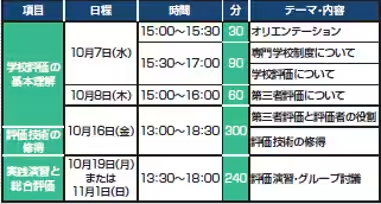
To facilitate the project and uphold its standards, TOSENKAKU will begin a new "Evaluator Training Course" in October 2026. This course is designed to cultivate the essential human resources needed for evaluations. It will cover a range of topics, including an understanding of the vocational school system, the importance of third-party evaluations, the role of evaluators, evaluation techniques, and practical evaluation exercises. Upon completion of this program, graduates will be registered in an "Evaluator Bank," allowing them to serve as evaluators for third-party assessments in vocational schools throughout Tokyo.
Why Third-Party Evaluations Are Important Now
1. Legal Revisions
The amendments to the School Education Law are pivotal in enhancing the educational landscape for vocational schools, as they introduce mandatory self-evaluation assessments and encourage third-party evaluations.
2. Addressing Challenges in Evaluation Environment
One of the significant issues faced by vocational schools is the lack of adequate evaluation systems and organizations. In response, the initiative will expand the framework for evaluations to include team evaluations led by multiple assessors, not just relying on external organizations.
3. Purpose of Ensuring Quality
The goal of this initiative is not merely to create a ranking among schools but to foster a culture of continuous improvement through objective evaluations. At the core of this effort is the necessity to implement a Plan-Do-Check-Act (PDCA) cycle based on self-evaluations that drives improvements in educational activities and school management.
Through this initiative, TOSENKAKU and the Tokyo government aim to streamline the process for vocational schools to receive third-party evaluations, ultimately leading to substantial enhancements in the quality of education provided, aligning with the evolving educational policies in Japan.
Conclusion
The Tokyo Vocational School Third-Party Evaluation Promotion Project represents a proactive step towards elevating the standards of vocational education in the metropolitan area. The collaboration between the local government and TOSENKAKU demonstrates a commitment to ensuring a robust and effective educational framework for the future generation of professionals.


Topics Other)








【About Using Articles】
You can freely use the title and article content by linking to the page where the article is posted.
※ Images cannot be used.
【About Links】
Links are free to use.